Can Gulf Green Finance Survive an Oil Price Shock?
The Iran conflict has arrived at the worst possible moment for Gulf sustainable finance, a sector already navigating fiscal strain, a global ESG backlash, and the unresolved tension between hydrocarbon revenue and transition capital.
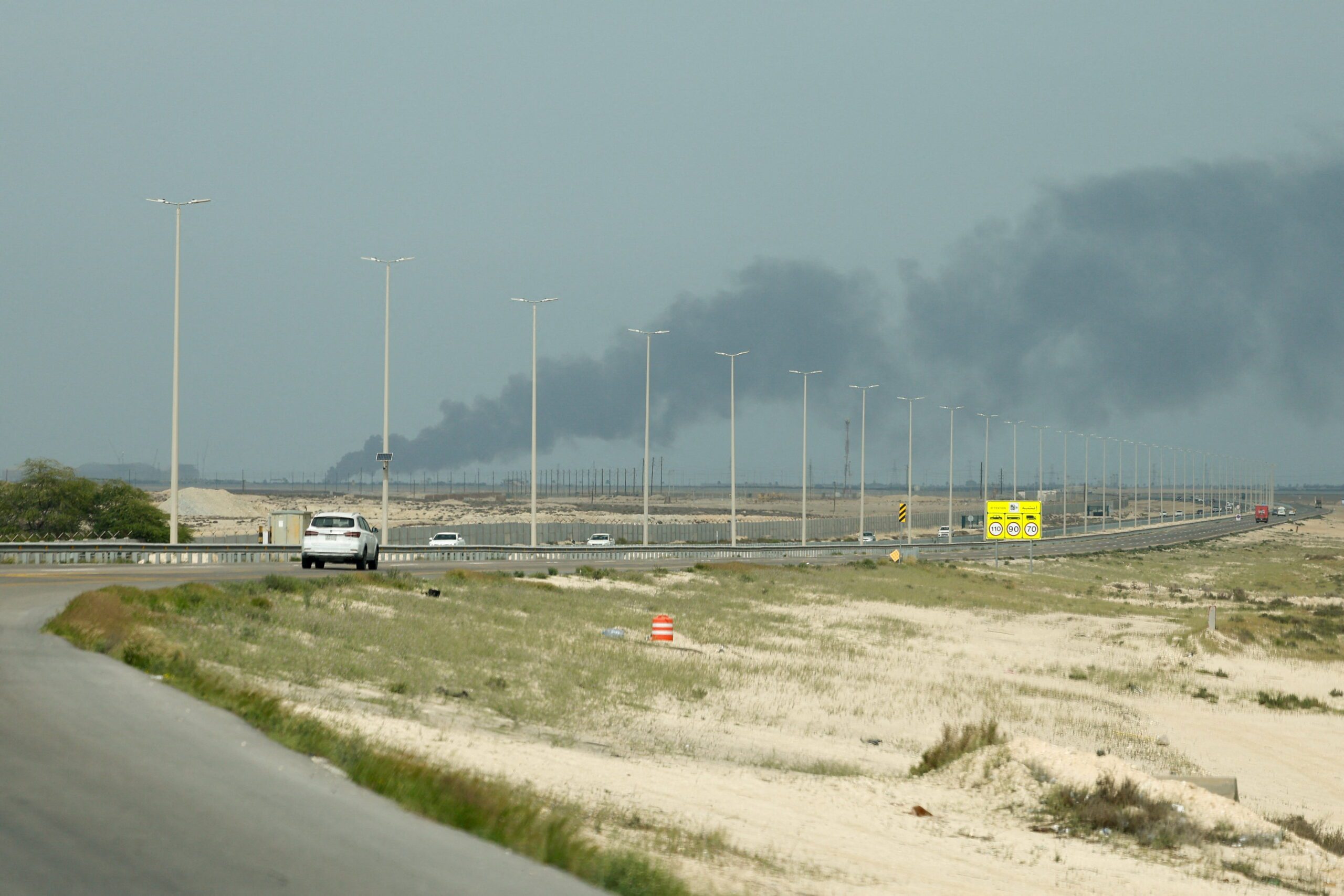
Smoke billows from Saudi Aramco's Ras Tanura oil refinery after a reported Iranian drone strike in Saudi Arabia, March 2. (REUTERS/Stringer)
For three years, the Gulf defied global trends in sustainable finance. While environmental, social, and governance-labeled bond issuance fell roughly 27% year-on-year in Europe in early 2025, and investor appetite cooled elsewhere, the region kept building. Labeled sustainable debt across the Middle East and North Africa reached approximately $94 billion, with issuance more than tripling between 2020 and 2024. Sovereign green bond debuts from Qatar and Saudi Arabia followed. Abu Dhabi’s Alterra climate fund, seeded with $30 billion at the United Nations climate conference COP28, began deploying capital at scale. The Gulf’s green finance story had acquired enough institutional architecture to look durable.
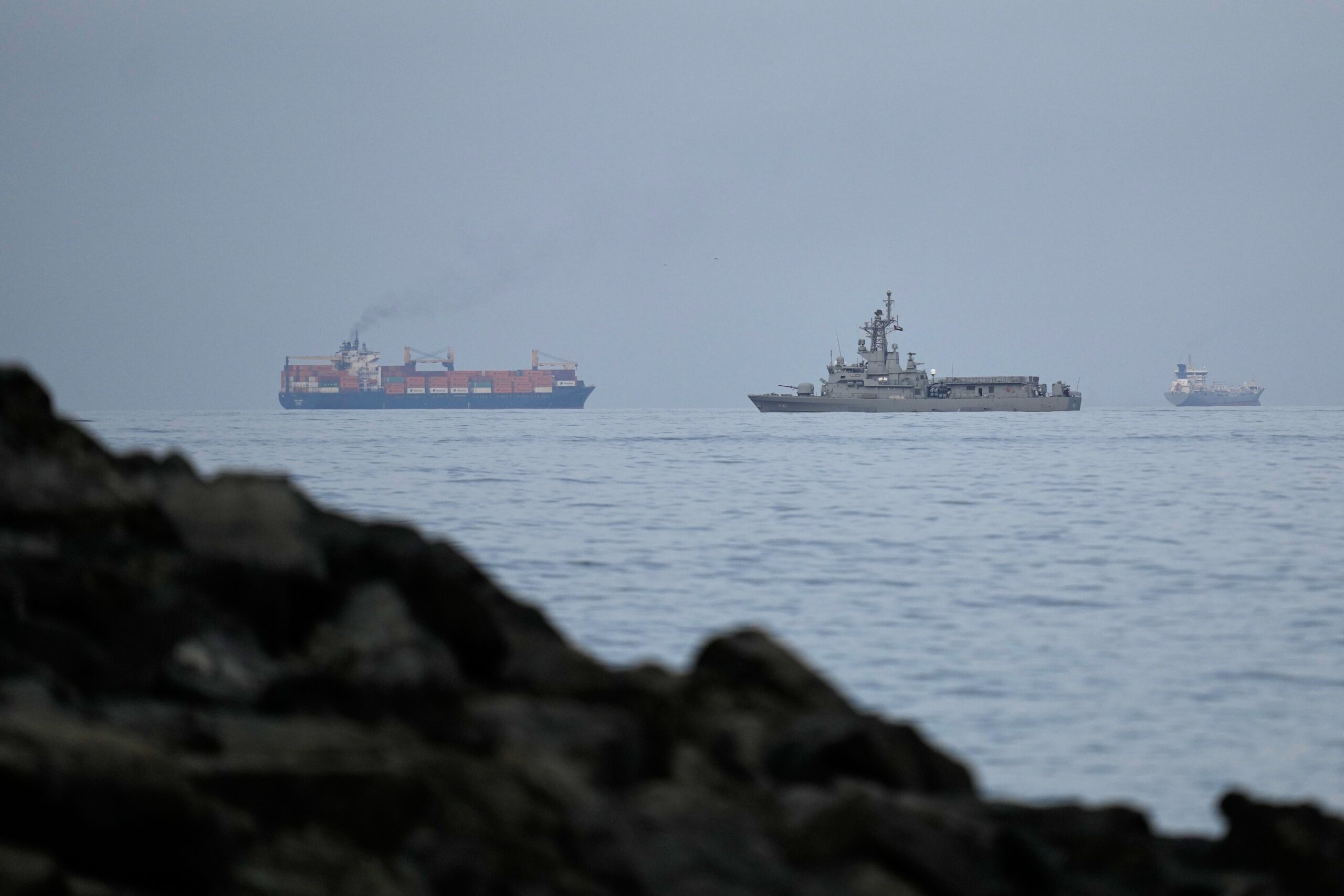
That architecture is now under stress it was never designed to absorb. The U.S.-Israeli strikes on Iran that began February 28 drew the Gulf into a conflict not of its making, and Iran’s retaliatory campaign has targeted the pillars of Gulf economic credibility with precision. QatarEnergy, the world’s largest liquefied natural gas producer, halted production at Ras Laffan and declared force majeure on deliveries. The Strait of Hormuz, through which roughly one-quarter of global seaborne oil and one-fifth of LNG transit, has effectively closed. Brent crude oil crossed $100 per barrel. This is the stress test Gulf green finance has never faced, and it arrives on top of preexisting strains that were already testing the thesis.
A Sector Already Under Pressure
The conflict did not land on a clean balance sheet. Saudi Arabia’s budget breakeven oil price sits at around $91/bbl, according to International Monetary Fund estimates, against a prewar Brent price near $70/bbl. The Public Investment Fund, the vehicle through which Vision 2030 is financed and through which the bulk of Saudi green investment flows, was already absorbing the strain of overcommitted megaprojects and rising project costs before the conflict began. Green finance here was never surplus capital deployed freely; it was competing against pressing domestic commitments on the same sovereign balance sheet.
Globally, the ESG landscape had already fractured. The U.S. anti-ESG backlash prompted major banks to exit climate alliances, and the European Union moved to remove the vast majority of companies from its corporate sustainability reporting directive. Gulf states had largely insulated themselves from this political weather. The United Arab Emirates’ Federal Decree-Law No. 11 of 2024, which made greenhouse gas emission reporting legally mandatory for all entities beginning in May 2025, remains among the most ambitious climate compliance frameworks anywhere. But that insulation depended on the stability of the sovereign architecture underpinning it. Iran’s drones are testing that architecture directly.
The Infrastructure Under Fire
Iran’s targeting strategy is, by design, economic. Analysts have described it as economic or cost “coercion“: Cheap drones impose outsized costs on a region whose model depends on stability. The Ras Laffan complex, where QatarEnergy declared force majeure, is also home to Qatar’s emerging green hydrogen infrastructure, the asset the country has been positioning as its long-term transition revenue base. Saudi Arabia’s Ras Tanura refinery, which sustained minor damage after two drone interceptions, underpins the export capacity on which the PIF’s green investment budget ultimately depends. The Dubai and Abu Dhabi airports sustained hits, disrupting the tourism and aviation revenue supporting the UAE’s non-oil gross domestic product, the same economy that was meant to reduce the sovereign balance sheet’s dependence on hydrocarbons.
Qatar, unlike Saudi Arabia and the UAE, has no pipeline alternative to the Strait of Hormuz for LNG exports. The Ras Laffan shutdown, covering roughly 20% of global LNG supply, is not a temporary rerouting problem. It is a direct hit on the revenue stream that funds the Qatar Investment Authority’s climate finance commitments.
The Correlation That Never Went Away
Officials confirmed March 11 that Saudi Arabia, the UAE, and Qatar are reviewing their sovereign wealth fund deployments, with options including reversing investment pledges made as recently as 2025. The funds doing that reviewing, the PIF, the Abu Dhabi Investment Authority, Mubadala, and the QIA, are the same institutions driving Gulf green finance. There is no separate pool of transition capital insulated from these decisions.
This is the structural vulnerability the headline $94 billion figure obscured. Gulf green finance was never an independent capital market in the way European green bonds are. It was sovereign capital in green packaging, allocated at political discretion and ultimately dependent on the hydrocarbon revenue it was nominally meant to transition away from. A major academic study published in September 2025, analyzing 14 years of Gulf corporate data, found that ESG in the region functions primarily as a tool for state-led economic transformation rather than a market-driven outcome. Stock markets show minimal responsiveness to ESG improvements. In a crisis that directly threatens state revenue, that distinction is now consequential.
The Case for Resilience
There is a counterargument worth taking seriously. The Gulf’s transition investment was never purely discretionary. Saudi Vision 2030, the UAE Energy Strategy 2050, and Qatar’s National Vision are long-run responses to the recognition that hydrocarbon dependency is itself a structural risk, a recognition the current crisis reinforces. The UAE’s non-oil sector now accounts for over 70% of GDP – though a portion of that reflects downstream and hydrocarbon-adjacent activity rather than full structural decoupling – a buffer that did not exist a decade ago and reflects the depth of the diversification commitment.
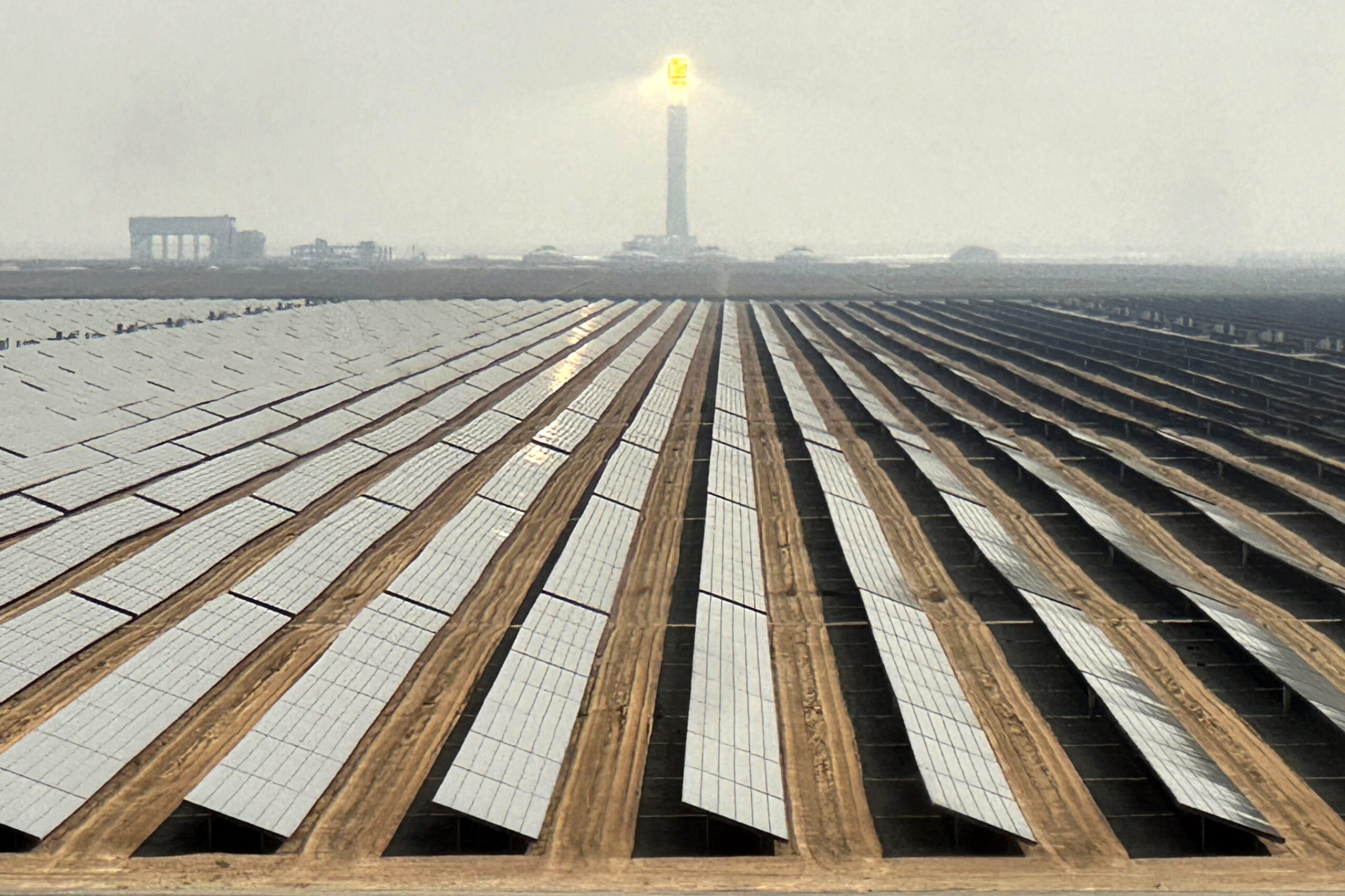
The conflict also sharpens the long-term strategic logic for Gulf renewables exports. Asian LNG buyers have been reminded that roughly 20% of global LNG supply can be taken offline by a drone strike on a single complex. The case for green hydrogen corridors and solar export infrastructure from the Gulf becomes more compelling, not less, in a world that has now seen what chokepoint dependency looks like in practice. The regulatory infrastructure, including mandatory greenhouse gas reporting in the UAE, binding ESG disclosure in Qatar, and formal green debt guidelines in Saudi Arabia, is legislative rather than voluntary. It does not dissolve when oil prices move.
The Signal to Watch
For investors, the test is not oil prices. It is institutional behavior under pressure. Goldman Sachs’ base case has Brent averaging around $98/bbl through March and April before declining – real fiscal stress but manageable if the conflict is short lived. What matters is whether green bond programs from Masdar, the PIF, and QatarEnergy resume issuance on schedule; whether Alterra continues deploying climate capital; and whether Gulf regulators hold the May greenhouse gas compliance deadline.
If those commitments hold, the $94 billion story survives its first serious test, and the region’s claim to structural transition intent is strengthened. If they do not, the conflict will have revealed something the headline numbers concealed: Gulf green finance was contingent on conditions that Iran’s drones have just removed. The structural logic behind the Gulf’s transition ambitions has not changed. But the margin for complacency is gone.
The views represented herein are the author's or speaker's own and do not necessarily reflect the views of AGSI, its staff, or its board of directors.
The true economic and societal impact of the conflict may not be driven by headline events alone but by the gradual erosion of the systems that underpin daily life.
The Gulf is defying global trends and investing in sustainable-labeled projects, and if those labels translate to real guidelines, the region could become a global benchmark for transition finance.
Gulf insurers can embed environmental resilience, social safeguards, and governance rigor into underwriting to strengthen local markets and align with the expectations of global investors increasingly focused on ESG.
As Gulf states reconcile fossil-fuel dependency with a transition to low-carbon energy systems, success will depend on their ability to integrate technology, carve out strategic market positions, and implement robust carbon governance reforms – such as emissions tracking and enforcement mechanisms.