A New Mediator: Can Pakistan Help the U.S. and Iran Cut a Deal?
After Oman-facilitated negotiations between the United States and Iran ended in a major regional conflict, Pakistan has picked up the mantle of mediator and helped broker a cease-fire, but can the country succeed at mediating a lasting peace deal?
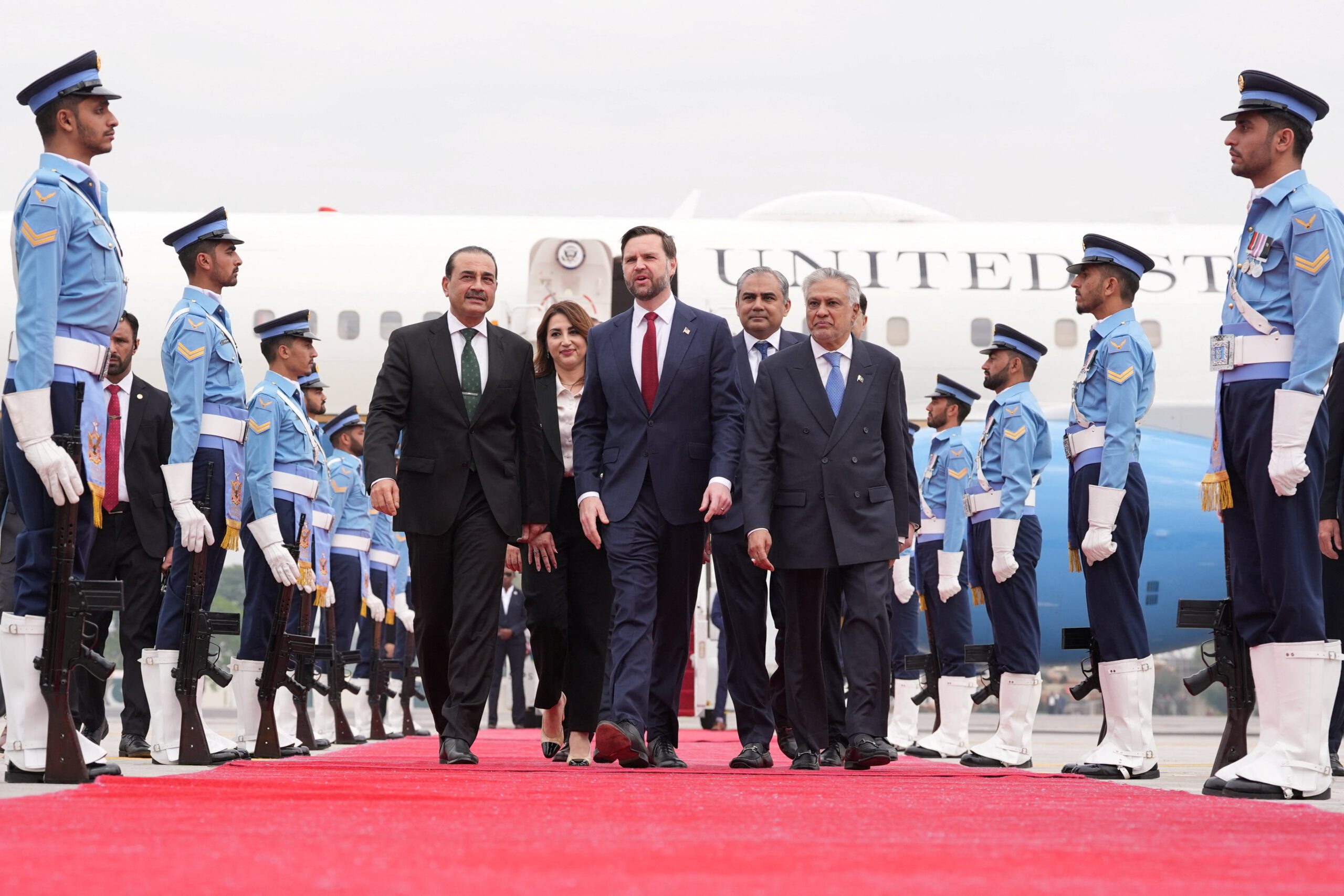
Vice President JD Vance walks with Pakistani Field Marshal Asim Munir, Pakistani Deputy Prime Minister and Foreign Minister Mohammad Ishaq Dar, Charge d'Affaires of the U.S. Embassy in Islamabad Natalie A. Baker, and Pakistani Interior Minister Mohsin Raza Naqvi after arriving for talks with Iranian officials in Islamabad, Pakistan, April 11. (Jacquelyn Martin/Pool via REUTERS)
On February 27, less than 24 hours before the outbreak of the U.S.-Israeli war with Iran, talks between the United States and Iran, hosted by Oman, seemed to be going well. Omani Foreign Minister Sayyid Badr bin Hamad Al Busaidi said that significant and unprecedented progress had been made. The deals put on the table reportedly included Iranian concessions exceeding those in the 2015 Joint Comprehensive Plan of Action nuclear deal, and President Donald J. Trump seemed poised to get much of what he wanted.
But these new concessions were not enough. The United States and Israel unleashed targeted strikes early the next morning, kicking off what has become a prolonged conflict against one of the region’s most powerful actors. Various justifications have been given for the conflict that has left no Gulf state untouched, including Oman. The February negotiations process appears to have ended in failure, with some analysts blaming the United States, others Israel, and yet others Oman itself. However, mediation has always been a complex and drawn-out process, easily derailed by spoilers, and Oman was not one of them.
Omani Mediation
When there have been serious escalations between the United States and Iran, Oman has often been at the heart or periphery of efforts to resolve tensions. Oman helped secure the release of abducted U.S. hikers from Iran in 2011, played a significant role in the JCPOA and U.S.-Iranian nuclear negotiations, and supported efforts in 2024 to de-escalate regional tensions and in 2025 to bring about a cease-fire between Iran and Israel. Such diplomatic efforts have often gone unreported by Omani media – part of Oman’s diplomatic strategy to minimize international attention that may hinder the ability of opposing parties to build trust and communicate.
For these reasons it was unusual for Oman’s foreign minister to publicly narrate the successes of mediation efforts earlier this year. Some analysts suggested Oman may have wanted to signal to the U.S. public that peace was possible when the United States chose to attack. The public statements by Busaidi before the strikes and the uncharacteristic Omani condemnation of U.S.-Israeli actions afterward suggest increasing skepticism regarding the Trump administration’s sincerity in pursuing a peaceful solution.
The stinging public criticism immediately set Oman apart from its Gulf Arab neighbors who have been restrained in second guessing of the administration’s war strategy. Oman continued to chart an independent course during the war, declining to attend a 35-country meeting on reopening the Strait of Hormuz, refusing to identify Iranian authorship of strikes throughout the region, and officially congratulating Ayatollah Mojtaba Khamenei after his selection as Iran’s new supreme leader.
The sudden lurch by the Trump administration away from diplomacy left the Omanis feeling blindsided after they had invested so much in diplomacy, including a trip by Busaidi to Washington February 27 hoping to close a deal. The war has challenged Oman’s core identity – that of a neutral, softspoken facilitator used to avoiding global news headlines – and even its role as a mediator has been sidelined for now, though the country continues to encourage all parties to reach a diplomatic solution.
Pakistan’s Emergence as a Mediator
Following Trump’s apocalyptic messaging to Iran threatening that a “whole civilization will die,” Pakistani Prime Minister Shehbaz Sharif announced that a cease-fire had been reached April 7. As Islamabad prepared to host talks between Vice President JD Vance and Iranian Parliamentary Speaker Mohammad-Bagher Qalibaf, reports circulated that Trump or someone within his administration reviewed and signed off on Sharif’s X post announcing the cease-fire. That initial round of talks ended with no marked advancement toward a permanent resolution, but Pakistan received recognition from both the United States and Iran for its role.
There were signs even before the war that Pakistan might take up the mantle of mediator should the need arise. In 2025, Trump played a role in securing another cease-fire, between Pakistan and India, which earned him considerable praise and a recommendation for a Nobel Peace Prize from the Pakistanis. Trump delivered his own praise of Pakistani Field Marshal Asim Munir after the Pakistan-India talks, opening the way for Munir to take part in the recent U.S.-Iranian cease-fire talks, an otherwise unusual role for a military chief.
Pakistan has its own reasons to position itself as a mediator. In September 2025, Saudi Arabia and Pakistan signed a mutual defense pact, notionally committing each country to treat an attack on one as an attack on both. Perhaps more importantly, Pakistan, with fellow regional heavy weights Turkey and Egypt, was driven by deep concern over the risks of serious regional instability the war posed. This multistate backchannel effort evolved to be increasingly Pakistan centric, as Islamabad’s advantages – good relations with Washington and Tehran, direct security stakes because of its border with Iran, and warm relations between Trump and Munir – came to the fore. Pakistan’s close relationship with China, on which it relies heavily for financial support, also seems to have helped facilitate its aspirations to mediate the conflict. Though China’s part in managing the war has remained limited, Chinese Foreign Minister Wang Yi said Beijing would like to see Pakistan play “a greater role” in resolving the conflict.
Pakistan is looking to anchor itself in the broader regional security shifts taking place, including as a member of an emerging Saudi-Turkey-Egypt-Pakistan bloc. The group has held talks on developing a regional security platform, seeing the Iran war as an opening to advance security cooperation discussions that had started prior to the conflict. Of the four, only Saudi Arabia has been the target of Iranian attacks, but Turkey and Egypt reportedly played quiet, yet instrumental roles in securing the cease-fire between the United States and Iran. By mediating the conflict, Pakistan can continue to distinguish itself within this emerging bloc and as a regional power.
Pakistan Molds Its Diplomacy to Match – Well Enough – Trump’s Style
For a U.S. administration that has been markedly critical of longtime allies and friendly with former adversaries, Pakistan may be the perfect candidate for a wartime go-between. Its willingness to draft statements approved by the White House and the posturing put out by Munir, Sharif, and others suggest that it possesses a high tolerance for the symbolic gestures that Trump seems to expect from a security partner or intermediary. Pakistan’s role also aligns with a broader Trump administration tendency to elevate relationships with states that previous administrations had treated more warily, or at least distantly, while bypassing traditional allies central to regional diplomacy.
Given that tendency and the almost certain White House unhappiness with Oman’s public criticisms at the beginning of the war, it is not surprising Oman saw itself sidelined when prospects for mediation ripened after several weeks of fighting. It remains to be seen whether Pakistan can help broker a deal to end this easily launched but apparently intractable war.
The views represented herein are the author's or speaker's own and do not necessarily reflect the views of AGSI, its staff, or its board of directors.
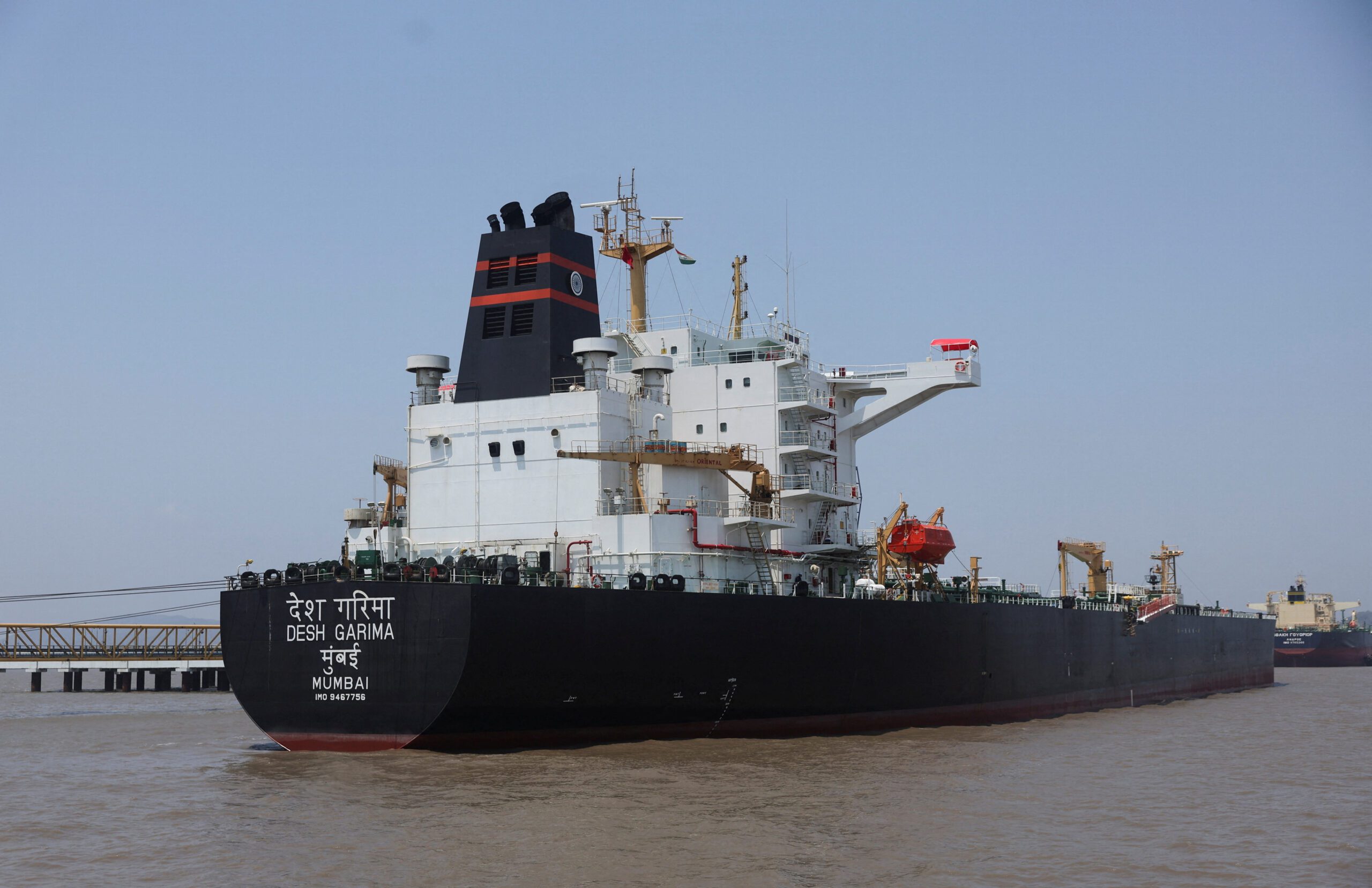
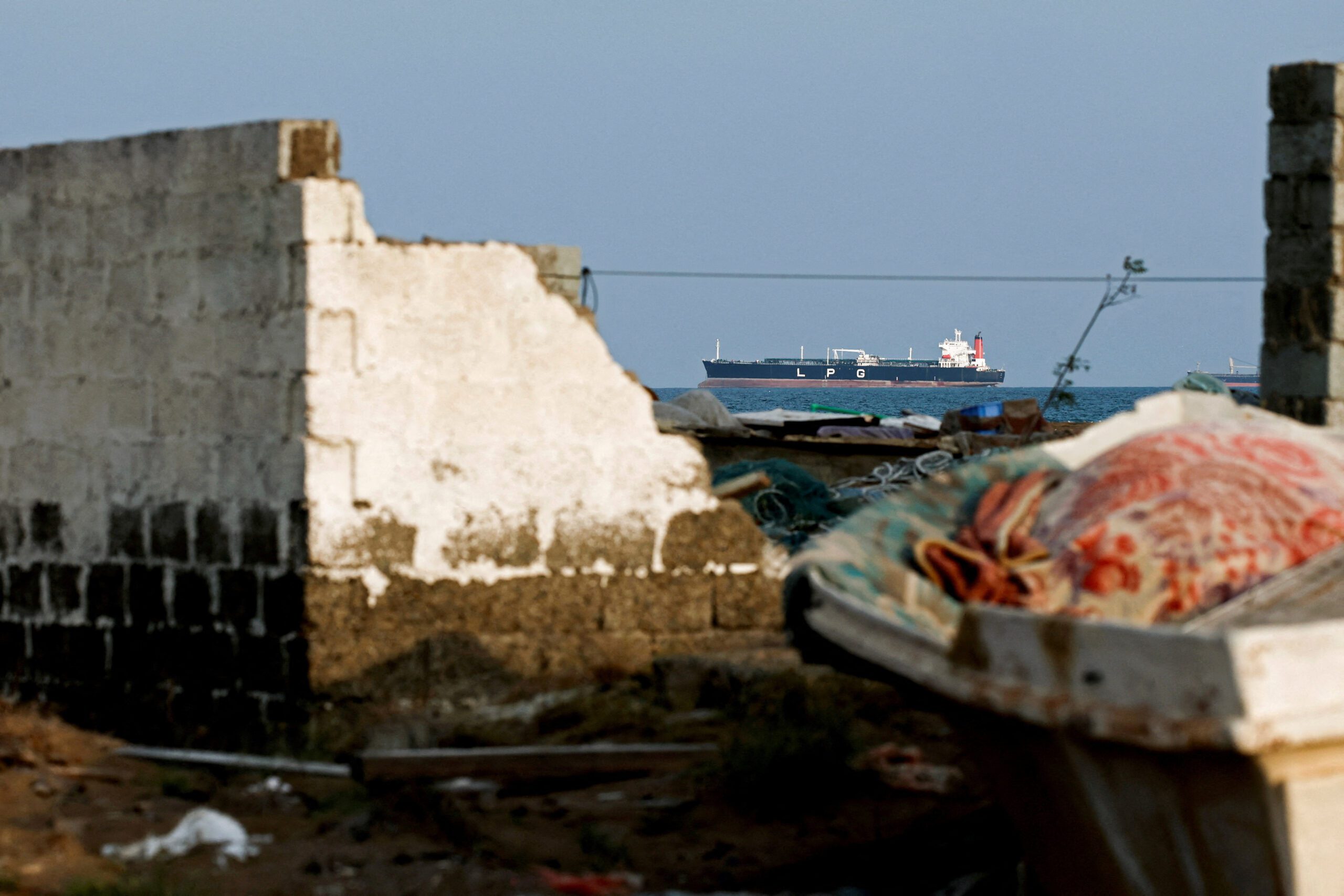
Iranian attacks on Omani ports and oil tankers are straining Oman’s long-standing “friend to all” regional foreign policy, but Muscat still has a part to play in achieving peace.