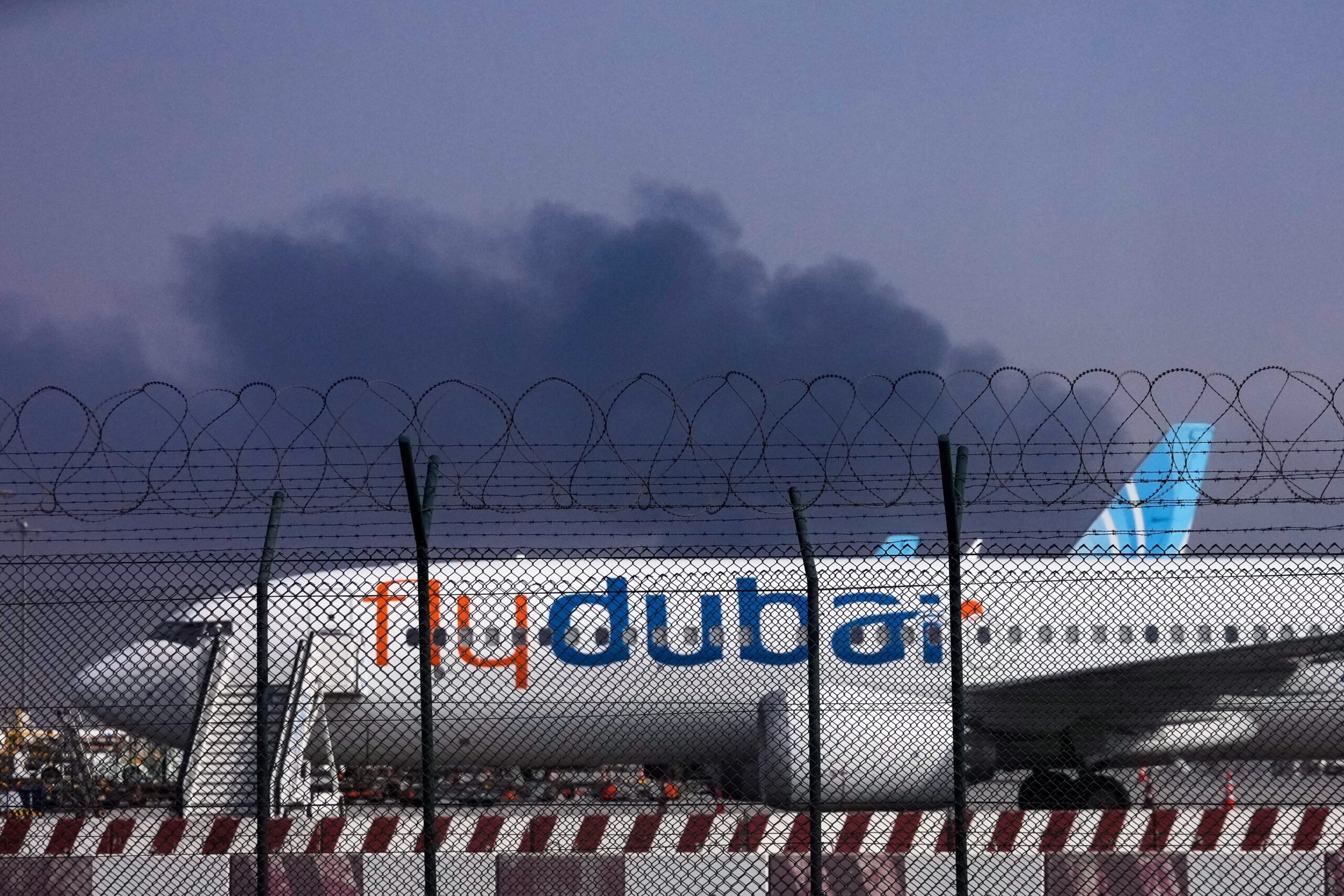
A flydubai plane is parked at Dubai International Airport, as smoke rises in the background after a drone struck a fuel tank in Dubai, United Arab Emirates, March 16. (AP Photo)
On September 30, a flydubai flight from Dubai to Tel Aviv was forced to divert to Saudi Arabia following a potential hijacking attempt. The incident added fuel to the fire for a regional aviation sector already struggling with disruptions caused by the U.S. and Israeli war with Iran. In 2025, more people passed through Dubai International Airport than lived in Germany. Aviation has become central to the United Arab Emirates’ post-oil economy and international image. Its location between Europe, Asia, and Africa has helped but so have years of investment in airports, liberal aviation policies, and airlines built around international connections. Emirates and Etihad, owned by the governments of Dubai and Abu Dhabi respectively, have been central to this growth. Both have channeled long-haul traffic through the Gulf while reinforcing the UAE’s image as an open, globally connected country.
The Emirati model relies on regional stability and reliable access to airspace across the Gulf. Conflicts can force airspace closures, disrupt connecting flights, and drive up fuel and insurance costs. Missile and drone attacks, along with cyberattacks and navigation interference, also threaten aviation infrastructure. For the UAE, the challenge is to reduce the vulnerability of its aviation hubs to regional geopolitical disruption.
Aviation Under Pressure
The International Air Transport Association estimates that aviation and aviation-related tourism contributed $92 billion to the UAE economy in 2023, equivalent to 18.2% of gross domestic product, and supported around 992,000 jobs. Dubai International Airport handled a record 95.2 million passengers in 2025, maintaining its place as the world’s busiest airport for international passenger traffic. Abu Dhabi’s Zayed International Airport handled another 32.5 million passengers. At the same time, Dubai is reportedly investing 128 billion Emirati dirhams (approximately $34.85 billion) to expand Al Maktoum International Airport. The plan is for the airport to eventually replace Dubai International Airport as Dubai’s main aviation hub, with capacity for as many as 260 million passengers per year.
The U.S. and Israeli war with Iran has already affected the aviation sector, causing airspace restrictions and widespread cancellations. Iranian strikes caused minor damage to Dubai International Airport, and Abu Dhabi’s airport was also targeted. By the first half of 2026, Dubai International Airport’s passenger traffic decreased by 31.3% from the same period in 2025. UAE carriers restored much of their networks, but several major foreign airlines remained more cautious about returning. In July, the number of airlines operating at Dubai airports had fallen from roughly 100 before the war to about 50. Several major airlines, such as the Lufthansa Group and United Airlines, have not yet resumed flights to the UAE.
Repeated disruption could also create longer-term consequences. Beyond reducing tourism, trade, cargo, and investment, it could weaken the UAE’s global brand as a reliable global connector and create an opening for competing hubs. Doha and Istanbul already offer alternative connections, while Saudi Arabia is investing heavily in its future aviation role.
Building Resilience Into the Hub Model
Amid continued regional instability, five policy actions could make the UAE’s aviation sector more resilient:
1. Strengthen Regional Airspace Coordination
The UAE’s General Civil Aviation Authority can work with neighboring civil aviation authorities to establish procedures for airspace disruptions. The UAE Airspace Coordination and Contingency Cell and the International Civil Aviation Organization Middle East Contingency Plan provide a starting point, but a more useful step would be to agree in advance on emergency routes and real time procedures for sharing operational information. For example, Bahrain temporarily relocated Gulf Air’s passenger operations to eastern Saudi Arabia during recent airspace closures.
Political tensions may limit how much operational information Gulf states are willing to share, but technical agreements and existing Gulf Cooperation Council mechanisms can institutionalize cooperation without requiring deeper political integration. A standing Gulf contingency arrangement would make these alternatives easier to activate when airspace closes.
2. Diversify Transit Hubs
The UAE can also reduce its reliance on Dubai International Airport and Zayed International Airport by building up alternative airports. Al Maktoum International Airport should be the main priority because of the scale of its planned expansion. This expansion plan should also be accelerated, with terminals and runways opening in phases rather than waiting for the entire project to be completed. At the same time, additional investment in Sharjah and Al Ain could provide useful backup during a disruption. This would require further investment in airport infrastructure and incentives for airlines to shift some operations to these airports. Spreading operations across several airports would reduce the risk that an attack on one major hub could paralyze the UAE’s aviation network.
3. Harden Airport Defenses
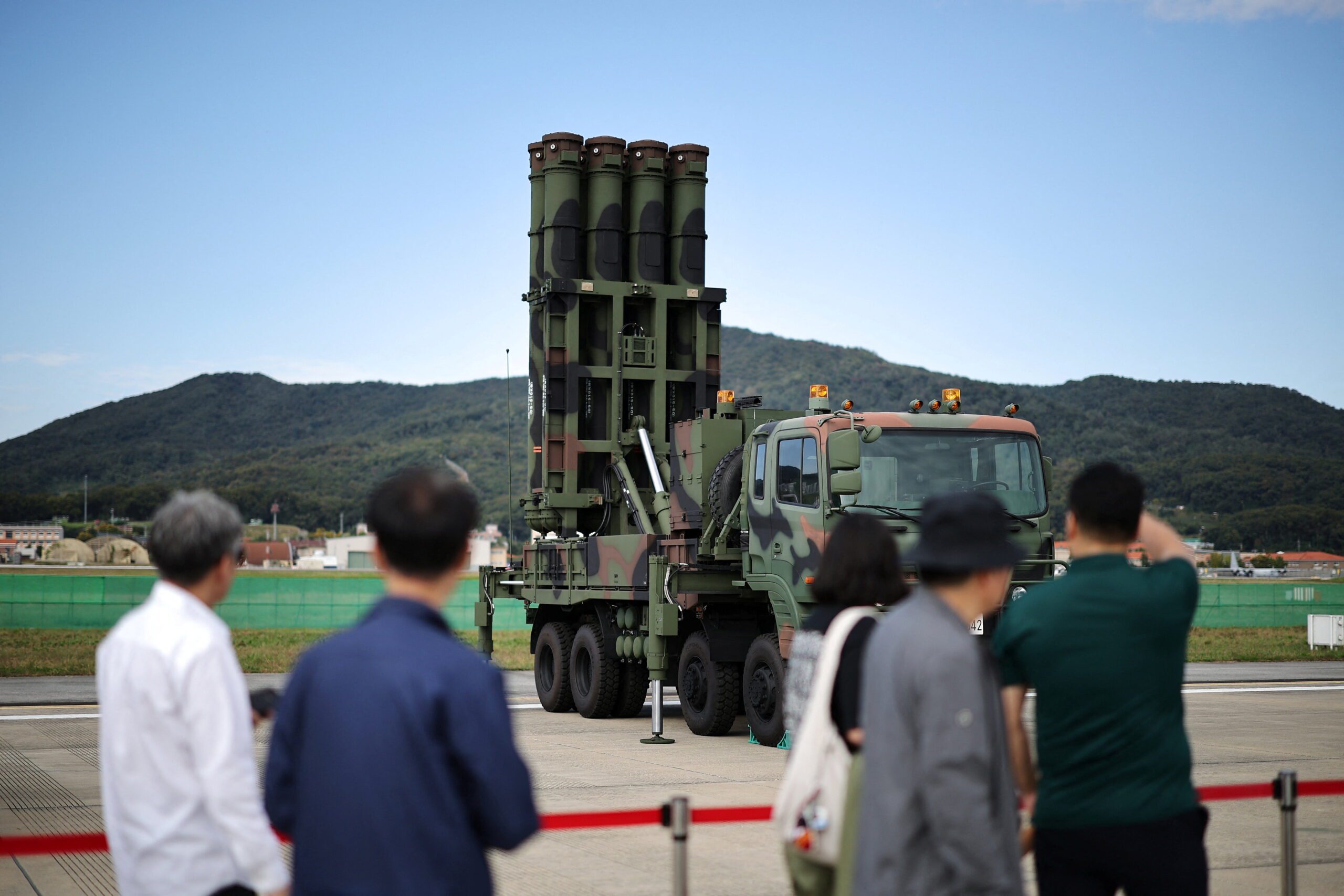
The Emirati government should strengthen the physical and digital resilience of its major aviation hubs against drone, missile, and cyber threats. The General Civil Aviation Authority should work with the Ministry of Defense, air force, cybersecurity agencies, and airport operators to conduct joint vulnerability assessments and identify which systems need additional protection. This may include protected backup power and databases, alternate air traffic control facilities, hardened shelters, and regularly exercised emergency and recovery plans. Recent acquisitions of counterdrone technology, including Australia’s EOS Slinger deal and Israel’s Rafael Drone Dome system, might be incorporated into a layered aviation defense architecture. This integrated approach could improve the UAE’s ability to detect and intercept threats and restore aviation operations after an attack.
4. Reengage Foreign Airlines
The UAE can use aviation diplomacy and targeted financial support to accelerate the return of foreign carriers. The General Civil Aviation Authority and Ministry of Foreign Affairs should engage foreign governments, aviation regulators, and insurance companies, providing regular security assessments to build the case for reassessing aviation warnings and restrictions.
Airlines based outside of the Gulf are reportedly facing $70,000 to $150,000 in additional war risk insurance costs per flight landing in the Gulf, while Emirates has reportedly been paying only an additional $100,000 per week to insure its fleet. The government should consider establishing a temporary war risk insurance facility to offset some of the additional costs for foreign airlines returning to the UAE. Dubai and Abu Dhabi airports could reinforce that support through reduced landing fees, marketing assistance, and other incentives for carriers willing to resume service. The objective would be to reduce both the perceived security risk and the financial costs of returning to the UAE.
5. Project the UAE’s Aviation Resilience Globally
Restoring passenger confidence will be as important as getting airlines back to normal operations. The Ministry of Economy and Tourism, General Civil Aviation Authority, and national carriers should expand international communications around the sector’s ability to maintain operations and recover quickly from disruptions. The existing “Love Your Sky” campaign can be used for this purpose, while Emirates and Etihad could reinforce the message through their extensive partnerships and international marketing.
The Emirati government should underscore the reliability and service standards that underpin its aviation model. It could also use incentives to encourage passengers to return, building on existing initiatives, such as complimentary hotel accommodation for long stopovers in Dubai and Abu Dhabi. The UAE carriers have leverage through their established global aviation networks that can help bolster the country’s position as a major global aviation hub and the international influence that comes with it.
The UAE’s aviation model depends not only on its geographic location but also on global confidence in its reliability. Regional crises can erode that confidence and push passengers toward competing hubs. The UAE will need to make its aviation sector more resilient and protect the advantages of its location.
The views represented herein are the author's or speaker's own and do not necessarily reflect the views of AGSI, its staff, or its board of directors.
As Iranian strikes exposed structural gaps, Gulf states are expanding their air defense architecture through new suppliers, lower-cost systems, and operational partnerships.
The war is demonstrating that missile defense can blunt Iran’s strategy – but only if the United States and its regional partners ensure that their defenses can keep pace with the scale and speed of future conflicts.
How the Gulf states choose to invest now could determine not just how they survive this crisis but how they sustain their role as both allocators and magnets of capital and superpowers in the global energy system.