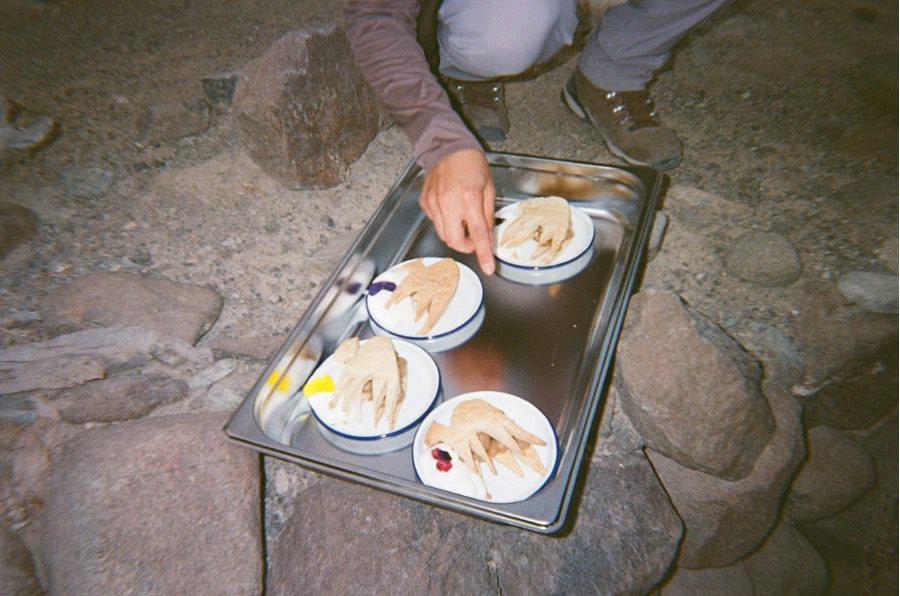
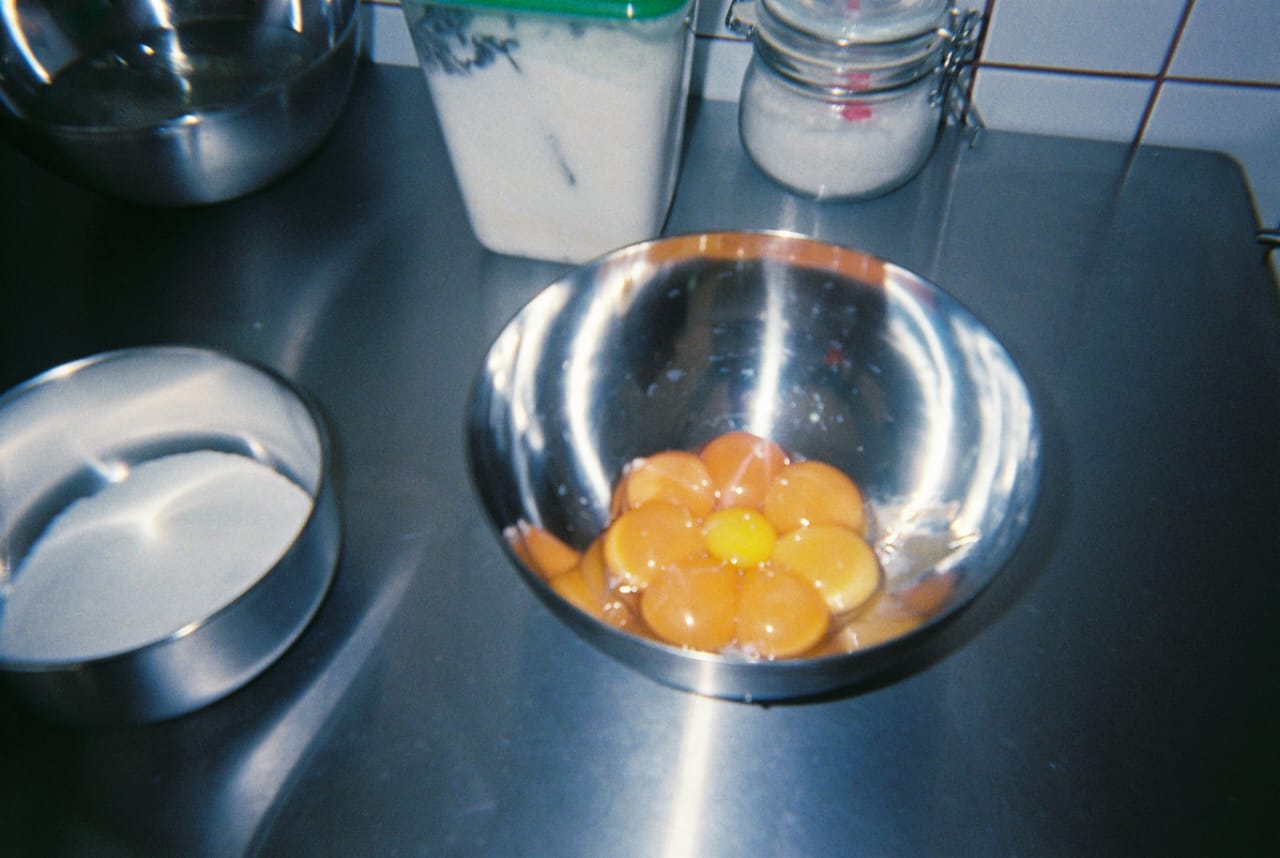
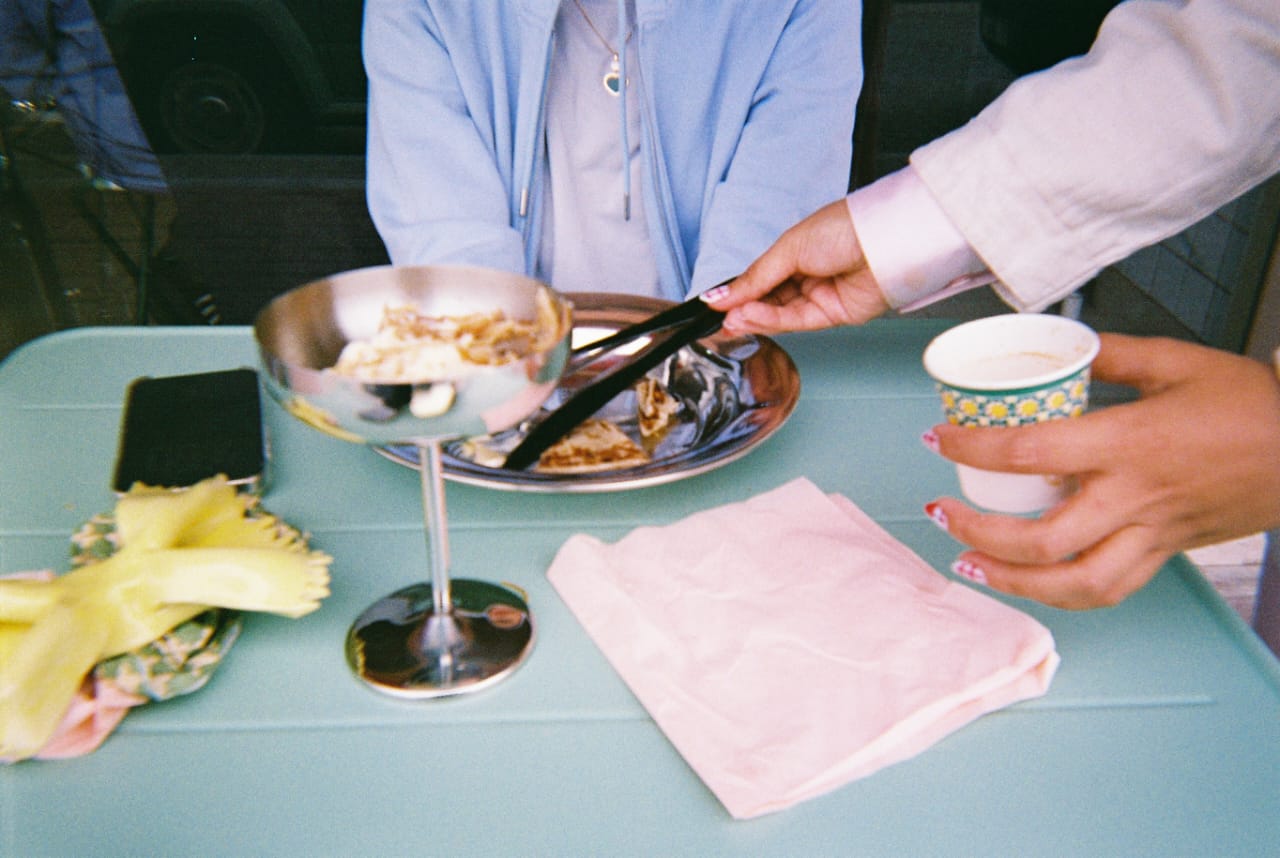
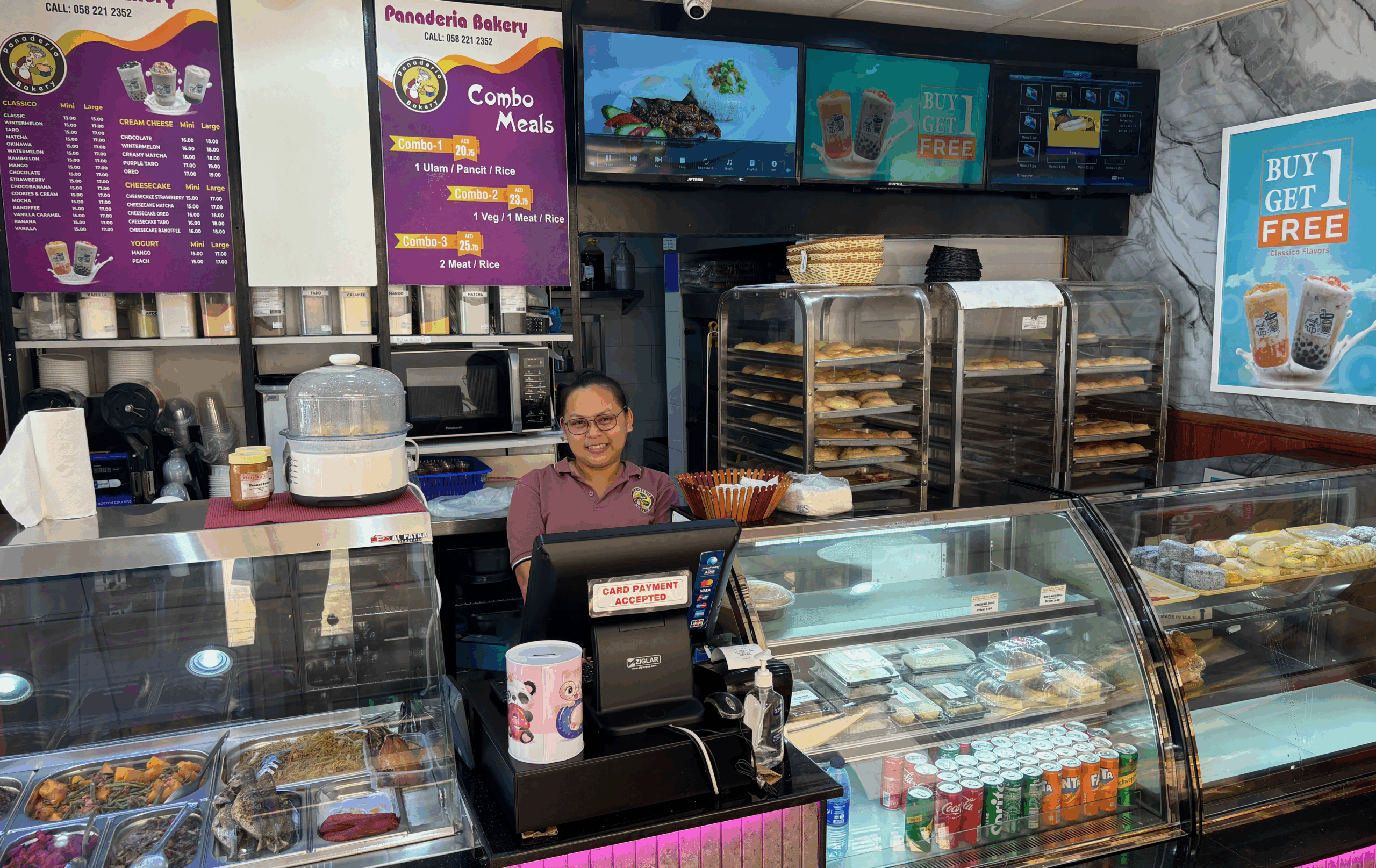
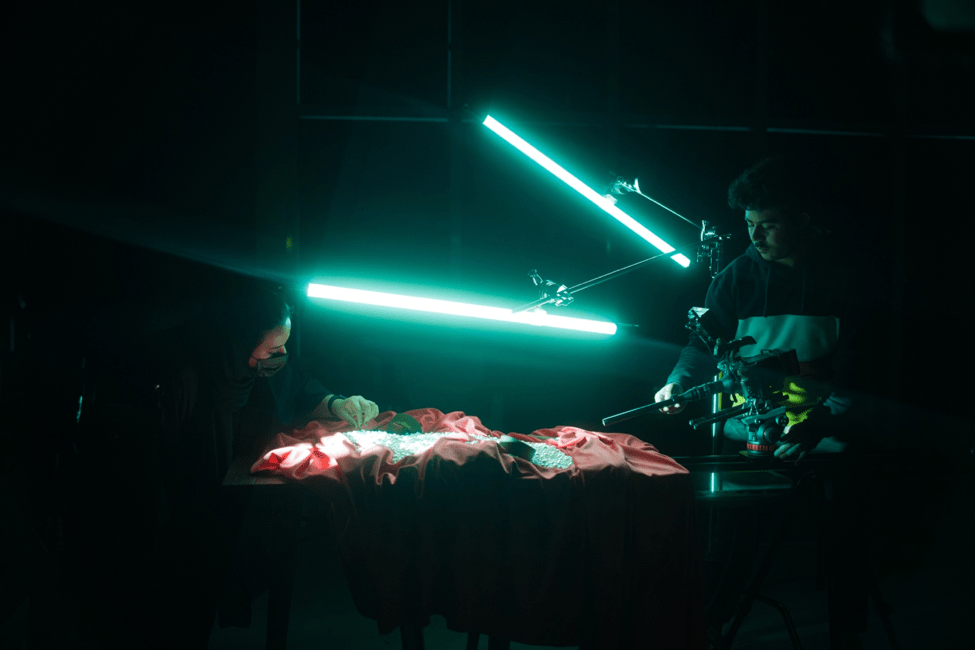
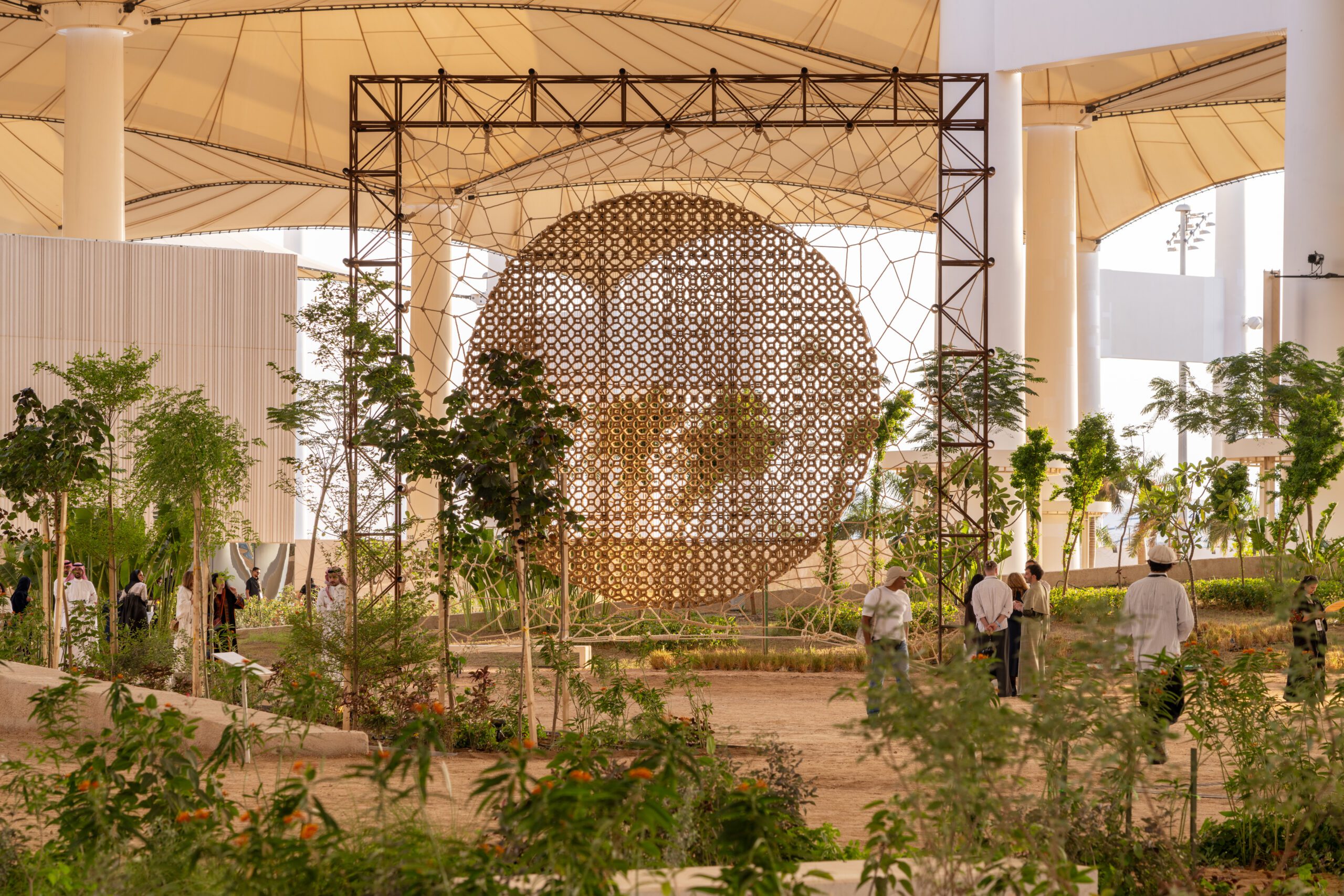
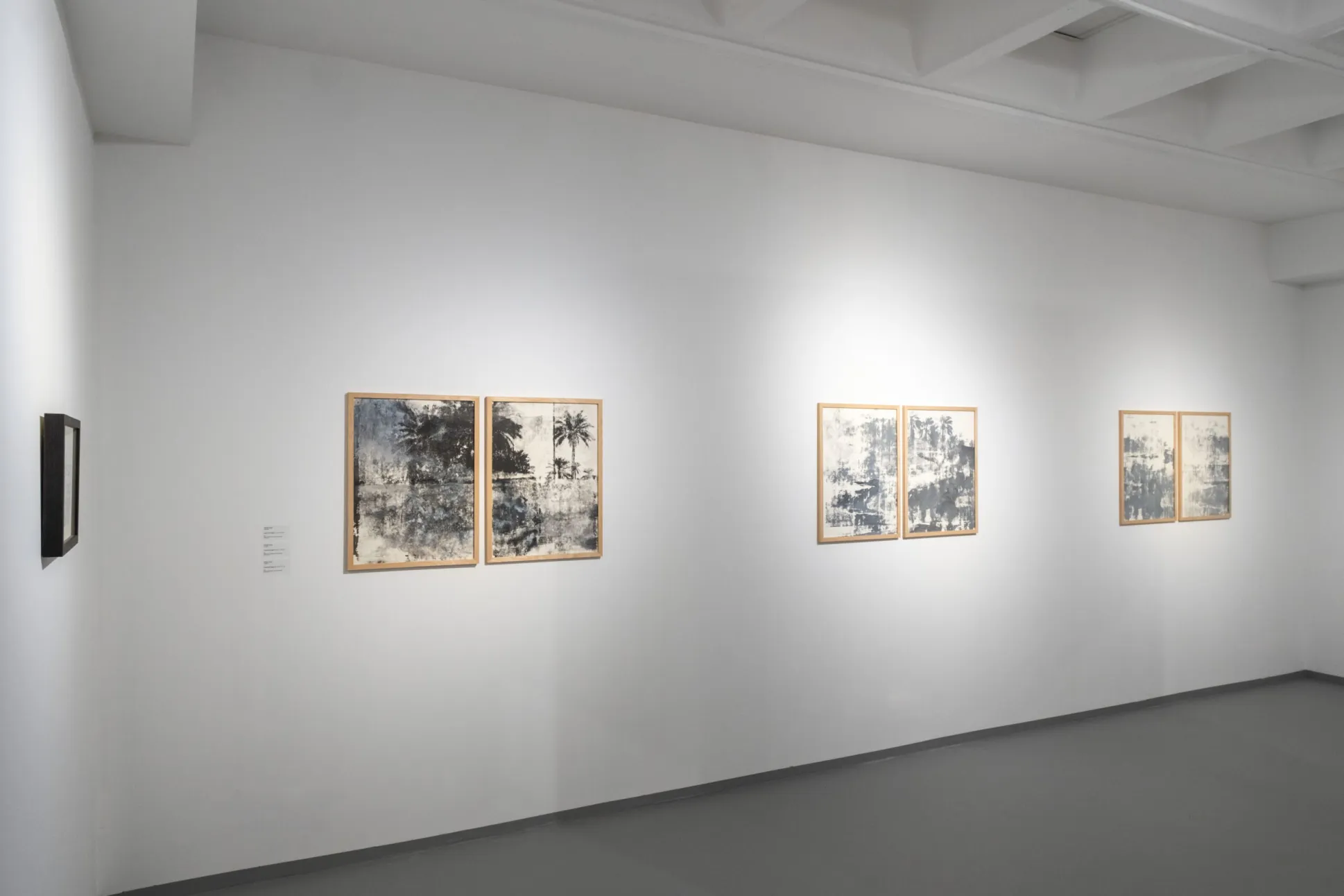
(Courtesy of Moza Almatrooshi, taken by cafeteria guests)
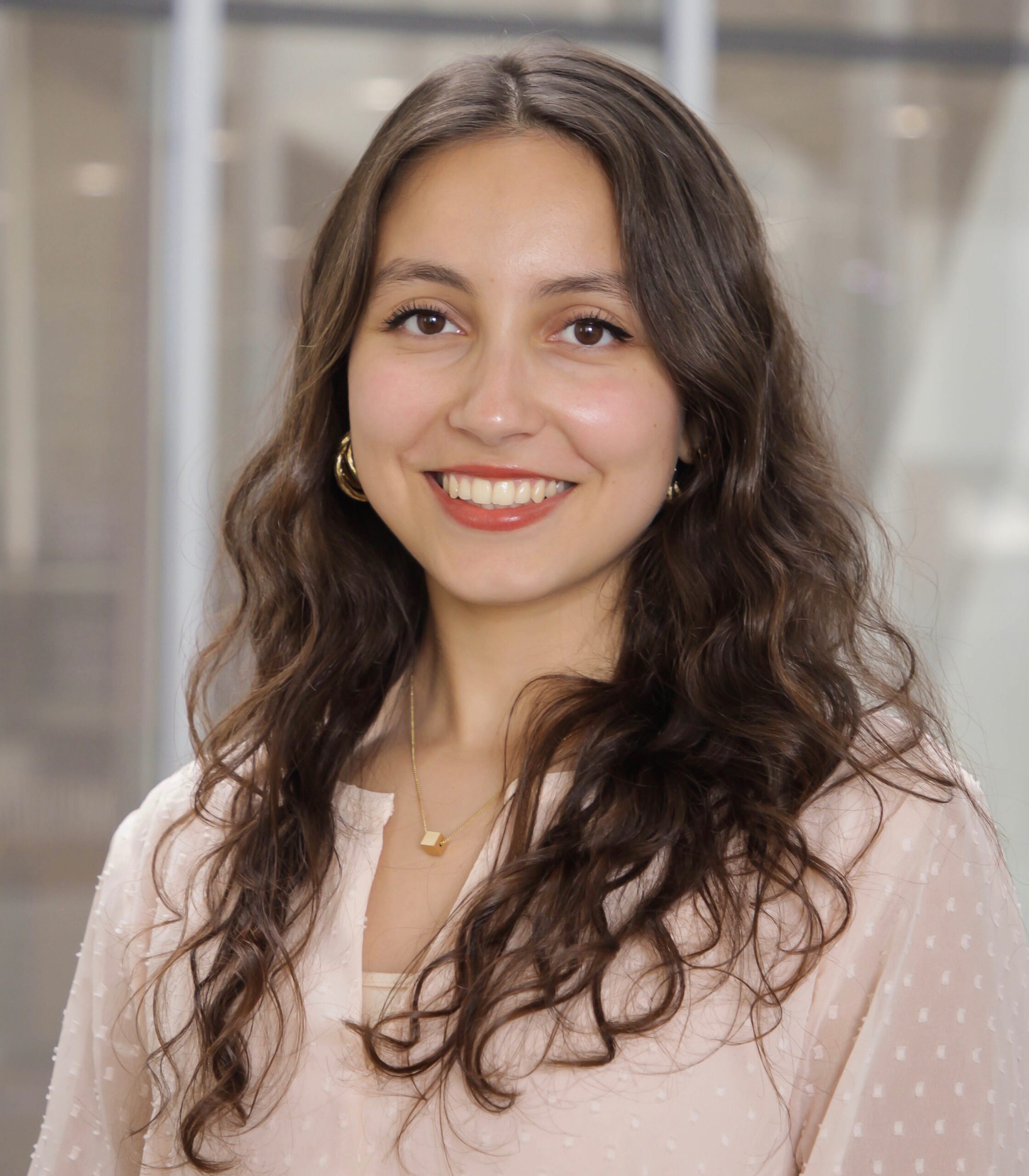
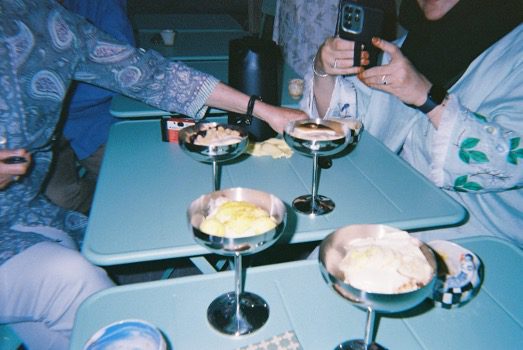
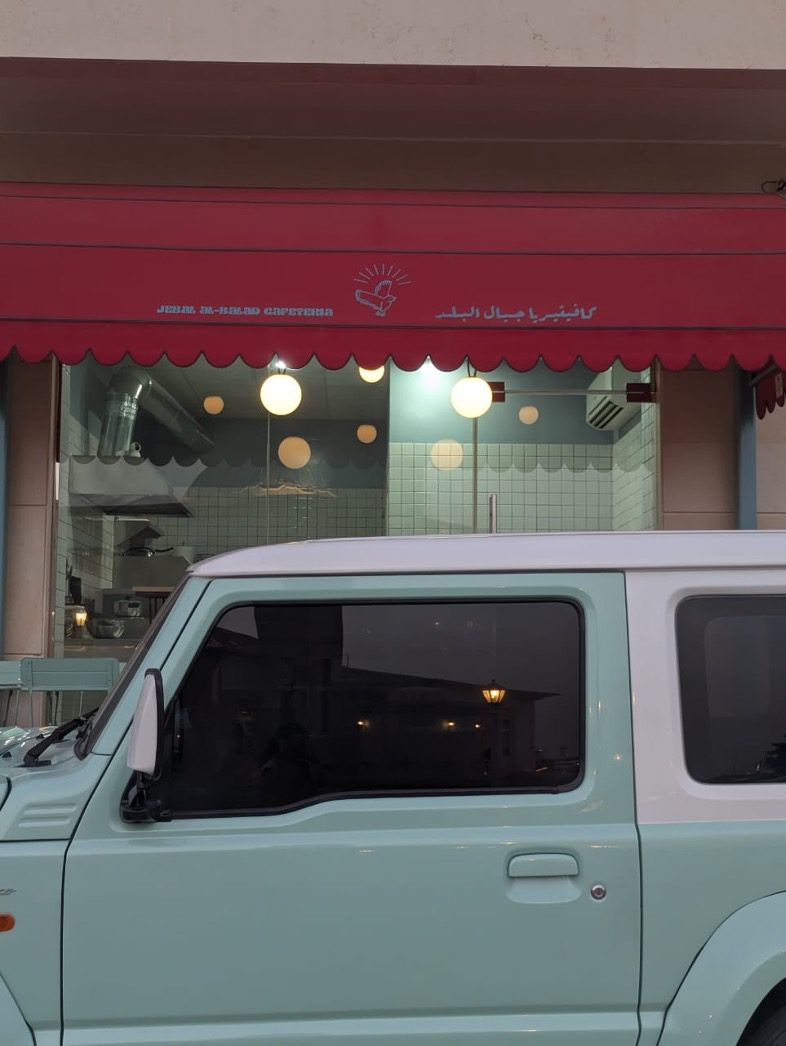
Nestled in a quiet market and mosque strip along Mleiha Road in Sharjah, a bright red awning invites passersby to discover an unexpected artistic and culinary feast. Moza Almatrooshi’s Jebal Albalad Cafeteria, colloquially known as ballad, functions as her artist’s studio, test and prep kitchen, and gathering space. It draws upon the archetype of a local cafeteria or casual street-side eatery. At ballad, Moza combines her culinary interests with her artistic curiosities centered around the landscape and storytelling. This summer, Moza opened her studio to dine-in guests through a series of weekend pop-ups with thoughtfully curated menus served in dishware made by local artists and artisans.
The inaugural season was themed around eggs to symbolize the conception of the project. Among the featured items on the menu were brown butter and meshawa, a traditional fermented fish sauce, omelet parathas, and “hamba bared,” a yogurt mousse of mango and citrus curd reminiscent of roadside cafeteria juices. The first ballad cafeteria season culminated in the cat-themed exhibition “Minor Events Involving Cats,” which showcased feline portraits by Emirati artist Mouza Al Hamrani. With strangers and friends alike popping in for artisanal bites and cat portrait commissions, ballad’s opening season captured a spirit of community and collaboration characteristic of the experimental, independent art initiatives in the region.
In a conversation with AGSI, Moza discussed how ballad encapsulates her ethos around landscape-to-table cooking, supplier-qua-collaborator relationships, and what visitors can expect in upcoming ballad seasons.
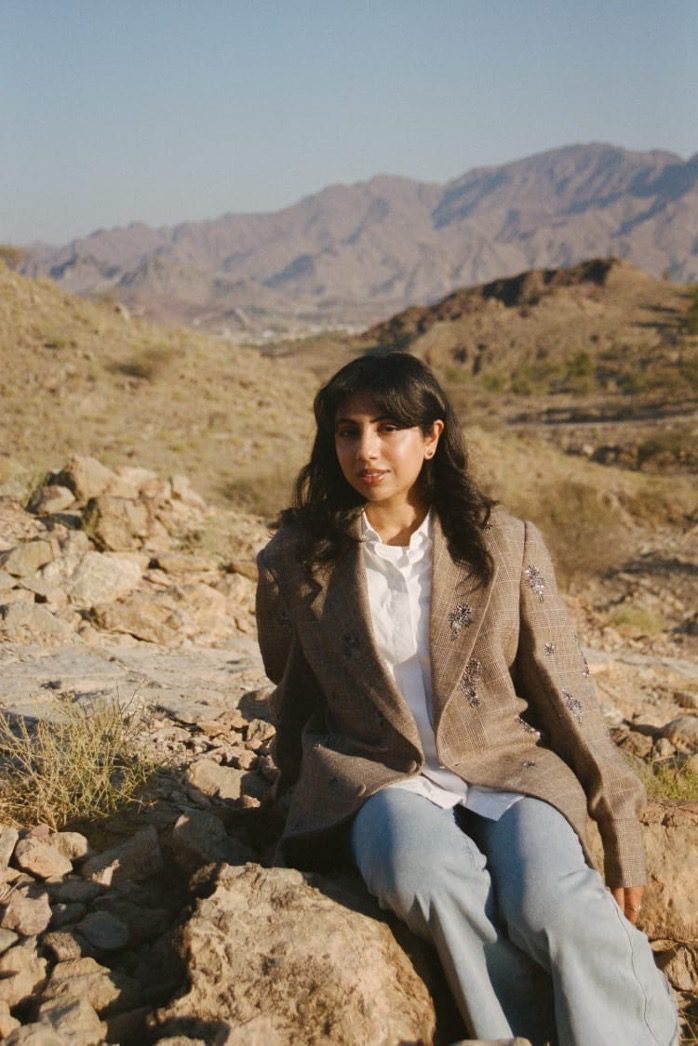
Moza Almatrooshi. (Photo by Arnold Barretto)
AGSI: Tell us a bit about your background and your journey as a chef and artist.
Moza: The arts came first. I did both my bachelor’s and master’s in fine arts. After graduating from my bachelor’s at Zayed University in Dubai, I participated in the Salama bint Hamdan Emerging Artists Fellowship program. Around that time, I started to focus more on the land and was thinking a lot about landscape changes and ephemerality. A lot of my peers at that time were reflecting on changes in urban environments, but I’m from Ajman where there was a relatively slower pace of changes that isn’t so stark. So, I started to focus on microchanges that were harder to clock, and I found those in the landscape, where the urban sprawl extends into the desert and beyond.
When I went to graduate school in the U.K., I could not access the landscape, so the stand in became food. I began to think about food in a geographical sense. For example, things like honey don’t necessarily have a geography, but we impose a geography on it. Seeds travel; fauna can move around unrestricted by borders. These things care more about climate, the environment, and where they can thrive rather than imposed lines or restrictions. In reflecting on that, I found that regional folklore and mythology ties into food well, and that storytelling can fill in a lot of gaps.
Jebal Albalad Cafeteria. (Courtesy of Moza Almatrooshi, taken by cafeteria guests)
AGSI: How did you translate your interest in food and ephemerality into an artistic practice?
Moza: I wanted to work with people who work with food, but I couldn’t match what I had in mind with someone else’s culinary practice. So, when I moved back to the UAE, I went into culinary school. I started working as a private chef and giving food tours with Frying Pan Adventures. I was trying to explore cooking for my art practice versus cooking in commercial spaces, all while making work about that and the landscape. Later I worked in a commercial kitchen as a chef. My artistic practice at that time really suffered, even though it felt like I was going to the studio every day cooking in those huge kitchens and discovering so much.
A few years into that, I decided that I needed to start something that combines both art and cuisine. I decided that, if I just named my studio and commercialized it, I could generate my own culinary projects connected to my arts practice. So, I quit my job and just leapt into creating a studio that basically looks at the land through those lenses.
AGSI: How did working in a large commercial kitchen inform your practice when you opened ballad?
Moza: I discovered that kitchens are a hard place to cultivate joy. Even though you are working with food, nourishment, and care, a lot of the time, cooks are quite unhappy. You are dealing with food and people’s safety, so sometimes the strictness of that takes precedence over the well-being of the people working there.
While I was working in that commercial kitchen, I made a point of using my vacation time to travel and learn. I went to a culinary school in Japan to learn about traditional Japanese dessert making before it got influenced by the West. I took a training course in a dessert bar in Bali. It was such an eye-opening experience. I saw in those environments the way that we talked about food and the way that teams were treated was very joyous. And I thought to myself, I need to cultivate an environment where I’m happy with what I’m doing, even if I’m stressed, and where the people working with me have agency.
(Courtesy of Moza Almatrooshi, taken by cafeteria guests)
AGSI: How do you relate the ingredients that you cook with to the final product that you’re preparing as “artwork”?
Moza: For the cafeteria, I’ve tried to treat this season like an art project, with a theme almost like an exhibition brief. The theme for this first season was eggs, which represent the beginning. It wasn’t like, “Come over, we’re gonna feed you the best omelet.” It was more about how we can incorporate eggs into the menu as a sort of discipline and medium. I used eggs that were local but that you could also access at the supermarket; the fruits that I used were seasonal; I used Mleiha Milk; and the coffee I used was from a small producer who’s very trusted and also has this traceability ethos running in his own business.
There were certain things I had to let go of. In the last collaboration of this season with Tariq Al Gurg from Rat Salad, I didn’t hound him about where he got the meat for his burgers because I wanted him to produce what he loves to produce. When we were talking about his ketchup, he brought this brand called Kimball, which you’ll find in any cafeteria. I would think, I need to produce ketchup now and in-house Japanese mayo, but then I didn’t want to take away the joy of his own expression of what a cafeteria burger is. So, we workshopped things together, and I had to resist the level of control and restriction that could come from trying to keep ingredients landscape focused and instead to focus on the joy of it. The landscape in this sense became the frame that surrounded us for the cafeteria.
(Courtesy of Moza Almatrooshi, taken by cafeteria guests)
AGSI: Can you elaborate on the relationship you developed with other invited chefs, creatives, and suppliers and their roles as collaborators in ballad?
Moza: I think my relationship with Palate Coffee as a beverage partner demonstrates the dream I have of how to work with people. Mohamed Alameeri, the owner, sources beans from particular places and roasts them based on his own ratios and knowledge; he’s got it down to a T. I met him through Ahmed Jalil, the guide who runs Frying Pan Adventures and who creates hikes with cultural experiences. He once did this hike, in partnership with Mohamed, where we learned how to prepare coffee for the outdoors. I stayed in touch with Mohamed, and I learned about his own frustrations with how he works as a supplier.
My first official meeting with him was more a training session on how to identify the flavor palette of different beans. I thought it would be such a shame to work with someone who is that passionate and reduce him to just a supplier. So, I brought him in for an event for which we co-created and workshopped coffee drinks. We saw that there was something more than me asking him for specific beans; it was rather a working relationship in which he’s not just my coffee supplier but my beverage partner.
And maybe that’s where I’m trying to land; a friendship in these partnerships is the highest currency. One of the things that I want to work on in the cafeteria is Friendship Kitchen, which would allow artists and chefs to come in and have as much agency as possible and just test things out. I think that would help us all to learn within the community itself, in real time.
AGSI: Is there an ingredient that has occupied your curiosity recently?
Moza: I missed rose season. I’m currently in Oman, but rose season ends around April. I want to get a bunch of fresh roses and ferment them and see what it’s like to do that.
(Courtesy of Moza Almatrooshi, taken by cafeteria guests)
AGSI: What does the next season of the cafeteria hold?
Moza: In September or October we are going to look at fermentation and culture, both symbolically and practically. There is a plan to launch Matbakh Cinema, which would allow us to create menus around films and create spaces for more workshops and gatherings.
With Eat the Landscape, there’s also a specific trajectory for this upcoming season. Ahmed and I found a family who for centuries produced pottery in Ras Al Khaimah, even before the union of the country. Ahmed met one of the family members serendipitously on one of his hikes. He is actually reviving the practice: pulling clay from the earth and practicing just like their forefathers, although there’s a knowledge gap because their own fathers and grandparents forgot. We decided to focus most of our Eat the Landscape routes for the upcoming season on the theme of clay, pottery, and the history of this family – to go to these sites, look at the historical kilns, and create menus around that. On the cafeteria side, we want to have a menu that reflects that all season long and perhaps also work with artists to create exhibitions and ceramic vessels for that menu.
The views represented herein are the author's or speaker's own and do not necessarily reflect the views of AGSI, its staff, or its board of directors.
Filipino migrants play important roles in the Emirati economy and culture, with Filipino cuisine particularly shaping everyday experiences for residents across the country.
Emirati artist Maitha Hamdan, featured in a UAE Embassy exhibition in DC situating women in the intimate space of the majlis, uses video performance to explore the more public social restrictions imposed on women.
The Diriyah Contemporary Art Biennale returned a third time with intergenerational dialogues that created a timeline of change, adaptation, and reflection in Saudi Arabia.
Contemporary commissions at the Islamic Arts Biennale 2025 highlight young creatives from the region and beyond underscoring community, care, and spirituality.
In Hunna Art’s new space, Bahraini multimedia artist Mashael Alsaie takes visitors on a journey through a metaphorical whirlpool, hoping to inspire a gentleness toward the environment.