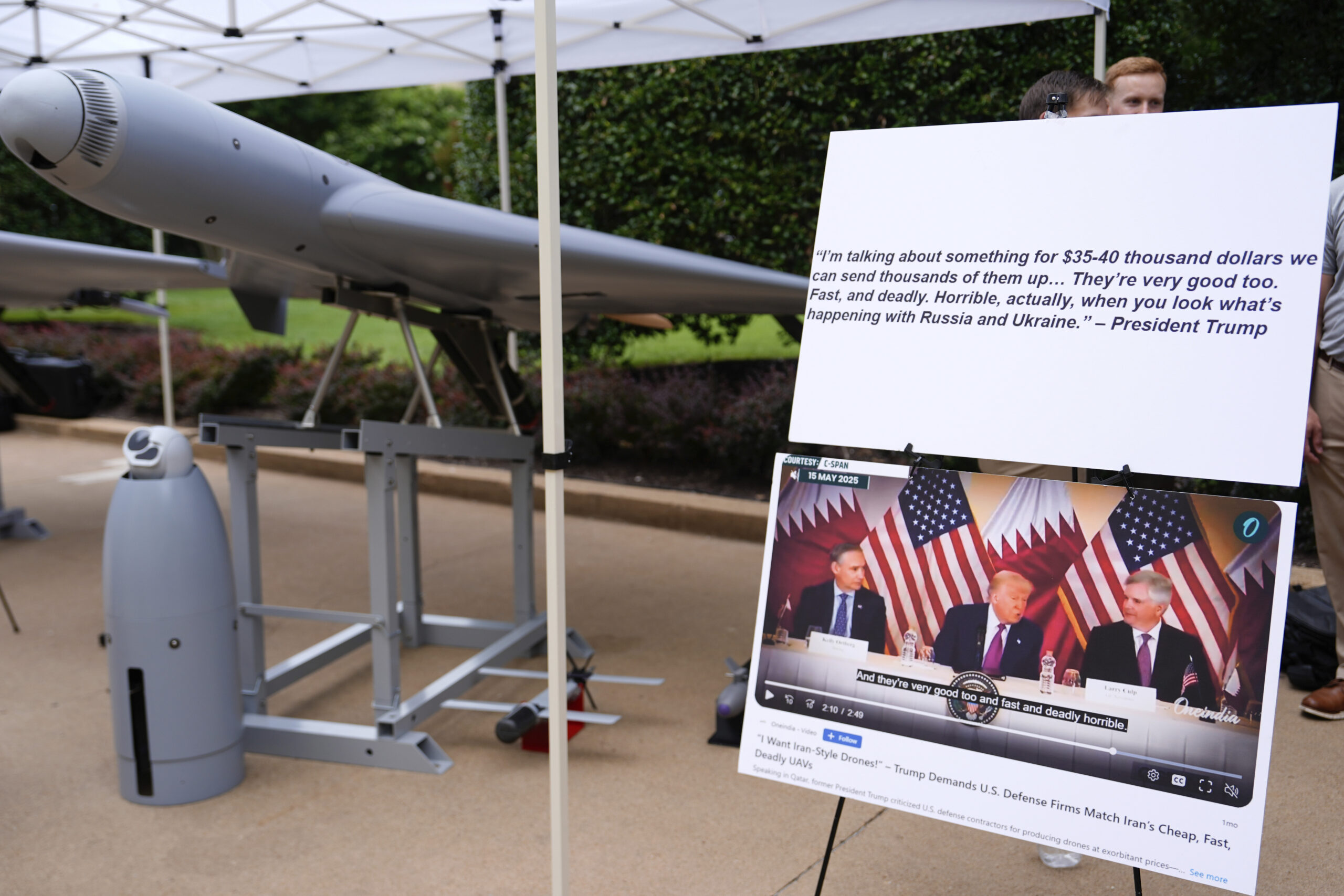
Drones are shown at a display of multidomain autonomous systems in the Pentagon courtyard, in Washington, July 16, 2025. (AP Photo/Julia Demaree Nikhinson)
The United States’ February 28 launch of Operation Epic Fury coordinated with Israel, more than a large-scale airstrike campaign on Iran, has been the first combat test of Washington’s emerging drone posture. What began in December 2025 with the establishment of Task Force Scorpion Strike, a dedicated one-way attack drone squadron under U.S. Central Command, has now transitioned to full operational employment.
The involvement of low-cost uncrewed attack systems in combat operations demonstrates that unmanned systems are no longer an adjunct capability but rather an integrated element of U.S. force projection in the region. Operation Epic Fury has served as an inflection point – a move from testing kamikaze-type drones to applying them under fire, in a theater increasingly defined by drone saturation and missile competition.
The Rationale and Economics of Drone Warfare
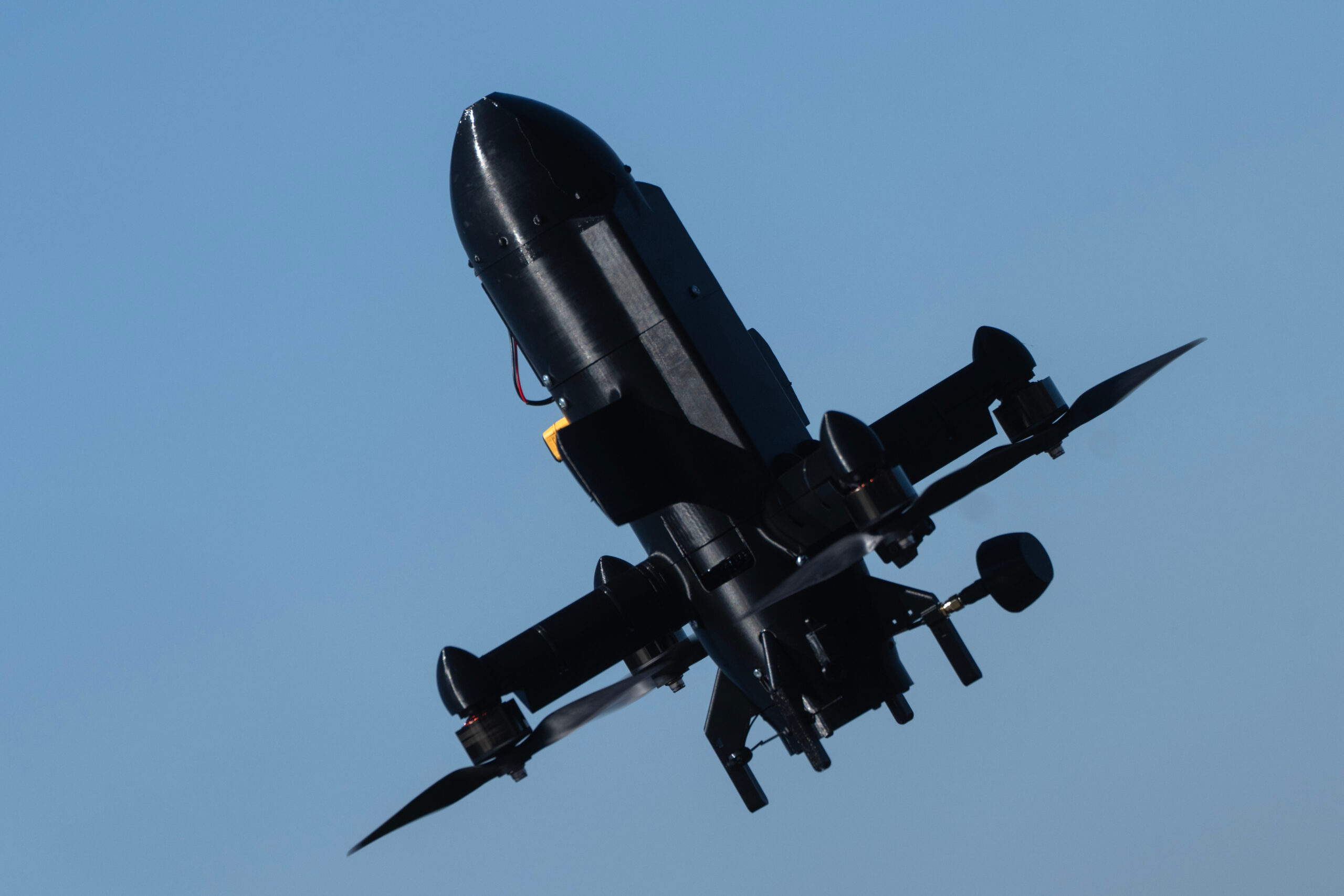
By design, one-way attack drones are fundamentally offensive strike weapons rather than defensive interceptors. They are comparatively simple, purpose-built platforms: They carry an explosive payload, fly toward a designated target, and detonate on impact. Within a coordinated strike package, their function is twofold: They inflict material damage on adversary infrastructure and assets, and they contribute to saturation.
Launched in large numbers alongside more precise and expensive munitions, these drones complicate an adversary’s defensive calculus. Air defense systems must decide what to intercept and in what order. Even relatively unsophisticated platforms can strain radar tracking, interceptor inventories, and engagement timelines. Used en masse, they are designed to stretch layered enemy defenses thin, create exploitable gaps, and increase the probability that higher-value strike assets reach their targets.
This push to accelerate the integration of lightweight drones into the U.S. air defense toolkit reflects a broader shift driven by the rapid expansion of drone warfare globally and Washington’s own lessons learned from the Houthi campaign targeting shipping in the Red Sea. The Houthi attacks exposed a structural imbalance: Cheap drones and missiles forced the United States to rely on high-end interceptors that cost millions per shot, quickly straining budgets and stockpiles. Sustained strike operations, such as the two-month Operation Rough Rider air campaign against the Houthis in 2025, which exceeded $1 billion in cost, further highlighted the limits of this model.
The gap is not only financial but also industrial. While missile inventories are finite and require significant time to replenish, one-way attack drones can be produced in large numbers and at a faster pace than missiles. The United States has begun to accelerate the development and deployment of systems that are affordable, scalable, and sufficiently lethal, focusing on defense by mass as much as precision.
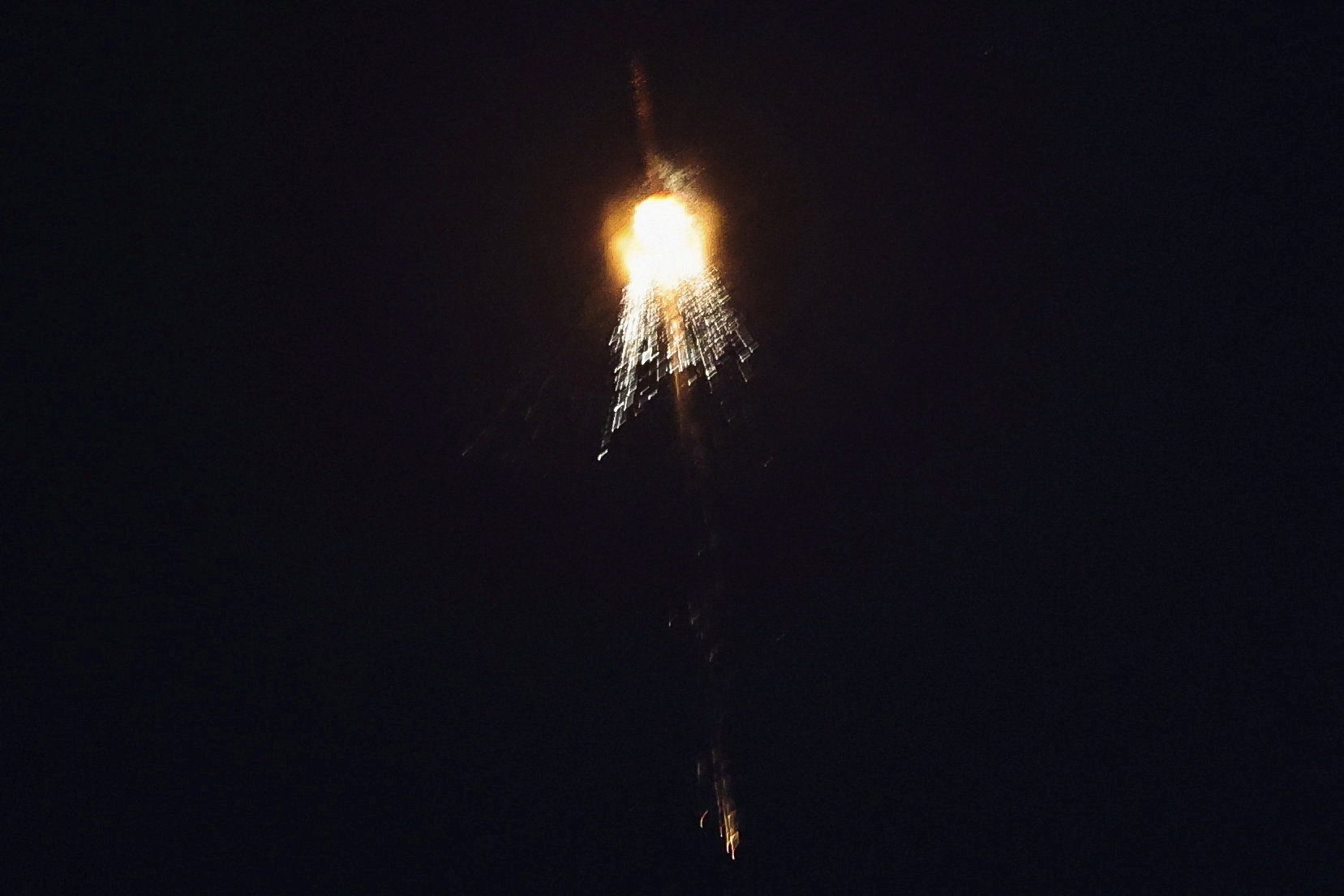
Since the start of Operation Epic Fury, hundreds of Iranian one-way attack drones have targeted U.S. military installations as well as critical energy and logistics infrastructure and urban areas across the Gulf. While U.S. and partner air defenses have maintained high interception rates, the challenge posed by these low-cost, unmanned aerial vehicles lies in volume.
Drone swarms place pressure on defensive systems. Their objective is less about immediate breakthrough and more about the erosion and saturation of air defense architectures over time – stretching defenses, depleting interceptors, and increasing the probability that some threats get through.
Building Unmanned-Based Architecture
The operational debut of low-cost drones in Operation Epic Fury was the culmination of years of groundwork, specialized unmanned units, structured experimentation, and increasingly integrated counterdrone exercises.
Task Force 59 was the first building block in the U.S. Navy’s shift toward unmanned operations in the region. Established in 2021 under the U.S. Navy’s 5th Fleet, it marked a structural change in Washington’s approach to presence and deterrence in the Middle East. Rather than relying solely on additional ships, the fleet began investing in unmanned systems and artificial intelligence as force multipliers.
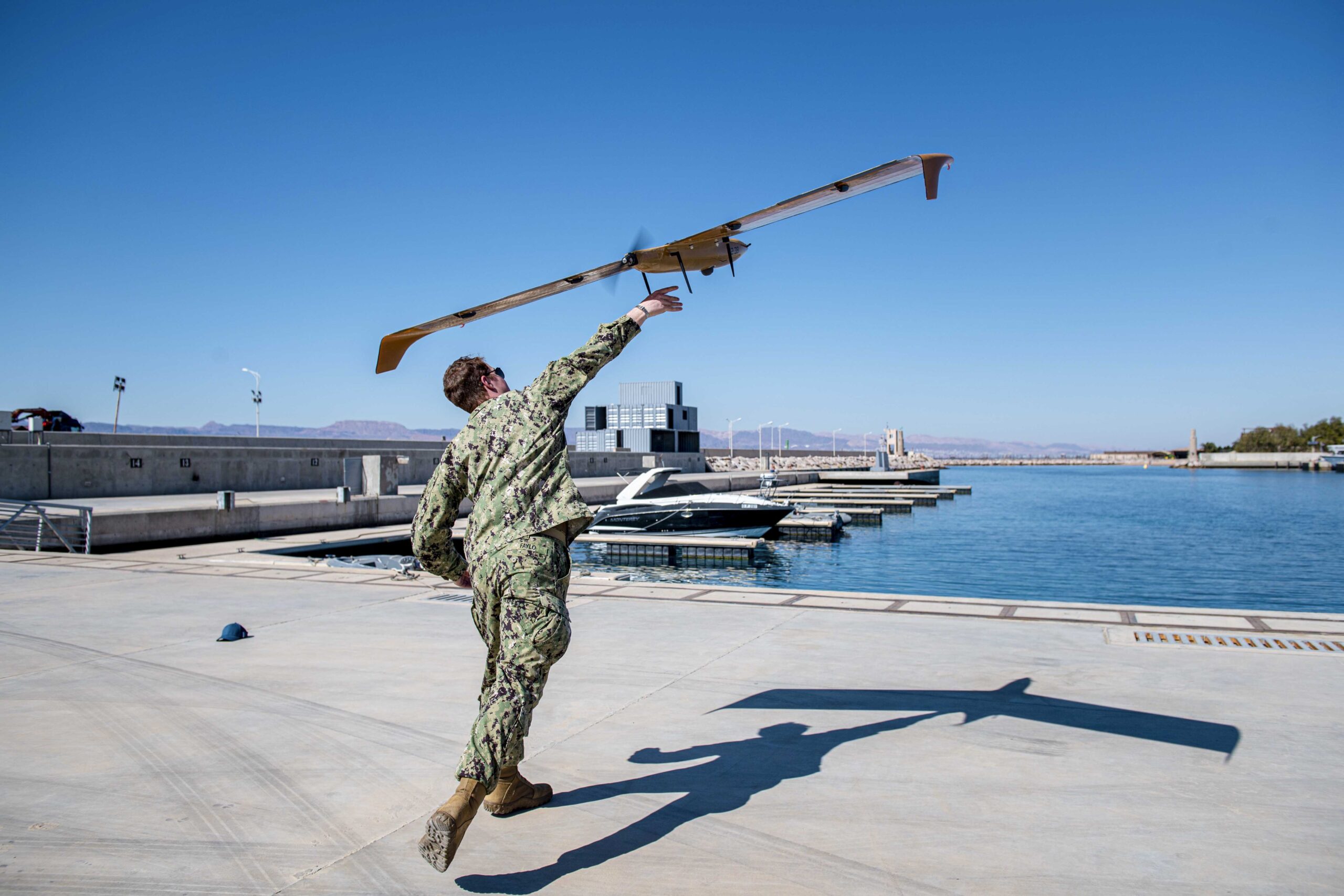
Headquartered in Bahrain, with an operational hub in Jordan, Task Force 59 was conceived as an innovation cell to address the challenge of covering a broad, contested maritime domain with limited manned assets. Its purpose is to enhance maritime domain awareness across the Gulf and adjacent waterways by deploying networks of unmanned surface, aerial, and subsurface platforms linked through AI-enabled data processing.
The logic is economy of force. By pushing sensors forward, above, on, and below the waterline, the task force seeks to expand surveillance coverage, shorten reaction time, and reduce risk to crewed vessels. Task Force 59 has become a testing ground for manned-unmanned teaming and a precursor to more structured drone formations within the fleet.
While Washington routinely conducts air defense exercises with Gulf Arab partners, the Red Sands exercise is the centerpiece of U.S. counterdrone efforts in the region. First launched in 2023 as an experimental initiative between Washington and Riyadh, by its fourth iteration in 2025 it had become the largest live-fire counterdrone exercise in the Middle East. The drill covers the full spectrum of counterdrone operations. It moves from early detection, enabled by layered radar and sensor networks, to integrated command-and-control systems that coordinate responses, and ultimately to a mix of kinetic and nonkinetic intercept options. A core objective is to stress test the different layers of air defense architectures under realistic conditions, including simulated drone swarm scenarios.
While primarily focused on the defensive dimension of drone warfare, Red Sands is also a valuable testing ground. It allows both sides to evaluate emerging unmanned technologies, refine interception tactics, and deepen operational interoperability between U.S. and Saudi forces.
Institutionalizing Drone Warfare
While Washington has long sought to integrate unmanned systems into its force posture, a marked acceleration began in 2025. During a business roundtable in Qatar, President Donald J. Trump announced, “We’re coming up with a new system of drones,” calling on defense companies to rapidly scale innovation and production for systems up to “$35,000, $40,000, where you send thousands of them.” Trump highlighted four main reasons for the U.S. push for unmanned capabilities: affordability, combat lethality, mass production, and swarm capability.
The call for a U.S. analogue to Iranian Shahed systems has been part of a broader push to accelerate the development of a competitive domestic drone sector. In a June 2025 executive order, the White House emphasized the commercialization and operational integration of drone technologies as pivotal to U.S. national security. This approach ranges from the trialing of low-cost expendable platforms to the deep integration of unmanned systems in operational environments, alongside the parallel development of a resilient U.S. manufacturing base, with a clear eye toward export-generated revenue and strategic market positioning.
Trump’s executive order was followed by a memorandum from Secretary of Defense Pete Hegseth a month later, calling for “drone dominance” through the streamlining of technological development and industrial production. The emerging U.S. drone doctrine rests on three mutually reinforcing pillars: the construction of a scalable military-industrial base capable of ensuring high-volume drone production; sustained support for a technological race in advanced unmanned systems; and the adaptation of training to the operational demands of contemporary drone-centric warfare.
Showcasing the rapid maturation of the U.S. low-cost drone ecosystem, 18 prototypes from different U.S. defense firms were displayed at the Pentagon in mid-July 2025. Several of these systems bore clear design similarities to Iranian platforms, suggesting elements of reverse engineering, particularly in relation to loitering munitions akin to the Shahed family.
While a mass fielding of such low-cost drone systems will likely require further validation through combat simulations and operational testing, their reliance on off-the-shelf components underscores a deliberate shift toward scalability and rapid production cycles, both central to the administration’s evolving drone approach.
From Testing to Combat
Shortly after Task Force Scorpion Strike was launched in early December 2025, the U.S. Navy moved quickly to operationalize new unmanned platforms. In a first-of-its-kind test, Task Force 59 conducted a trial of a one-way attack drone, modeled on the Iranian Shahed-136, launched from the flight deck of the USS Santa Barbara.
The test underscored the United States’ effort to integrate autonomous systems more deeply into its regional force posture. However, the scope appeared deliberately limited, with the test focusing on launch procedures and flight performance. More complex tasks, such as target identification and live strike execution, were not publicly demonstrated.
This does not suggest the system was unready, as platforms are hardly fielded into a contested operational theater without a significant degree of combat confidence. Rather, the exercise seemed designed to prove deployability and interoperability at sea while also sending a signal that Washington was prepared to field low-cost, scalable strike options in the Gulf.
This signaling phase, however, was short-lived. On February 28, as the United States launched Operation Epic Fury alongside Israel against Iranian military targets and senior regime figures, CENTCOM confirmed that Task Force Scorpion Strike had moved from demonstration to combat employment. The low-cost drones were used operationally to deliver what was described as “American-made retribution.”
Layered Air Power
The integration of low-cost drones into U.S. air-defense architecture is intended to address a structural imbalance: the heavy reliance on expensive missiles for sustained airstrikes. Yet these systems are not a substitute for conventional military power. Manned aircraft, missile-defense batteries, and ship-launched interceptors remain central to the U.S. offensive strike capabilities in the Gulf.
What is changing is the composition of air power. Task Force Scorpion Strike is part of a shift toward layered, scalable firepower, where affordable drones complement high-end assets and provide a sustainable firing solution against swarms. Looking ahead, the challenge will not be technological alone, but it will hinge on production capacity, stockpile depth, and the ability to institutionalize drone-centric doctrine without diluting conventional deterrence.
The views represented herein are the author's or speaker's own and do not necessarily reflect the views of AGSI, its staff, or its board of directors.
The war is demonstrating that missile defense can blunt Iran’s strategy – but only if the United States and its regional partners ensure that their defenses can keep pace with the scale and speed of future conflicts.
U.S. force projection in the Gulf is increasingly relying on artificial intelligence, unmanned platforms, and space technology, using these systems to augment existing military infrastructure.
With an aging and largely untested fleet, U.S. mine clearing operations can restore maritime access but only under favorable political and operational conditions.
NATO’s Operation Ocean Shield helped secure freedom of navigation in the Red Sea, but diplomatic fractures and naval constraints mean its success is unlikely to be repeated in the Strait of Hormuz.