The Southern Transitional Council is betting that if the South can be united under its leadership it can cordon the South off from the Houthis in the North, utilize oil and gas revenue, and create a stable and functioning state.
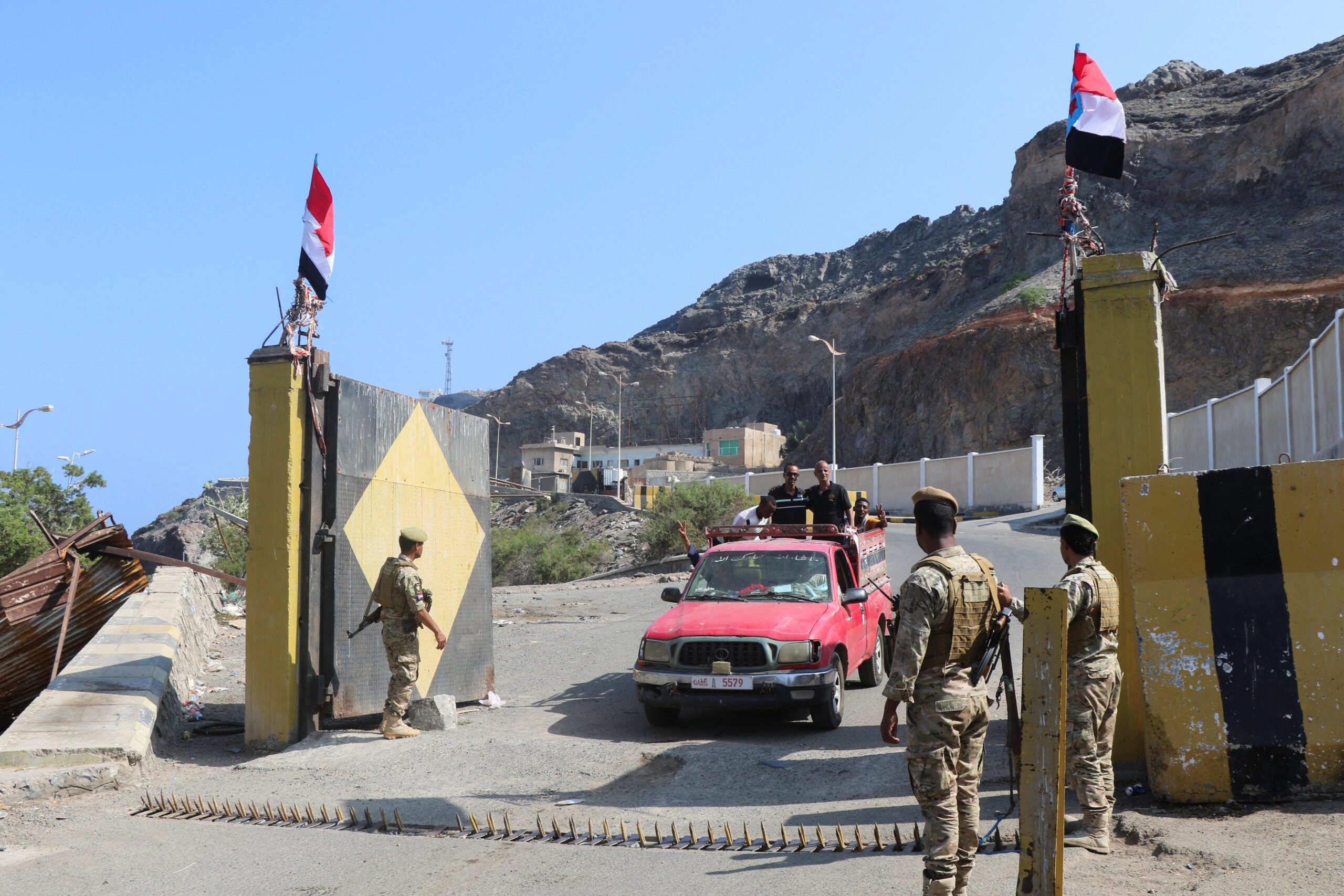
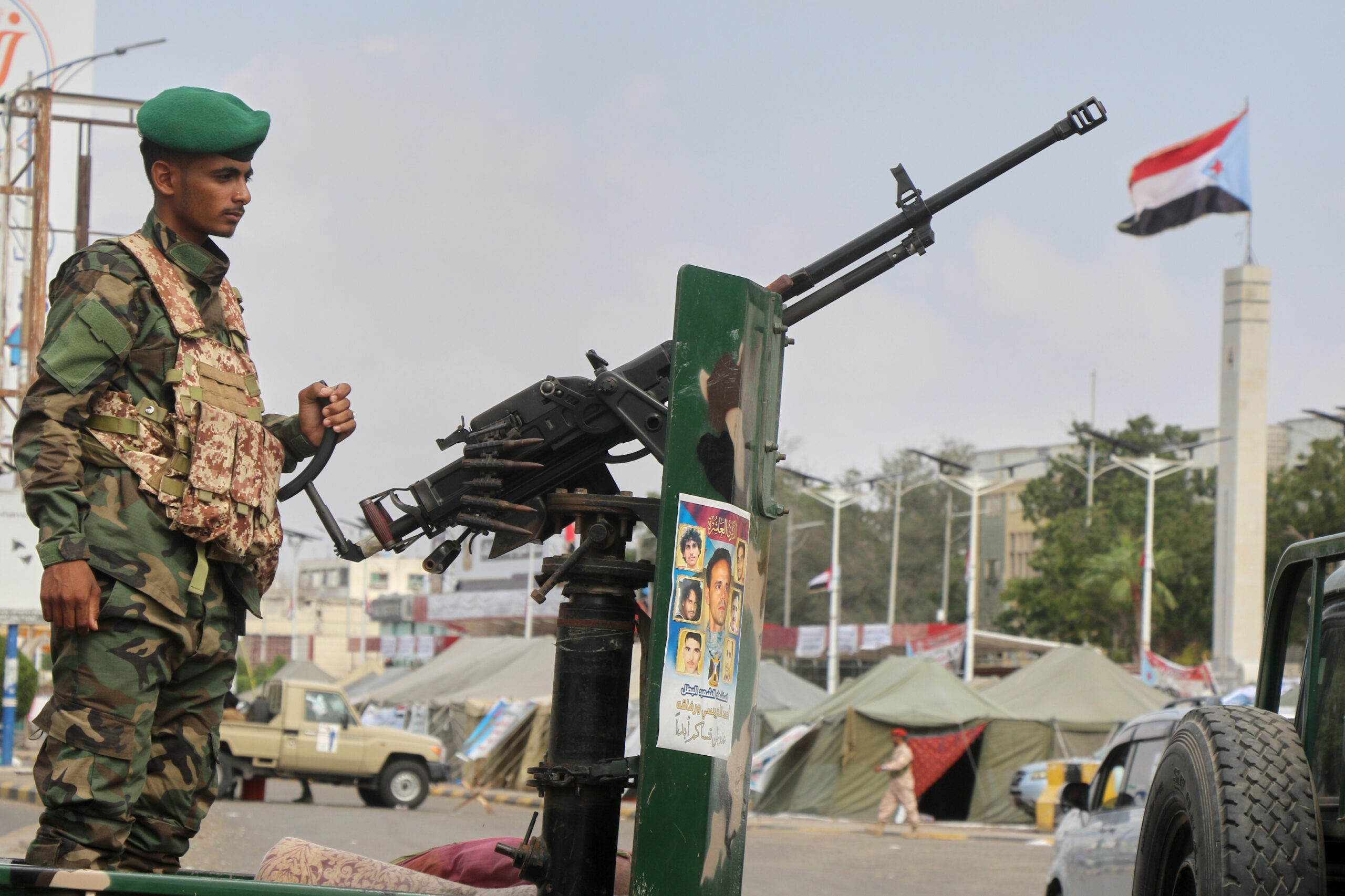
Soldiers loyal to Yemen's separatist Southern Transitional Council stand guard outside the compound of the presidential palace in Aden, Yemen December 9. (REUTERS/Fawaz Salman)
For the past 15 years, since the first fledgling protests of the Arab Spring sputtered to life in December 2010 and January 2011, Yemen has been falling apart, fracturing and collapsing in fits and starts. First came the fall. In 2012, Ali Abdullah Saleh, who had been in power since 1978, was forced out of power. Then came the coup in 2014 when the Houthis seized power in Sanaa. After that came the war, as Saudi Arabia and the United Arab Emirates led the charge against the Houthis in their attempts to restore the United Nations-recognized government. Nothing went as planned. Yemen’s currency collapsed, the banking system split, and a host of competing militias seized what territory they could.
Since 2022, Southern Yemen has been ruled by an odd amalgamation of interests through the Presidential Leadership Council, while in the North the Houthis have consolidated control over the highlands. The Presidential Leadership Council was never meant to be a long-term solution to Yemen’s many problems. Instead, it was designed to paper over a host of internal rivalries and reunify the anti-Houthi coalition as a single bloc. That hasn’t happened for two simple reasons – one internal and one external.
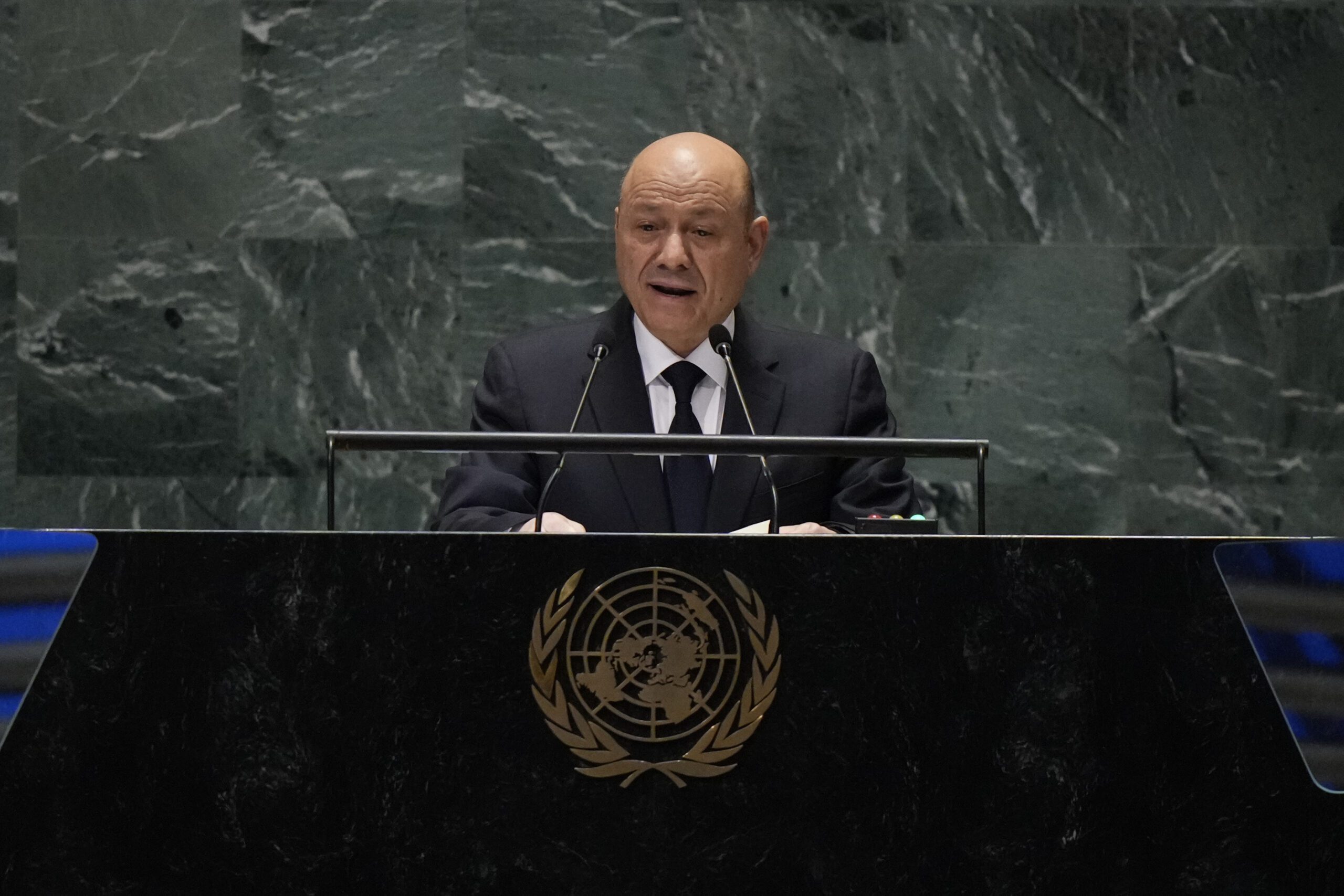
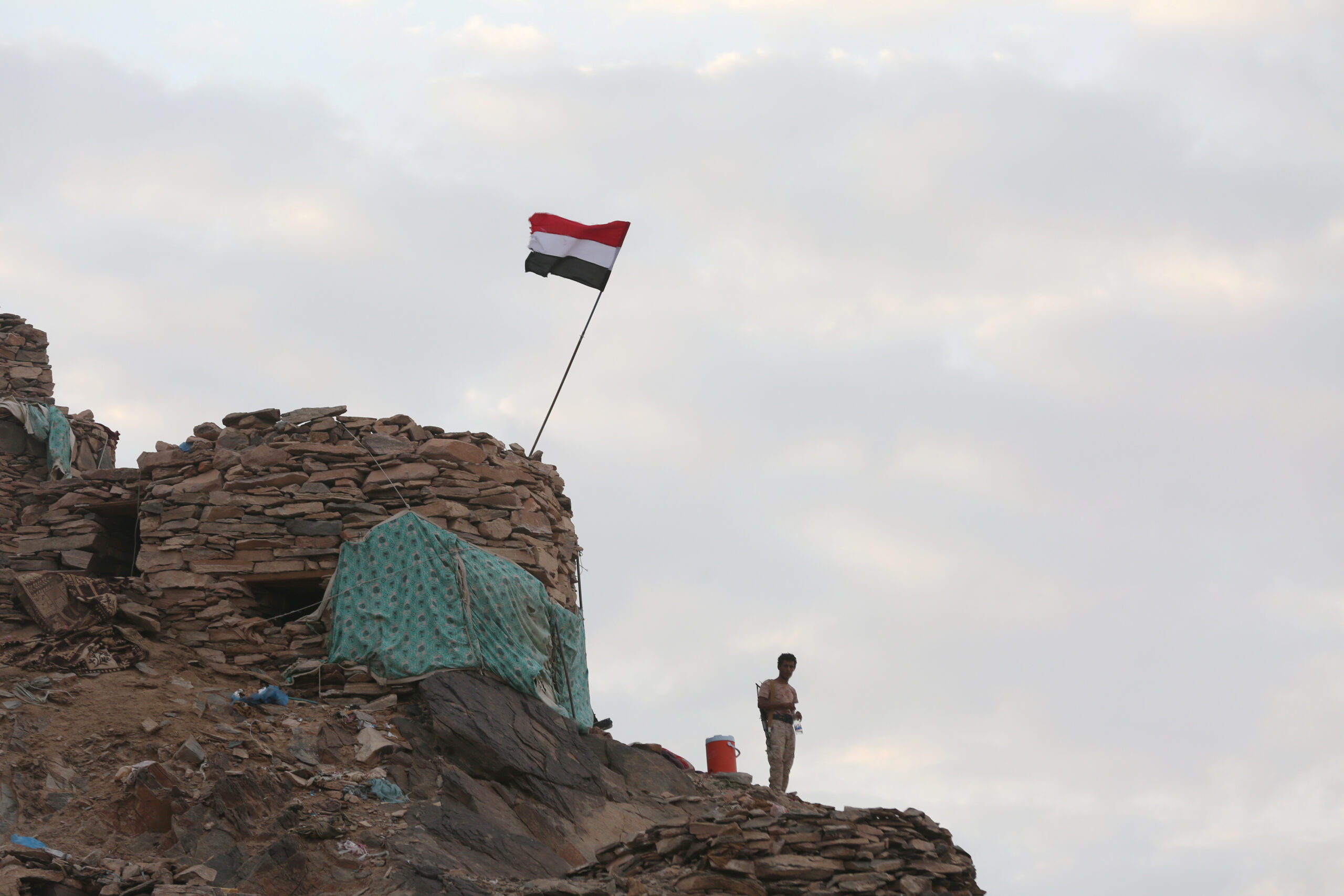
The Presidential Leadership Council is a Yemeni organization, but it was organized and built by Saudi Arabia and the UAE, each of which selected four members for the committee. The problem is that Saudi Arabia and the UAE don’t agree on what to do in Yemen and neither do their proxies. The head of the council, Rashad al-Alimi, who is backed by Saudi Arabia, favors reunifying the entire country, while Aidarous al-Zubaidi, one of the vice presidents on the council, wants an independent Southern state. Zubaidi is also the head of the Southern Transitional Council, which in recent days launched a major military operation in Hadramout and Mahra apparently as a first step toward seizing unilateral control of the South and, potentially, declaring independence. Southern Transitional Council forces took over military bases, check points, and oil fields, sometimes peacefully and sometimes after a short skirmish. Each time they did so, they replaced the Yemeni national flag with the Southern flag, clearly signaling their intentions.
Once again, there is both an internal and an external reason for the Southern Transitional Council’s offensive, which it has labeled “The Promising Future.” On the domestic front, the precipitating spark was a decision by Amr bin Habrish, Hadramout’s deputy governor and a commander of the Hadramout Tribal Alliance, to deploy troops around oil fields in an effort to secure more revenue. Bin Habrish, who is backed by Saudi Arabia, was quickly confronted by troops loyal to the Southern Transitional Council, who used his move as a pretext for military action. Southern Transitional Council troops, which are funded and armed by the UAE, then moved into Mahra, on the border with Oman, positioning themselves to take control over much of Southern Yemen.
At the same time, on December 5, Alimi abandoned the presidential palace in Aden and boarded a flight to Saudi Arabia. The Saudi troops that had been protecting him in Aden also withdrew, clearing the way for the Southern Transitional Council to take control of the presidential palace, the seat of political power in the South. By December 6, bin Habrish had also flown to Saudi Arabia. This meant that, on the ground in Yemen, the Southern Transitional Council held both the Southern capital of Aden as well as the South’s richest governorate – Hadramout. In parts of the South there are already demonstrations, demanding that the Southern Transitional Council declare independence.
However, as some commentators have pointed out, no matter the internal dynamics and jockeying in Yemen, it is unlikely the Southern Transitional Council would have launched an offensive aimed directly at Saudi-backed forces in Yemen without prior consultation with the UAE. It is no secret that Saudi Arabia is looking to extricate itself from Yemen, and the kingdom had been looking to make a deal with the Houthis brokered by Oman. The Southern Transitional Council takeover, at least in the short term, likely complicates those discussions.
What is unclear is whether Saudi proxy forces in Yemen will push back militarily against the Southern Transitional Council and, relatedly, whether it is prepared to declare an independent Southern state and disband the Presidential Leadership Council. Either of these possibilities could spark renewed fighting in the South, which could easily tip Yemen back into a renewed civil war.
Yemen has been broken for years. Saleh pillaged the South after the civil war in 1994, sowing some of the early seeds of state failure. Abd Rabbu Mansour Hadi, who succeeded Saleh in 2012, was largely inept, making decisions like splitting the central bank, which only made a bad situation worse. The Presidential Leadership Council is paralyzed by infighting and indecision. The Southern Transitional Council is betting that if the South can be united under a single leadership – its own, of course – it can cordon the South off from the Houthis in the North, utilize oil and gas revenue, and create a stable and functioning state. That is a tall order, and it will likely be contested both internally and externally.
The views represented herein are the author's or speaker's own and do not necessarily reflect the views of AGSI, its staff, or its board of directors.
Negotiations in Riyadh will determine whether the Presidential Leadership Council emerges as a functional governing body or dissolves into a symbol of Yemen’s enduring divisions.
To eliminate the Houthis' capabilities, the United States will need the support of Yemen's Presidential Leadership Council, a body plagued by infighting and incompetence.
Recent fighting in Shabwa highlights lack of unity of Yemen’s Presidential Leadership Council, threatening its ability to present a common front against the Houthis.
The Houthis’ decision to dip their toes into the conflict is a calculated choice based on military capacity, a blueprint, and the need for retaliatory pressure.