Kuwait is working to ensure its naval forces can protect its economic interests, uphold its sovereignty, and contribute meaningfully to multilateral security initiatives.
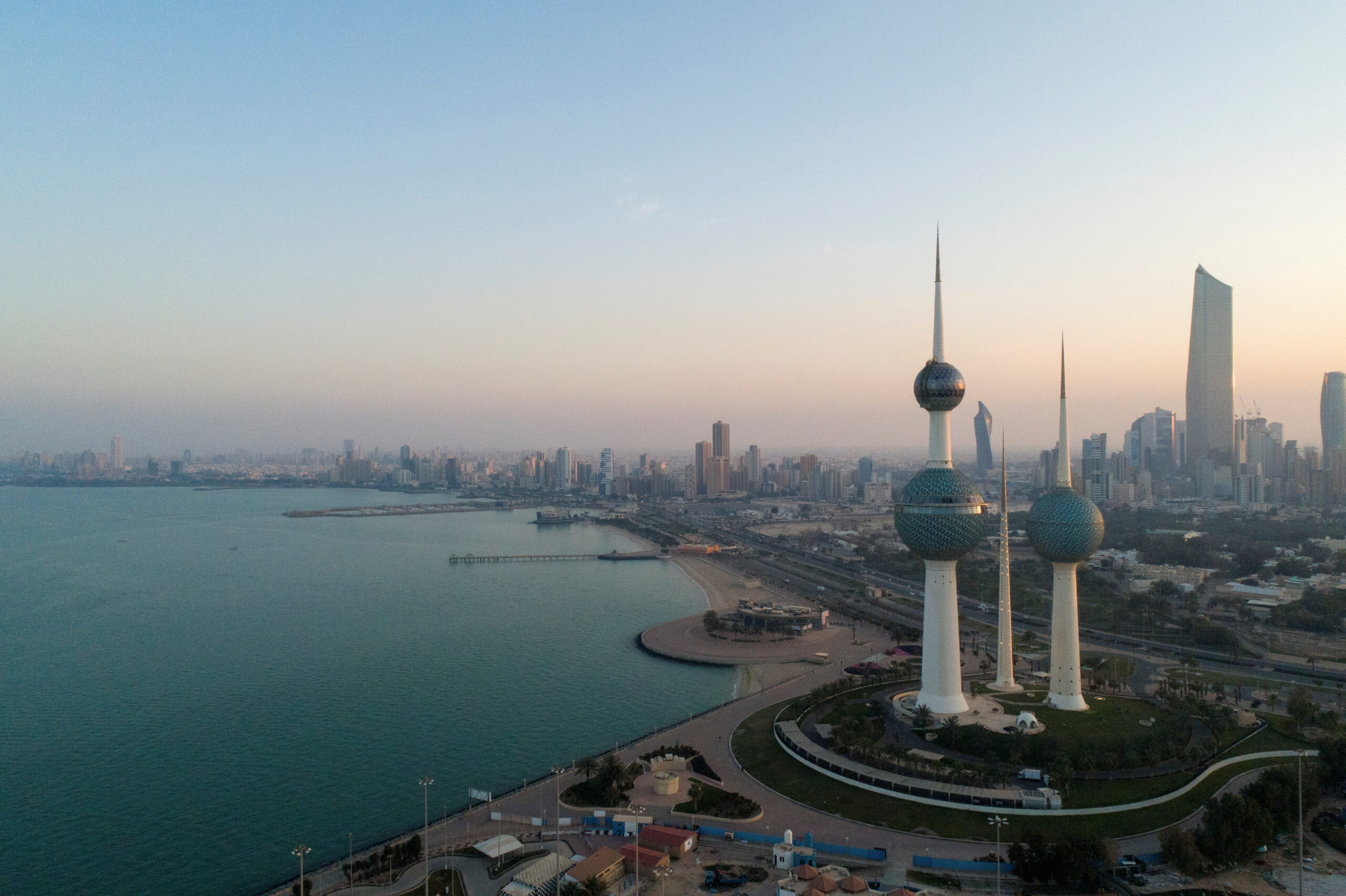
An aerial view shows Kuwait City, Kuwait, March 16, 2020. (REUTERS/Stephanie McGehee)
On July 2, the Kuwaiti coast guard successfully conducted live demonstration exercises for two NeedleFish uncrewed surface vessels, the latest milestone in a multiyear effort to revamp the country’s maritime security capabilities. This deployment, following a series of high-profile acquisitions and modernization deals, underscores Kuwait’s ambition to transform its modest coastal forces into a technologically sophisticated, regionally relevant naval actor.
Maritime Modernization Drive
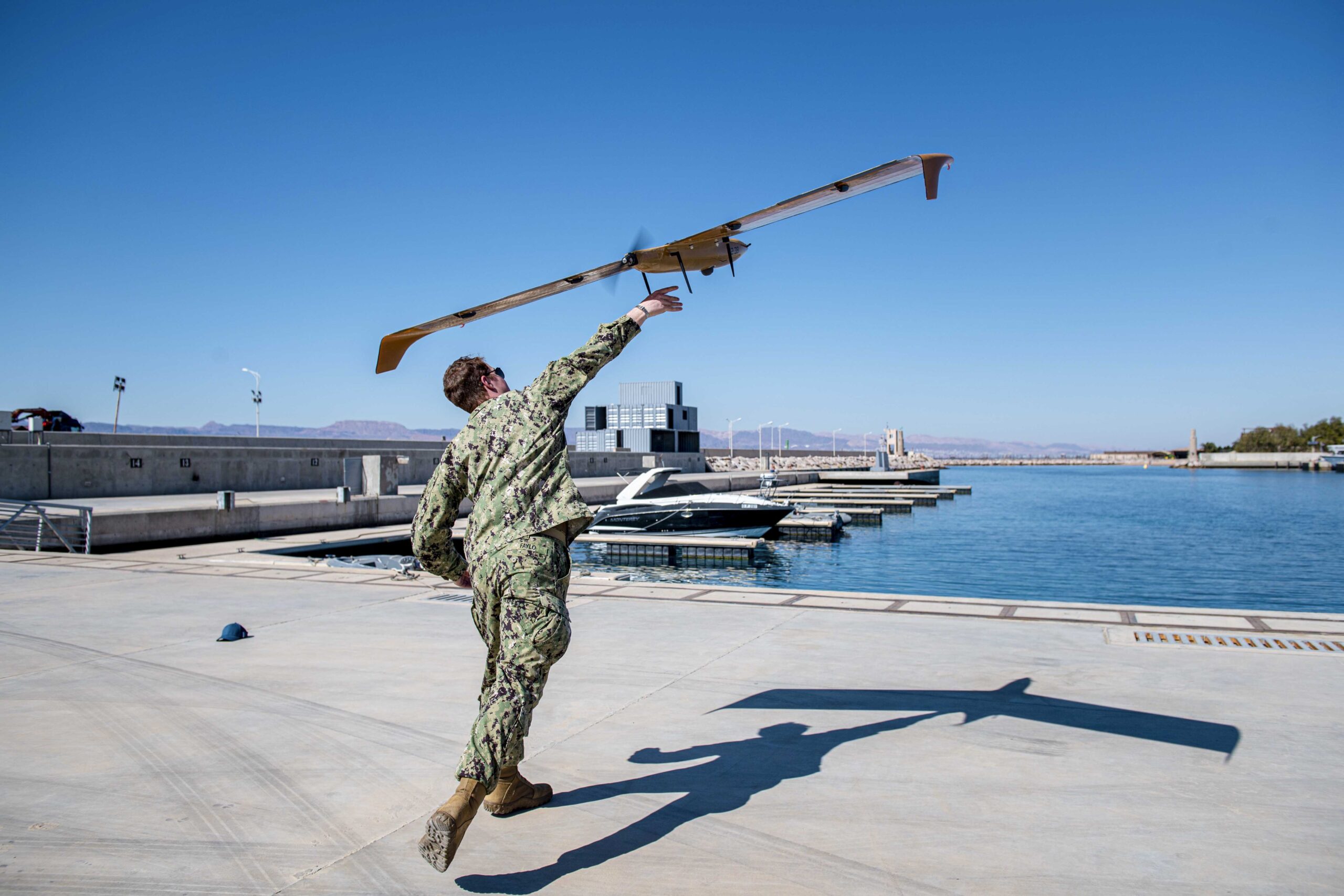
Just three weeks after its initial testing, the Kuwaiti coast guard deployed the NeedleFish during a joint drill with the U.S. Navy, signaling its commitment to integrating the drone boat into routine maritime security operations. Developed by the Texas-based marine robotics company Ocean Infinity, the 46-foot, dual-hull naval drone leverages high maneuverability, record speed, and advanced sensor suites to perform a broad range of maritime security roles, with a particular focus on intelligence, surveillance, and reconnaissance missions.
While integral to Kuwait’s broader efforts to improve the combat readiness and operational efficiency of its coastal and naval forces, the NeedleFish is only one of multiple key pillars in the country’s maritime power overhaul.
The cornerstone of this modernization drive is a $213 million contract signed in October 2024 between the Ministry of Interior and the United Kingdom-based SRT Marine Systems to deliver an advanced radar system. Operational since 2005, Kuwait’s current radar architecture is increasingly ill-suited to meet contemporary maritime requirements. Leveraging artificial intelligence-driven analytics, a distributed network of modern sensors, and advanced data-integration technologies, the SRT C5ISR system will markedly enhance maritime surveillance and support intelligence-led operational planning and response.
The deal also includes the construction of 12 radar towers, delivery of a naval surveillance aircraft, and establishment of onshore command centers, enabling the Kuwaiti coast guard to detect, monitor, and respond to any activity below, on, and above its over 40,000 square miles of territorial waters. With the first truck-mounted command unit delivered in February, the new maritime surveillance system is slated to reach full operational capability by mid-2026.
Kuwait has also made significant strides in modernizing its aging fleet. The centerpiece of this effort is a $2.45 billion deal signed in June between the Kuwaiti Ministry of Defense and Emirati defense conglomerate EDGE for eight 200-foot FALAJ-3 patrol vessels.
Developed by the Abu Dhabi Shipbuilding Company, an EDGE subsidiary specialized in naval assets, the FALAJ-3 is an offshore patrol vessel designed to operate in both coastal and blue waters. Equipped with a broad array of armaments, from missiles to medium-caliber guns and decoy launchers, it is capable of operating in air, surface, and subsurface warfare scenarios. The United Arab Emirates ordered four of these vessels in 2021, at a hefty $238 million estimated price tag per ship, with the first ship of the class commissioned in January.
Kuwait has likely ordered the FALAJ-3 to gradually replace its aging Um Al Maradim-class patrol vessels, which have been in service since the late 1990s. The FALAJ-3 is a substantial leap forward, including an extended operational range (up to 2,000 nautical miles at 16 knots), advanced command-and-control and navigation suites, and modern multidomain weapon systems.
However, these superior capabilities are tempered by two structural constraints: personnel gaps and sustained training demands. With a complement of 39 personnel, the FALAJ-3 needs a larger crew than its predecessor, which operated with 24. Given Kuwait’s endemic naval personnel shortages, fully crewing fleets remains a challenge.
Moreover, introducing advanced ships means incorporating highly complex combat management systems, multidomain sensors, and sophisticated propulsion technologies. Crews often require years of training to master them, alongside adjustments to military doctrine to effectively employ these capabilities.
While the FALAJ-3 procurement contract expands Kuwait’s fleet of surface combatants, it also reinforces defense relations with the UAE. This partnership is not new, as Kuwait purchased eight landing ships from Abu Dhabi Shipbuilding Company in 2013. In December 2024, the Kuwaiti coast guard announced a $146 million contract with the UAE for retrofitting and upgrading more than 20 of its patrol boats. Over half of the batch is undergoing maintenance, repair, and overhaul at Abu Dhabi shipyards. Focused on engine replacement, sensor and weapon modernization, and hull repairs, the two-year retrofit program is likely to extend each boat’s service life by six to eight years.
Defense Planning Realignment
Kuwait’s recent procurement deals are part of a broader shift in the country’s defense planning, laid out in the Ministry of Defense’s “Strategic Plan 2025-2030.”
Launched in May, the strategy underscores a growing determination to adapt to contemporary challenges by laying the foundations for a more resilient and integrated national defense ecosystem. The plan provides a structured blueprint to elevate the operational performance and defensive capabilities of Kuwait’s armed forces. It highlights the importance of deepening defense partnerships to strengthen Kuwait’s external security ties while simultaneously investing in human capital through enhanced training, military education, and professional development. Other priorities include relocating the Ali Al-Sabah Military Academy to a more modern facility, opening to investment to develop the local military-industrial base, and disposing of aging military equipment.
Coalition Anchors, Broader Ties
Despite the limited size and constrained expeditionary capacity of its naval forces, Kuwait stands out as an active player in regional waters. To cultivate security partnerships and enhance interoperability, Kuwait participates in the Combined Maritime Forces, a U.S.-led 46-country naval coalition. Notably, Kuwait is not alone in this effort: Saudi Arabia and Bahrain have also increased their contributions in recent years, with Riyadh recently assuming its fourth command of Task Force 150 since 2018.
Since the establishment of the Combined Maritime Forces’ Task Force 152 in 2004 to bolster maritime cooperation in the Gulf waters, Kuwait has taken command for nine rotations. During its present command, Kuwait has spearheaded multiple naval exercises, including search and rescue operations, countersmuggling drills, safety of life at sea missions, and patrol and reassurance activities. The consistent participation of Gulf Cooperation Council states in these exercises has reinforced Kuwait’s leadership profile, deepened information sharing among Gulf states, and sharpened tactical interoperability for challenging operational scenarios. Kuwait is also the only GCC state to have made a substantive operational contribution to the smaller-scale Combined Maritime Forces’ Task Force 151, assuming command of counterpiracy operations three times between 2018 and 2020.
Kuwait has also sought to strengthen its operational capabilities through minilateral and bilateral exercises. Since 2017, it has regularly taken part in a series of trilateral maritime exercises with the U.S. 5th Fleet and the Iraqi navy. Held at least once per year, these naval drills aim to foster interoperability among participating countries and enhance key naval competencies, including search-and-rescue techniques, ship boarding procedures, gunnery training, and formation sailing. Side activities, such as liaison exchanges, significantly contribute to building personal connections among sailors and familiarizing them with each other’s command protocols and decision-making processes, thereby reinforcing trust and teamwork.
The continuation of the trilateral naval exercise even amid renewed Kuwait-Iraq tensions over the Khor Abdullah border dispute in 2023 illustrates the value of this minilateral format as a platform for maintaining dialogue and managing frictions between the neighboring countries. It also reinforces Washington’s role as Kuwait’s partner of choice in maritime security, a point underscored by talks in August between the Kuwaiti coast guard chief, Commodore Mubarak Ali al-Sabah, and commander of the U.S. Central Command, Admiral Brad Cooper.
Despite Washington’s predominance, Kuwait has worked to diversify its security partners, focusing particularly on those with advanced military assets and strong maritime expertise to enhance specific naval capabilities. For instance, exercises with France target mine clearing and explosive disposal divers. Training with the U.K. centers on marine infantry operations, with potential expansion into sea mine countermeasures. And drills with Pakistan address counterpiracy, antismuggling, and other illicit activities. Most recently, after a six-year hiatus, Kuwait has also resumed bilateral naval exercises with Egypt.
Kuwait’s diversification of security partners and broad focus of maritime engagements reflect its commitment to a balanced, multilateral approach to regional security and ambition to maintain operational relevance despite limited naval capacity.
Dialogue Amid Tensions
Since the 1960s, Kuwait and Iran have been embroiled in a maritime demarcation dispute over the Dorra or Arash offshore gas field in the northern Gulf waters. Kuwait and Saudi Arabia assert exclusive rights to exploit the field’s estimated almost 8 trillion cubic feet of natural gas reserves, while Iran also maintains sovereignty claims over the resource-rich area.
Tensions increased in early 2022 after Saudi Arabia and Kuwait signed an agreement to jointly develop the gas field. Iran opposed the deal and announced its intention to begin drilling operations in the contested area. Ultimately, tensions eased amid broader regional de-escalation efforts between Gulf Arab states and Iran.
Despite the border demarcation issue remaining technically unresolved, and Tehran’s periodic announcements regarding drilling, Kuwait and Iran have capitalized on the recent easing of tensions to explore mutual maritime interests, particularly the maintenance of open sea trade routes and freedom of navigation. Notably, in April 2024, senior coast guard officials from both countries met to discuss enhancing cooperation in search-and-rescue operations, counterpiracy measures, and joint efforts to combat drug smuggling.
Protecting Coastal Assets
While fleet expansion and modernization programs underscore Kuwait’s efforts to strengthen its naval defense capabilities, they also serve pragmatic goals, namely, safeguarding its economic interests at sea and diversifying the Kuwaiti economy.
Kuwait’s oil production is heavily concentrated onshore, which significantly reduces the vulnerability of its upstream infrastructure to seaborne threats. Yet, it strongly relies on coastal refineries and export terminals to process and ship petroleum products. Most of Kuwait’s key hubs, including Mina al-Ahmadi and Shuaiba, are clustered along the southern coast, leaving the country’s export infrastructure exposed to potential maritime disruption and asymmetric threats in the Gulf.
Similar to its neighbors and in alignment with Kuwait Vision 2035, the country is also investing in logistics and trade corridors to diversify its economy, attract foreign investment, and expand local employment opportunities. Chief among these initiatives is the Mubarak Al-Kabeer port project.
First launched in 2011, the port construction has progressed intermittently. However, since 2019, Kuwait has signed multiple agreements with China to complete the port, which Beijing conceives as a strategic component of its Belt and Road Initiative. Recently, a contract for study, design, and project planning services has injected renewed momentum into the initiative, and on-site work began in March.
Strategically located on the eastern side of Boubyan Island, near Kuwait’s northern maritime border with Iraq, the port’s development has historically been a source of tensions with Baghdad, which is building its own logistics and trade hub, the Al-Faw Grand port, on the opposite shore.
Upon completion, expected by 2026, the port is projected to feature 24 berths and handle an estimated annual container throughput of 8.1 million twenty-foot equivalent units, thereby strengthening Kuwait’s standing as a regional transshipment hub. Additionally, the development plan includes the establishment of free trade zones, industrial parks, residential and commercial areas, and tourist facilities and marinas.
With Kuwait’s economic lifelines – from traditional oil revenue to emerging trade hubs – hinging on secure maritime routes and resilient coastal infrastructure, developing a capable and modern naval force has become pivotal to safeguarding national security and economic interests. As the Gulf’s maritime environment grows more contested – shaped by regional disputes, evolving trade corridors, and emerging asymmetric threats – Kuwait’s modernization drive reflects both pragmatism and ambition, ensuring its naval forces can protect economic interests, uphold sovereignty, and contribute meaningfully to multilateral security initiatives.
The views represented herein are the author's or speaker's own and do not necessarily reflect the views of AGSI, its staff, or its board of directors.
As the Gaza war and campaign of Houthi attacks targeting commercial shipping have prompted the United States to strengthen its military footprint regionally, the U.S.-led Task Force 154 aims to enhance interforce interoperability.
Qatar’s naval expansion will give it new amphibious, air defense, and anti-ship capabilities, but the country will face challenges to fully man its naval platforms exclusively with Qataris, given the country’s small population.
U.S. force projection in the Gulf is increasingly relying on artificial intelligence, unmanned platforms, and space technology, using these systems to augment existing military infrastructure.
With an aging and largely untested fleet, U.S. mine clearing operations can restore maritime access but only under favorable political and operational conditions.
NATO’s Operation Ocean Shield helped secure freedom of navigation in the Red Sea, but diplomatic fractures and naval constraints mean its success is unlikely to be repeated in the Strait of Hormuz.