Oil Price War Tests Saudi-Russian Investment Cooperation
The collapse of the OPEC+ production agreement and the ensuing oil price war place pressure on joint investment initiatives spearheaded by Saudi and Russian sovereign wealth funds.
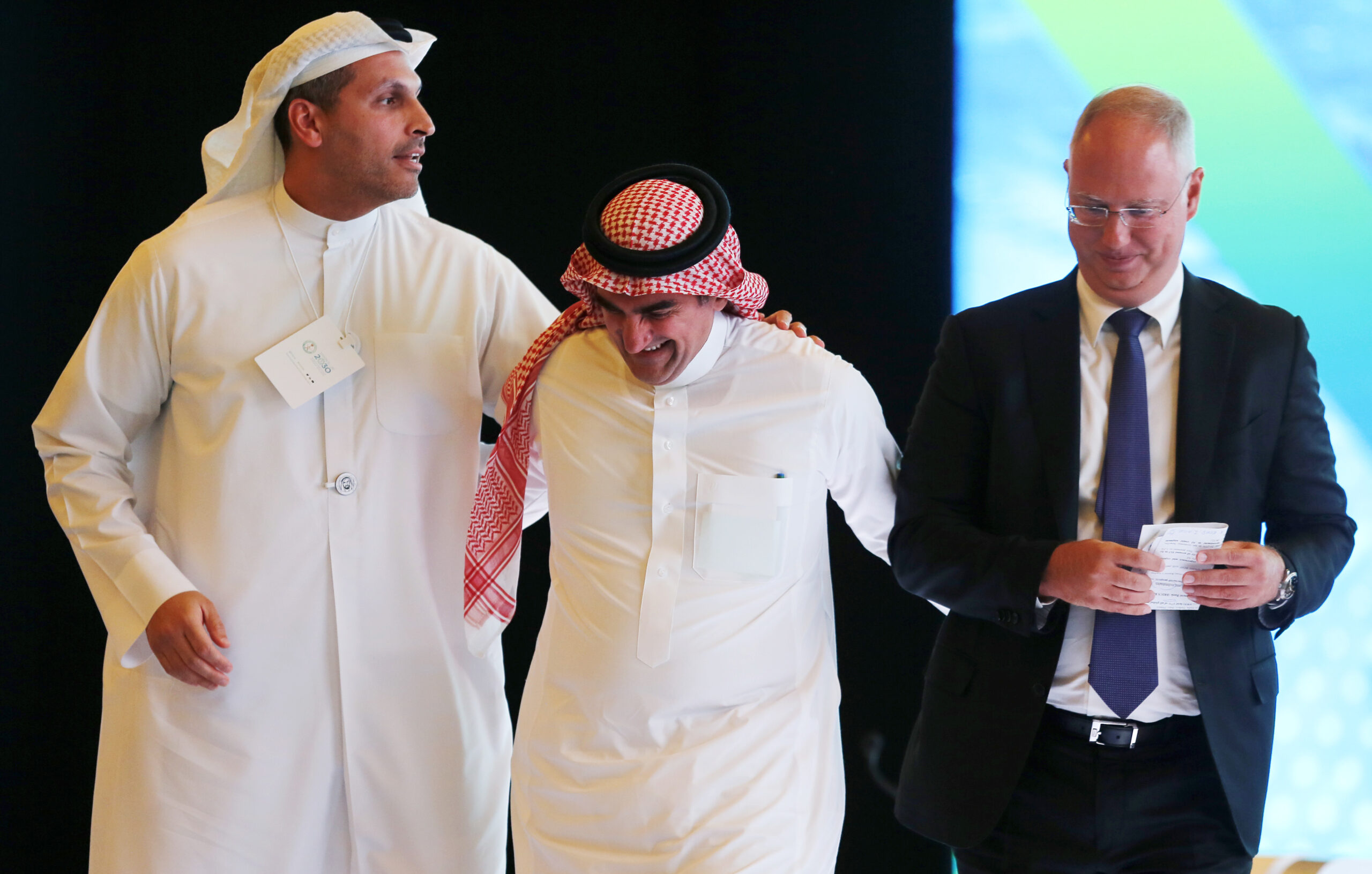
(From right to left) Kirill Dmitriev, CEO of the Russian Direct Investment Fund, Yasir al-Rumayyan, chief of Saudi Arabia's Public Investment Fund, and Khaldoon Khalifa al-Mubarak, CEO of Mubadala, leave after speaking at the Future Investment Initiative conference, Riyadh, Saudi Arabia, Oct. 23, 2018. (AP Photo/Amr Nabil)
Saudi Arabia and Russia launched a risky oil price war after the collapse of a supply deal among major oil-producing countries. Energy-related tensions between the two countries will likely impact an interrelated sphere: sovereign wealth fund-linked investment collaboration. The acute divergence on oil production cooperation contrasts with developing ties between Saudi and Russian sovereign wealth funds, which appeared to be strengthening throughout 2019 and are deeply intertwined with energy markets.
The Russian Direct Investment Fund, the country’s sovereign wealth fund, announced the opening of its first foreign office in Saudi Arabia just days before Russian President Vladimir Putin’s state visit to Saudi Arabia in mid-October 2019. According to Kirill Dmitriev, CEO of the RDIF, the Russian investment institution’s new office in Saudi Arabia would “elevate our partnership to new levels and speaks highly for our mutual trust.” A Saudi-Russian CEO Forum in Riyadh on October 14 likewise led to a flurry of commercial agreements and memorandums of understanding between the RDIF, the Public Investment Fund, Saudi Aramco, and Russian companies.
Sovereign wealth funds in both Saudi Arabia and Russia depend on hydrocarbon revenue for investment capital, but these investment vehicles also serve as financial buffers for governments. Plummeting oil prices and emergency spending needs related to the global coronavirus outbreak have increased the importance of cash reserves held by governments. Indeed, sovereign wealth funds in oil-producing countries are on track to sell an estimated $225 billion in equities to minimize losses stemming from the coronavirus outbreak and oil price war.
Saudi and Russian sovereign wealth funds play a central role in economic policymaking. The PIF, a Saudi sovereign wealth fund with an estimated $320 billion in assets, seeks to be both a “global investment powerhouse” and the primary catalyst behind the country’s planned economic transformation. The Russian National Wealth Fund possesses approximately $151 billion in assets, which Russian officials intend to use to offset the economic impact of low oil prices. The fund also financed a $39 billion purchase of Sberbank, Russia’s largest lender, from the country’s central bank.
It is the RDIF, however, that serves as a primary facilitator of foreign capital into Russia. Created in 2011, the sovereign wealth fund manages $10 billion of reserved capital and claims responsibility for 90% of direct investment into Russia, of which 60% involves technology-focused projects. The RDIF’s CEO, Dmitriev, served as one of Russia’s key negotiators alongside the energy minister during previous discussions about the OPEC pact. Dmitriev’s dual role reflects the energy investment nexus upon which many aspects of Saudi-Russian commercial relations hinge.
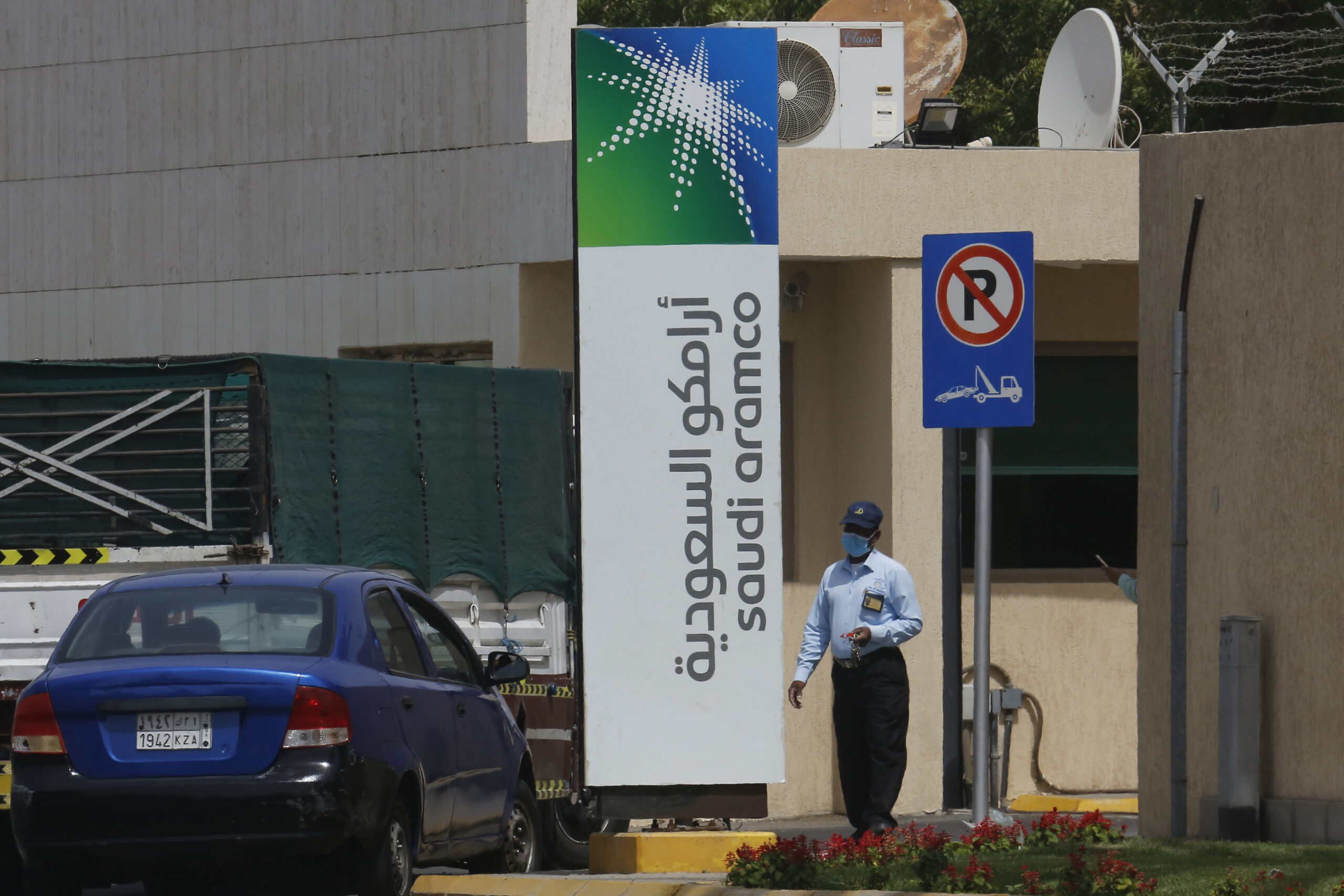
In 2017, the PIF and RDIF established a Russian-Saudi Energy Investment platform in partnership with Saudi Aramco. The first major deal to emerge from this energy-focused platform involved a share purchase agreement between the PIF, RDIF, Saudi Aramco, and Rusnano to acquire Rusnano’s 30.76% share in Novomet, a Russian services firm. The RDIF, SABIC, and ESN Group, a Russian private equity group, also agreed to build a methanol plant in Russia’s eastern region of Amur under a separate arrangement.
Softer forms of investment cooperation on energy issues exist. The RDIF attempted to organize a consortium of investors during the initial public offering of Saudi Aramco. The RDIF’s Dmitriev suggested that Russian pension funds and major Chinese institutions were interested in participating in the IPO, but little materialized from these efforts. This positioning nevertheless sought to cast Russian officials and commercial entities as facilitators of Gulf-bound foreign investment.
The PIF and RDIF formally began their partnership in July 2015, when the PIF committed to investing $10 billion across various sectors. By May 2017, the two sovereign wealth funds had created the Russia-Saudi Investment Fund with a reported $6 billion in committed capital. The joint fund prioritizes six sectors: food and agriculture, consumer goods and services, healthcare, pharmaceuticals, innovation and technology, and infrastructure.
The partnership between the RDIF and the PIF extends to broader economic strategies and programs, permitting Russian commercial entities to play a visible role in Saudi Arabia’s ongoing economic transformation. The RDIF features prominently in the PIF’s program for 2018-20 as one of six initiatives to develop international strategic partnerships. The other international partners include Softbank, Uber, Blackstone, French private equity firms, and the Jordanian Investment Fund.
Russia’s sovereign wealth fund has established similar linkages within the United Arab Emirates and, to a lesser extent, other Gulf Arab states. The RDIF and Mubadala, one of Abu Dhabi’s sovereign wealth funds, launched a joint investment platform in 2013. The platform oversees around 45 investments with an aggregate value exceeding $2 billion. The RDIF and Mubadala have explored the development of a new $2.8 billion pulp mill in northwestern Russia and agreed to a partnership with NtechLab, the leading Russian face recognition technologies developer. In 2016, the RDIF and DP World established DP World Russia, a joint venture project intended to develop Russia’s Northern Sea Route.
The Kuwait Investment Authority served as an early investor in the RDIF, having allocated $500 million to the Russian fund in 2012. The RDIF also signed a memorandum of understanding in 2014 with Mumtalakat, Bahrain’s sovereign wealth fund, and Mumtalakat made a reported $250 million investment in RDIF in 2016. The Qatar Investment Authority and the RDIF jointly invested $500 million by early 2017, and Qatar pledged an additional $2 billion. Most of these relationships resemble “automatic partnerships,” in which the Gulf sovereign wealth funds make some level of investment in each RDIF deal.
Joint Saudi-Russian investment initiatives remain a small segment of Gulf sovereign wealth fund portfolios. Yet through a calculated engagement with these institutional drivers of Gulf Arab economies, Russia has become increasingly embedded in the Gulf’s economic development initiatives and global expansion plans. Sustained fallout from the oil price war may reshape the contours of this investment cooperation. Under a newly constrained investment environment, owing in large part to the economic consequences of the oil price war, it is unlikely that either Saudi Arabia or Russia will prioritize bilateral investment partnerships as the first order of business.
The views represented herein are the author's or speaker's own and do not necessarily reflect the views of AGSI, its staff, or its board of directors.
Saudi Arabia’s decision to proceed with plans to ramp up its oil production capacity despite collapsing demand during a global health crisis may seem rash. But is it?
Russia may be able to withstand more pain from the collapse in oil prices than other producers, but cooperation in global energy markets is only one pillar of Russian-Gulf ties.
France is positioning to be a more influential actor across the Middle East, but the European powerhouse is most likely to see immediate traction on the economic tracks that run to and from the Gulf.