The Gulf’s Green Rush: Financing the Future, or Just Repainting It?
The Gulf is defying global trends and investing in sustainable-labeled projects, and if those labels translate to real guidelines, the region could become a global benchmark for transition finance.
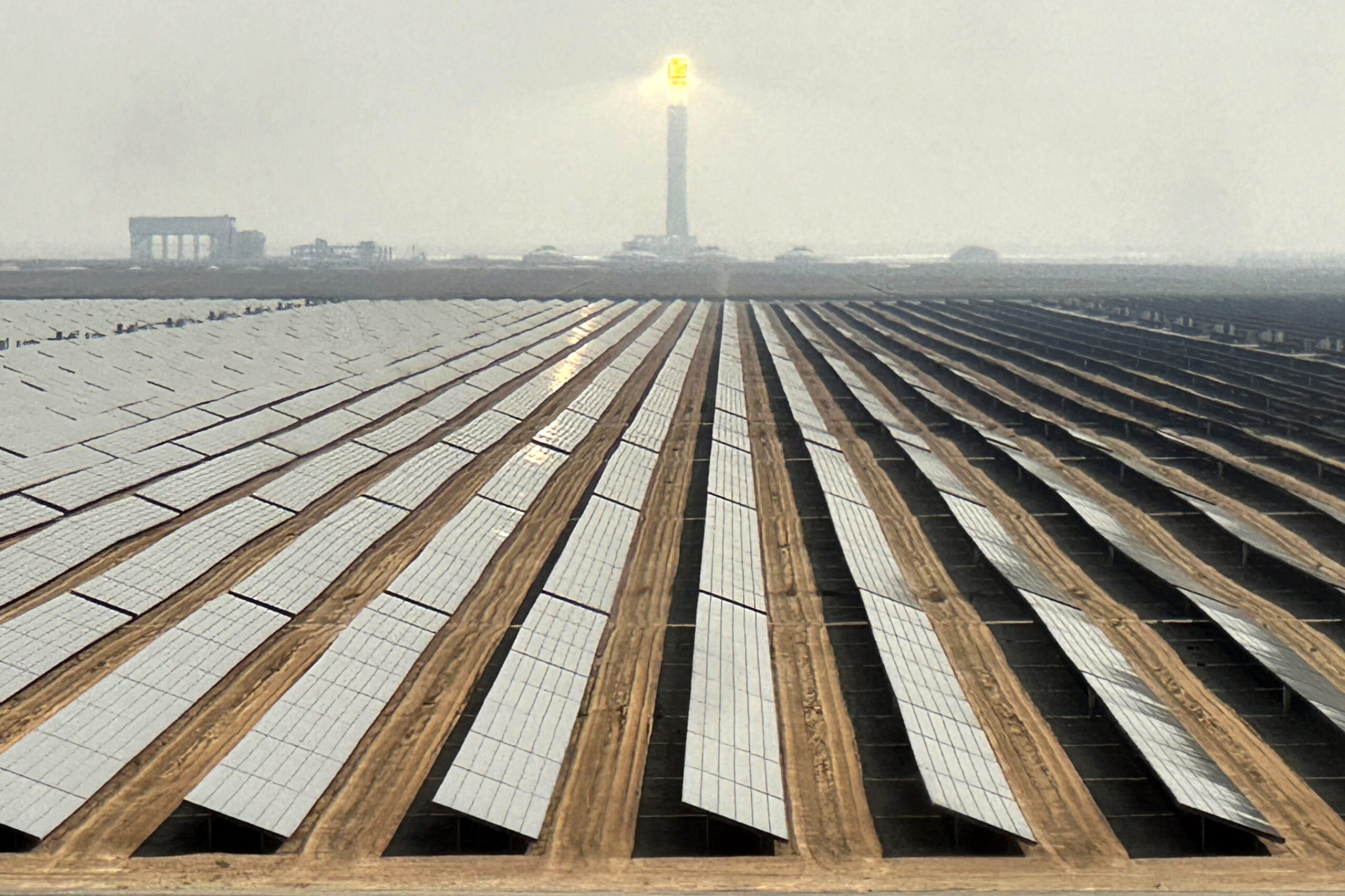
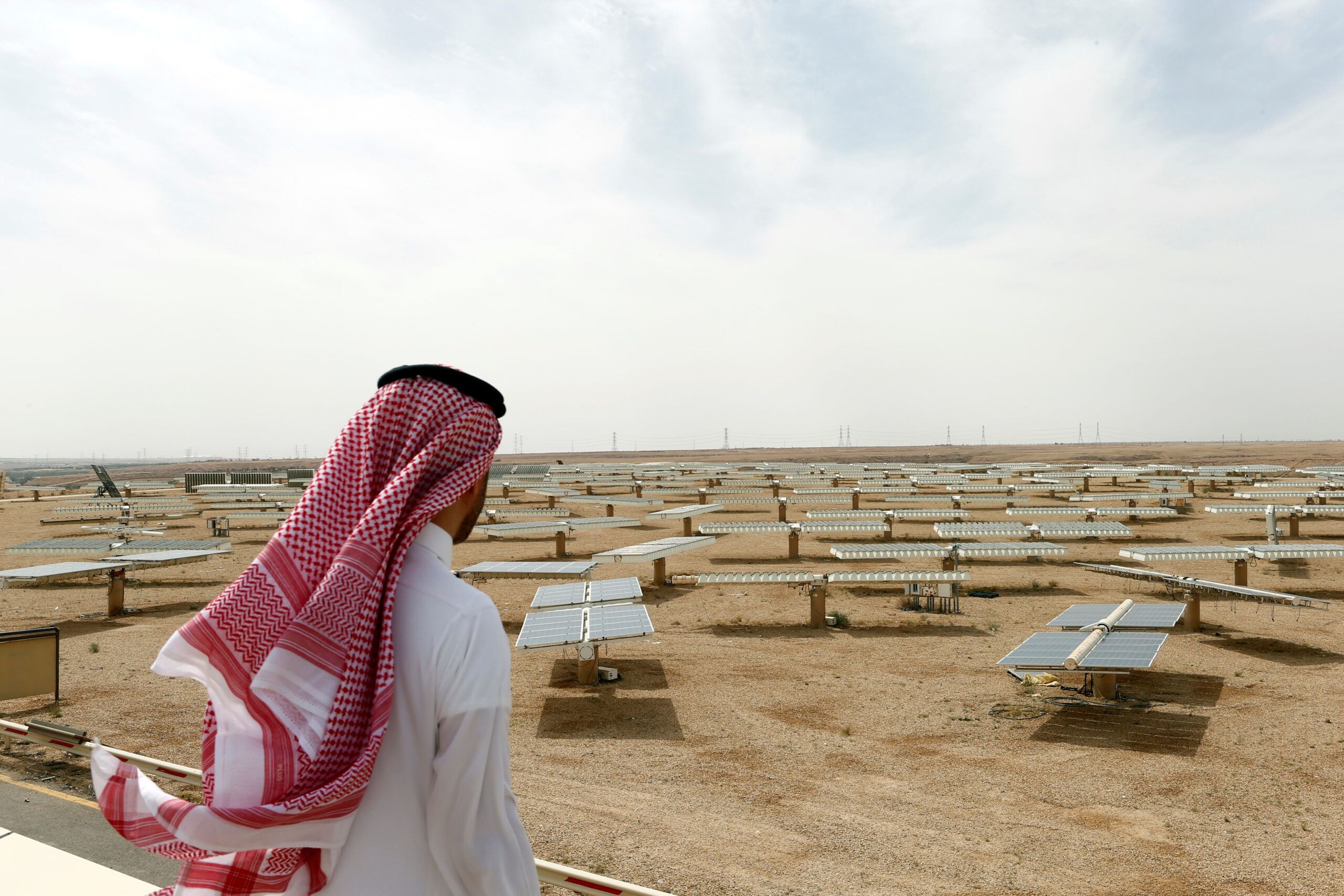
Solar panels at Mohammed bin Rashid Al Maktoum Solar Park in Dubai, United Arab Emirates, Nov. 9, 2023. (AP Photo/Kamran Jebreili)
Sustainable finance is arguably losing momentum globally, but the Gulf is moving in the opposite direction. In Europe, sustainable bond and loan issuance fell 27% year-on-year in the first quarter of 2025 to about $199 billion (169 billion euros). The share of sustainable bonds slipped to roughly 11% of the total in 2024, down from 13% a year prior – a sign of investor fatigue amid political backlash over environmental, social, and governance priorities. Meanwhile, S&P Global Ratings reported a sustainable debt issuance drop in emerging markets of around one-third in the first half of 2025 as rising interest rates, geopolitics, and policy uncertainty tempered enthusiasm.
The Gulf, however, is bucking this trend. Labeled sustainable debt in the Middle East and North Africa and emerging Asia-Pacific markets has now reached approximately $94 billion, with issuance more than tripling between 2020 and 2024, according to a November 2025 analysis by the Dubai Financial Services Authority, Hong Kong Monetary Authority, and BloombergNEF. In the Middle East and North Africa, the United Arab Emirates and Saudi Arabia alone have accounted for roughly 74% of issuance since 2020. This sharp increase suggests sustainable finance is no longer peripheral in the region – it is becoming structural.
Qatar issued its debut sovereign green bond in May 2024, raising $2.5 billion at tight spreads in five- and 10-year tranches, with demand reportedly surpassing $14 billion, according to its Ministry of Finance. Saudi Arabia followed with its debut sovereign green bond in February 2025, a roughly $1.8 billion seven-year euro-denominated issue that drew books of more than $8 billion and marked the first euro green bond from a Middle Eastern government. Abu Dhabi’s Masdar has since raised a cumulative $2.75 billion through its green bond program, after a $1 billion issue in early 2025 was oversubscribed more than sixfold. In December 2024, Emirates NBD issued a $500 million sustainability-linked bond listed on Nasdaq Dubai at a coupon of 5.141%, marking the region’s first corporate loan bond aligned with International Capital Market Association guidelines. DP World then priced the Middle East and North Africa’s first corporate blue bond in December 2024, a $100 million five-year issue listed on Nasdaq Dubai to finance port decarbonization and marine and water projects. First Abu Dhabi Bank became the Gulf’s first financial institution to issue a blue bond in August 2025 with a roughly $50 million five-year deal, followed by a second $20 million three-year blue bond in October, both dedicated to ocean and water-related projects.
Momentum is also building beyond sovereign-backed entities. According to a November 2025 analysis from Environmental Finance, global lenders, such as ING, are deepening their presence in Saudi Arabia, positioning themselves to support a growing pipeline of sustainability-linked financing opportunities and anticipating a rise in corporate green-bond issuance in 2026 and beyond. As local banks face capital adequacy constraints, institutional investors from Europe and Asia are expected to play a larger role in bridging green financing gaps – further internationalizing the market.
But volume alone does not equal transition. A Chatham House review in late 2024 showed that Gulf Cooperation Council sustainable bonds have overwhelmingly funded low-carbon projects, such as renewables and urban efficiency, with little financing directed at retrofitting or decarbonizing existing hydrocarbon assets, petrochemicals, or heavy industry. The International Finance Corporation warned that weak verification and capital allocation controls in emerging markets are creating greenwashing risks, especially where issuers do not link capital raised to measurable emissions reductions.
Regulatory developments suggest this gap is being addressed. The UAE’s Federal Decree-Law No. 11 of 2024, effective May 30, 2025, legally mandated emissions measurement, reporting, and reduction for public and private entities and created a national carbon credit registry – building the infrastructure for trading and compliance markets. The GCC Exchanges Committee has standardized 29 ESG metrics across regional stock markets since 2023 to align reporting with international norms. Oman has taken a harder line by requiring all publicly listed companies to produce ESG reports based on Global Reporting Initiative standards, according to the Financial Services Authority. The Qatar Financial Centre Regulatory Authority is implementing International Sustainability Standards Board-aligned disclosure from 2026 for major entities, one of the earliest formal migrations toward the new global sustainability standards. Saudi Arabia’s Capital Market Authority also introduced formal guidelines for green, social, sustainable, and sustainability-linked debt issuance in May 2025, requiring external review, specific capital allocation disclosures, and mandatory reporting of any misalignment. These measures begin to bridge the transparency gaps that undermine investor confidence.
Still, structural risks remain. Sustainable bond issuance in the GCC states is highly correlated to oil prices – rising during fiscal surpluses and falling in low-price environments. This trend suggests that green finance is still seen by many Gulf issuers as optional rather than integral to capital allocation. Unless this correlation weakens, the sector risks being synonymous with volatility rather than transition momentum.
Yet the economic foundation for a serious transition exists. According to PwC’s November 2025 Middle East Economy Watch, non-oil sector growth across the region has strengthened decisively: 6.4% in Abu Dhabi, 5.3% in Qatar, and 4.2% in Saudi Arabia in the first half of 2025, with a comprehensive diversification drive underlying that shift. According to the World Bank’s June 2025 “Gulf Economic Update,” real gross domestic product growth in the GCC is projected to rise to 3.2% in 2025, from 1.7% in 2024, with non-oil GDP growing about 3.7% in 2024. The UAE posted a current account surplus of 14.5% of GDP in 2024 – its highest in a decade – helped by strong trade and continued service exports in tourism, finance, and professional services. These underlying trends give the region both fiscal and private-sector headroom to sustain its green-finance growth.
The opportunity is vast. Strategy& estimates that the Gulf could mobilize up to $2 trillion in green finance by 2030 if project pipelines, regulatory frameworks, and investor confidence align. Sovereign wealth funds are leveraging their firepower accordingly: Abu Dhabi’s $30 billion Alterra climate fund, announced at COP28, has begun deploying capital at scale into global low-carbon infrastructure. Its mandate is tied explicitly to accelerating climate finance in developing markets, widening the Gulf’s influence in ESG-aligned capital flows.
Islamic sustainable finance brings an added layer of competitive advantage. Green and sustainability-linked Islamic instruments, or sukuk, allow Gulf issuers to align sharia principles with climate finance, opening the door to larger pools of capital across Asia and the Middle East. The UAE and Saudi Arabia have emerged as leaders in this niche, with local issuers increasingly incorporating ESG criteria into sukuk-style instruments to broaden investor participation. New issuers are joining this trend: In November 2025, Dubai-based developer Binghatti listed a $500 million green sukuk on Nasdaq Dubai that was more than four times oversubscribed, while Fitch Ratings now expects global ESG sukuk outstanding to exceed $60 billion by the end of 2026, with the GCC states already accounting for more than half of that total.
The next 12 to 18 months will test not whether the Gulf “embraces” green finance as an environmental project but whether it treats sustainable-labeled capital as a durable financial instrument rather than a cyclical add-on. To remain credible across oil-price cycles and attractive to international capital, green finance frameworks will increasingly need to favor structures that link financing terms to emissions performance, channel capital toward decarbonizing existing industrial assets rather than only funding new capacity, standardize impact reporting, and sustain issuance even when fiscal conditions tighten. Absent these shifts, green finance risks remaining a parallel investment track alongside hydrocarbons, profitable in periods of surplus but structurally peripheral to transition outcomes.
The Gulf’s structural advantages are real: sovereign sponsorship, regulatory clarity, deep domestic capital, and an increasingly sophisticated investor base. If these are tied to substance rather than merely strategic branding, the region could become a global benchmark for transition finance. If not, it risks becoming another cautionary tale in label-driven ESG.
So far, the Gulf has captured investor attention by defying global trends. Whether it becomes a model for transition finance or remains a parallel green bubble alongside hydrocarbons depends on what happens next.
The views represented herein are the author's or speaker's own and do not necessarily reflect the views of AGSI, its staff, or its board of directors.
Gulf insurers can embed environmental resilience, social safeguards, and governance rigor into underwriting to strengthen local markets and align with the expectations of global investors increasingly focused on ESG.
Saudi Arabia is rapidly scaling up renewables as it works to reduce domestic carbon dioxide emissions, free up more oil, power new industries, and secure a role in the global energy transition.
Gulf insurers can embed environmental resilience, social safeguards, and governance rigor into underwriting to strengthen local markets and align with the expectations of global investors increasingly focused on ESG.
As Gulf states reconcile fossil-fuel dependency with a transition to low-carbon energy systems, success will depend on their ability to integrate technology, carve out strategic market positions, and implement robust carbon governance reforms – such as emissions tracking and enforcement mechanisms.
International renewable energy certificates, which are increasingly popular in the Gulf, can help fuel the growth of the renewable energy industry as the world transitions away from fossil fuels.