The United Arab Emirates’ space industry is entering a new phase of maturity, as private Emirati firms play an increasingly active role alongside government entities and international partnerships.
In March, Iranian drone strikes damaged Amazon Web Services data centers in the United Arab Emirates and Bahrain, disrupting banking apps, cloud systems, and government-linked digital services across the region. The attacks served as a sharp reminder of how dependent modern economies have become on a relatively small number of physical data centers while also shining a light on how governments are turning to massive investment in orbital infrastructure to safeguard their data sovereignty. In the UAE, for example, firms including Orbitworks and Madari Space have announced plans to build orbital data centers. This new frontier builds off almost two decades of momentum within the UAE’s space economy.
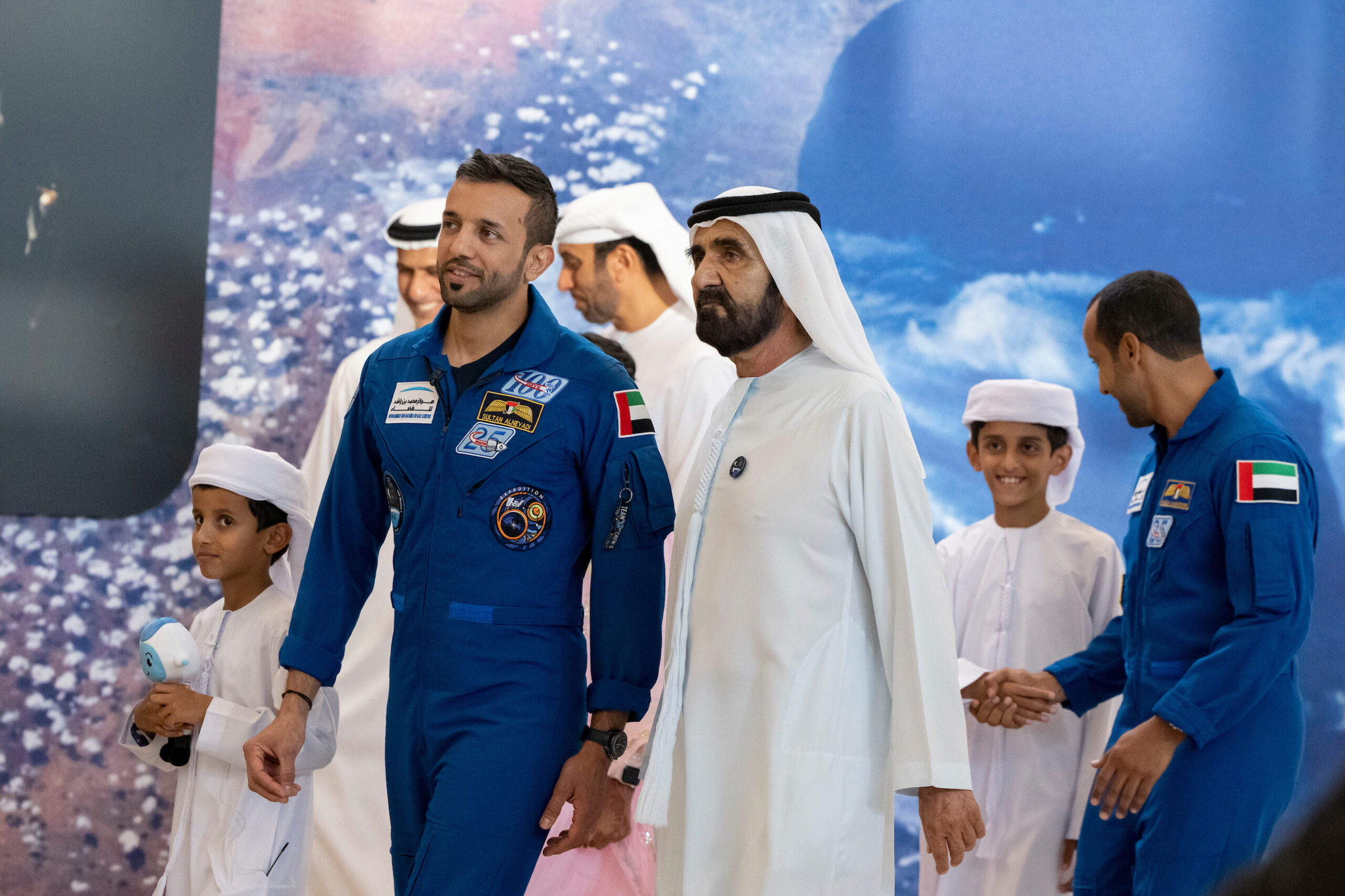
As of October 2025, the UAE had invested an estimated $12 billion in its space sector. Established in 2006, the Mohammed Bin Rashid Space Centre is the scientific and technological hub responsible for developing the UAE’s National Space Program. Between 2006 and 2017, the Mohammed Bin Rashid Space Centre launched the UAE’s first Earth observation satellite and nanosatellite and, in 2018, the first satellite fully designed and manufactured in the UAE. In 2019, Emirati astronaut Hazzaa AlMansoori embarked on the UAE’s first scientific mission to the International Space Station. In 2020, the Emirates Mars Mission launched Hope Probe, which reached Mars in February 2021, and, in 2023, the first lunar rover launched and reached lunar orbit. Though the mission did not succeed in touching down in 2023, the Rashid Rover-2 is now supposed to make a historic landing in late 2026 on the far side of the moon. In September 2023, Emirati astronaut Sultan Alneyadi landed back on Earth after six months on the International Space Station, the longest space mission by an Arab astronaut.
The UAE Space Economy: From Government Missions to Space Commercialization
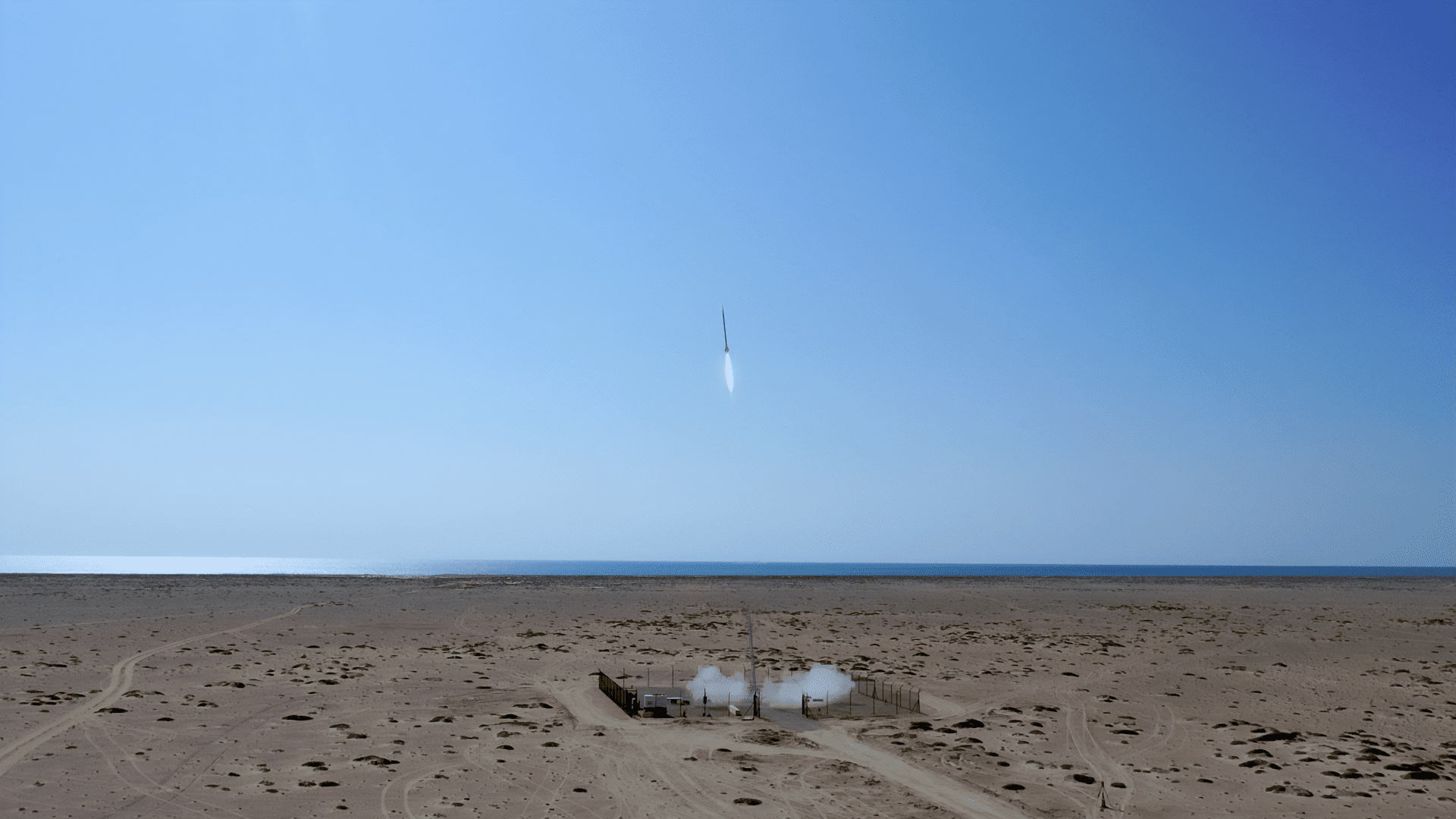
In 2023 the Abu Dhabi-based Technology Innovation Institute joined Dubai’s Mohammed Bin Rashid Space Centre as another major player in UAE space capability development. In October 2025, the institute designed, built, and test fired the UAE’s first liquid rocket engine, an experimental propulsion system, capable of generating enough force to lift 55 pounds on Earth. Initial testing was conducted at Airborne Engineering’s facilities in the United Kingdom, though the rocket was engineered and built entirely in the UAE. In February, the institute successfully launched the UAE’s first sounding rocket powered by a fully domestically developed hybrid propulsion system. The flight validated the rocket’s propulsion system, control architecture, and structural integrity under real flight conditions, reaching an altitude of almost two miles before safely descending.
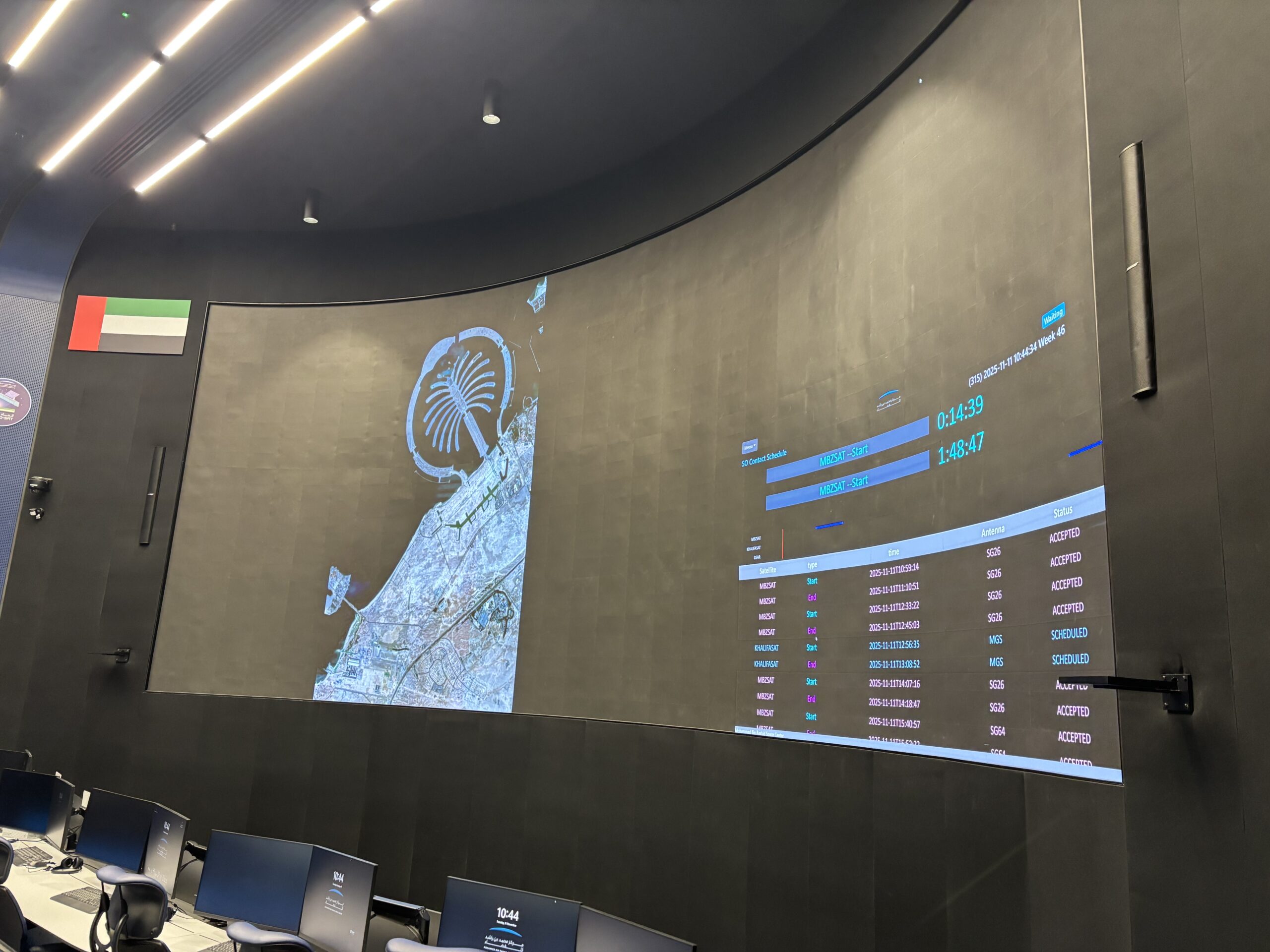
Alongside outer space missions and rocket launches, the UAE has also kept pace with the global surge in satellite technology and research focused on Earth observation, known as “new space” or “space 4.0.” The UAE has 13 satellites currently in orbit; the first was launched in 2000, and the most recent, Etihad-SAT, was developed with Korean company Satrec Initiative and launched March 15, 2025. The UAE also launched six communications and observation satellites in 2025, including MBZ-SAT, the region’s most advanced high-resolution satellite, and PHI-1, a modular satellite platform that hosts international payloads. In addition, according to analytics company and magazine Spacetech Gulf, the UAE hosts 247 space organizations, including government entities, education and research organizations, private companies, and investors. These organizations work in aerospace, Earth observation, satellite communications, manufacturing, artificial intelligence, and consulting. Of these, 52% are UAE founded and run; 64% are located in Abu Dhabi; and 66% are private companies.
Abu Dhabi-based Orbitworks, founded in 2024, has plans to develop a $1 billion satellite network over five years, alongside a manufacturing facility in Abu Dhabi that can scale production from 10 satellites annually to as many as 50. Meanwhile, Madari Space, also in Abu Dhabi, is developing what it has described as “space data centers offering data storage and data processing in low Earth orbit.” Together, according to Madari founder Shareef Al Romaithi, Orbitworks and Madari aim “to give the UAE government complete independence from terrestrial systems.”
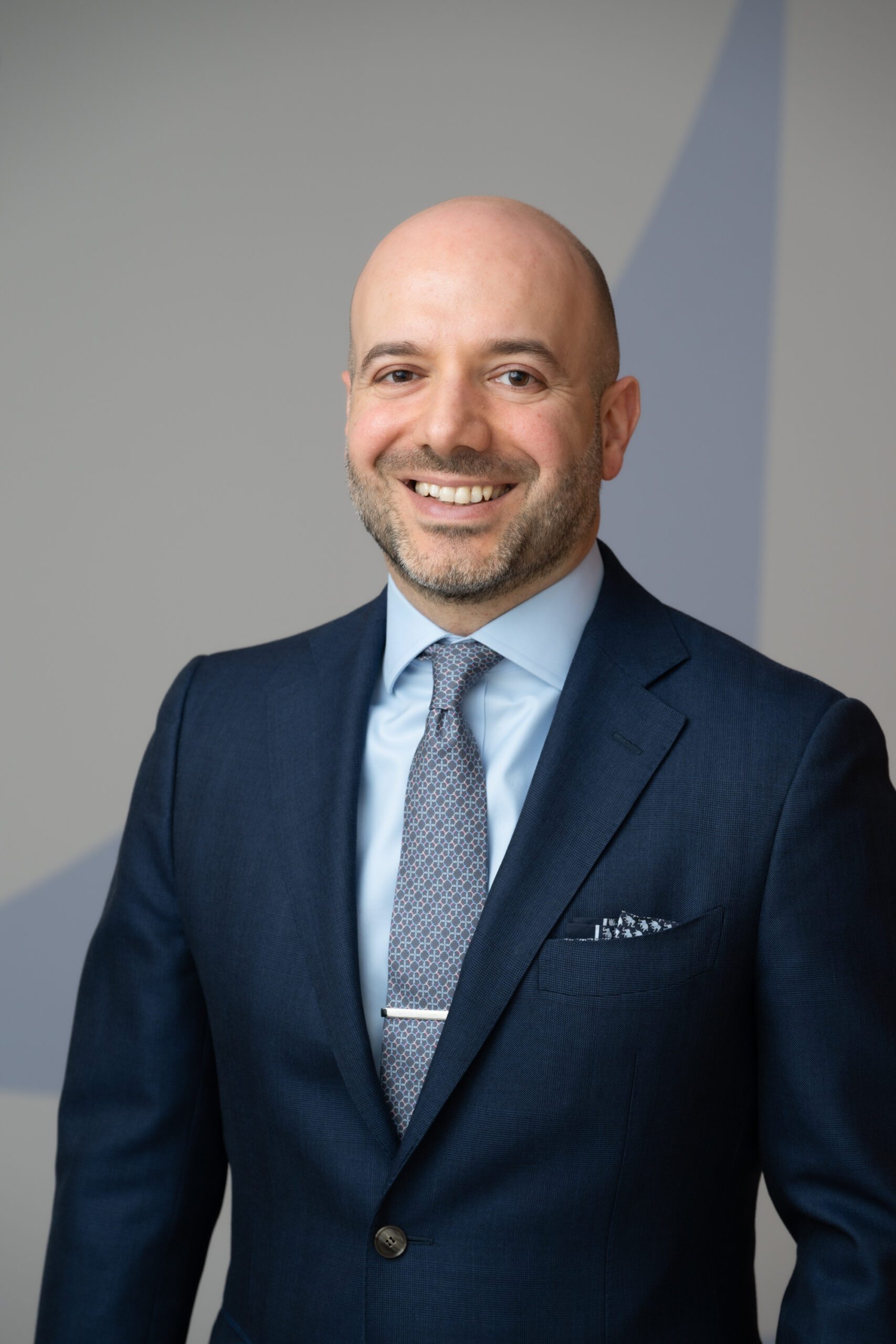
The more than 160 private companies based in the UAE exemplify the country’s shift to what the founder and CEO of UAE space company AzurX, Anna Hazlett, argued is the “second phase” of the UAE’s space economy. The UAE is now positioning itself as a launchpad, enabling Emirati companies to meet global demand in space-based capabilities, such as Earth observation, communications, and emerging in-orbit services. Hazlett emphasized that “Rather than pursuing technological sovereignty in isolation, the UAE is building it through partnerships, aligning with international players across government and industry.”
Hazlett’s statements echo those of the chairman of the UAE Space Agency, Ahmad Belhoul Al Falasi. Falasi has noted that the UAE’s space industry is entering a new phase of maturity as private Emirati firms play an increasingly active role alongside government entities. Falasi highlighted that the UAE government is “holding bilateral and trilateral meetings with space agencies worldwide to explore areas of collaboration, while also enabling these agencies to learn about the capabilities of the UAE’s private space sector and identify partnership opportunities.”
Ali Al Hashemi, CEO of Space Services at UAE space tech firm Space42, recently stated that the UAE now has domestic capability across space policy, scientific research, exploration, satellite operations, and product development. “We have Emiratis working in policymaking, research and development, exploration, Earth observation, communications, product development, and satellite operations,” he said. “In that sense, the UAE has built the full stack.” According to Hashemi, the unfinished layer is large-scale commercial satellite manufacturing and deeper vertical integration.
Building International Partnerships
In December 2025, Space Scotland, a Scottish industry group that promotes the Scottish space sector and represents the Scottish industrial space community, and the UAE’s Mohammed Bin Rashid Space Centre signed a memorandum of understanding to deepen cooperation across areas including satellite manufacturing, launch services, and research. Scotland manufactures more small satellites than anywhere else in Europe and, alongside its strong academic institutions and quickly scaling private space ecosystem, is “one of the most complete and connected space ecosystems in Europe,” according to Daniel Smith, Scotland’s Trade and investment envoy for space. The memorandum is the most recent step in building a U.K.-Gulf space bridge, an initiative that began formally in 2016, when the U.K. Space Agency and UAE Space Agency signed a memorandum of understanding that aimed to “open the way for extensive cooperation and partnership in space research, scientific missions and popular outreach.” In 2020, the Scotland-UAE space collaboration took front stage when Hazlett’s AzurX and Smith’s AstroAgency hosted Scottish Space Day at Expo 2020 Dubai. “We announced it on an international stage at Expo 2020 so that learnings from that strategy could be shared,” said Hazlett. “Space is all about collaboration, working together, strategic partnerships, and making sure the right stakeholders are in the room.”
Building from the relationship established through Expo 2020, in 2023, AstroAgency, in partnership with Dubai-based AzurX, led a U.K. Space Agency-funded trilateral initiative among the U.K., the UAE, and Bahrain. The U.K. Space Agency awarded the firms $100,000 each for joint projects on Earth observation, data and analytics initiatives, carbon credit allocation monitoring, oil and gas leak detection, and natural disaster monitoring. “We knew there was a lot of remote sensing and Earth observation in the UAE and a lot of talent and stakeholders in Scotland,” said Hazlett. “We asked ourselves: How can we bridge the two?” Smith said that the project would “showcase the U.K.’s impressive Earth observation capabilities to new markets,” facilitate knowledge sharing, and support environmental protection.
A memorandum of understanding signed by Scotland and the UAE in 2025 embodied the same principles of collaboration. “By working together, we can combine Scotland’s expertise in small satellites, data analysis, research, and sustainability with the UAE’s strengths in investment, global connectivity, space science, and deep space missions,” Smith said in an interview with Spacetech Gulf. “It also means we can find gaps to plug, for example the UAE can consider including Scottish companies’ data insights as part of its wider tools for addressing local challenges, while Scotland’s desire to increase interaction with private investors means that the UAE investment community can be given swift, easy access to exploring exciting opportunities among Scotland’s space scale-up ecosystem.”
The deal followed Scotland’s Deputy First Minister Kate Forbes’ three-day visit to the UAE in April 2025, which aimed to build relations with the UAE government and position Scotland as an investment destination. Commenting on space developments between the two countries since the signing, Hazlett highlighted there is nothing fully fledged yet. “What the MoU has done is keep the door open,” Hazlett stated. “If Scottish companies want to connect with someone in the UAE, there is an official route to that now.”
The views represented herein are the author's or speaker's own and do not necessarily reflect the views of AGSI, its staff, or its board of directors.
As the UAE navigates a more volatile regional environment, the next phase of its space effort will hinge on how quickly it can scale its commercial ecosystem and deepen international integration.
Oman is positioning itself as a future regional hub for space applications and innovation and a host, regulator, and service provider embedded within the global space economy.
Filipino migrants play important roles in the Emirati economy and culture, with Filipino cuisine particularly shaping everyday experiences for residents across the country.
Animation in the Middle East is a quickly growing industry, and Gulf countries are playing a leading role in creating, funding, and distributing animated stories from the region.