Al-Falaj Connects Researchers to the Scattered Archives of Arabia
Saudi author and anthropologist Ghada AlMuhanna Abalkhail launched al-Falaj, an open access digital directory, to help users explore the Arabian Peninsula's visual and documentary heritage.
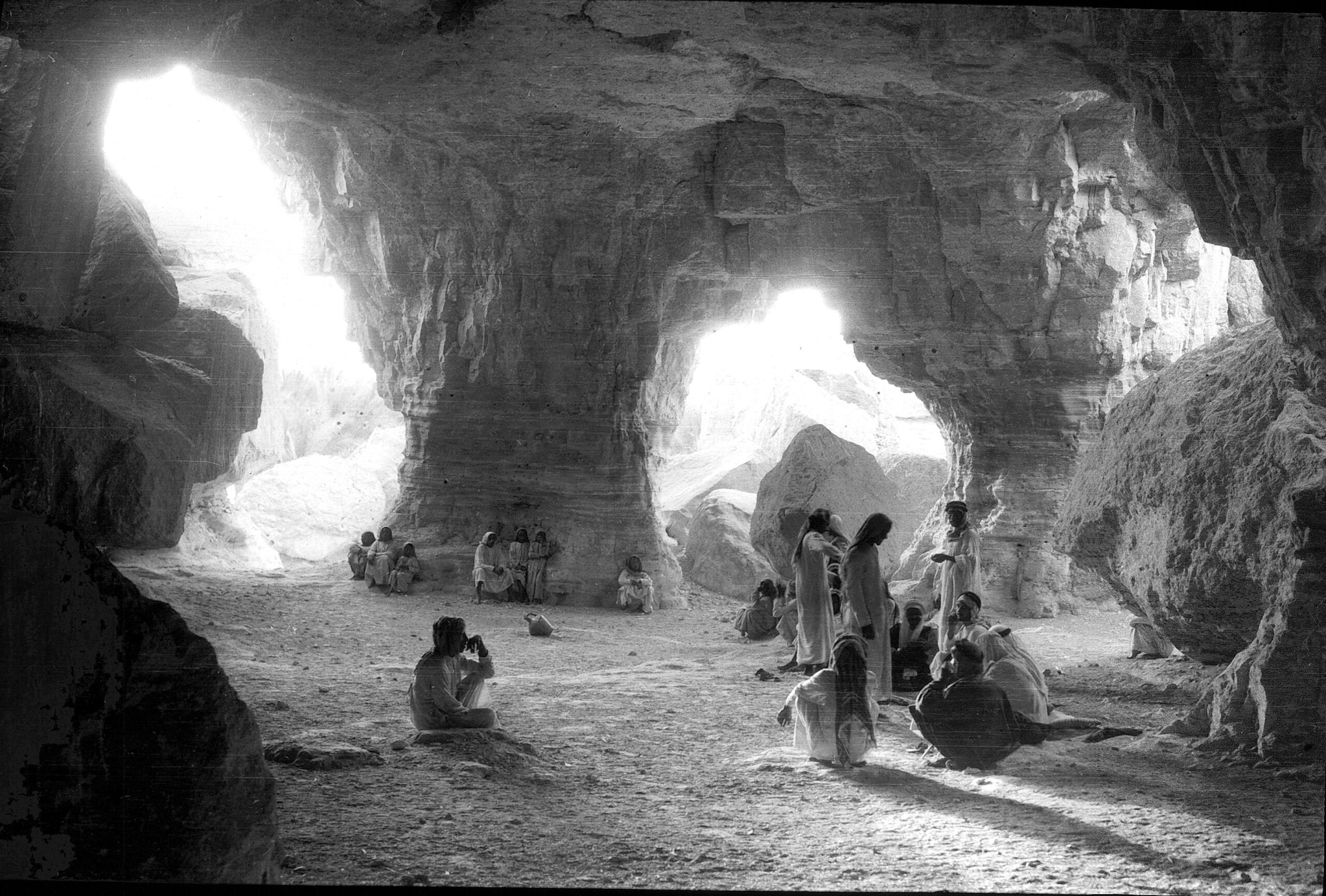
This photograph was taken inside Jabal Al-Qarah, situated between the villages of Al-Tuwaythir and Al-Qarah in Al-Ahsa governorate on May 31, 1924. (Swiss geologist Arnold Heim via ETH Zurich)
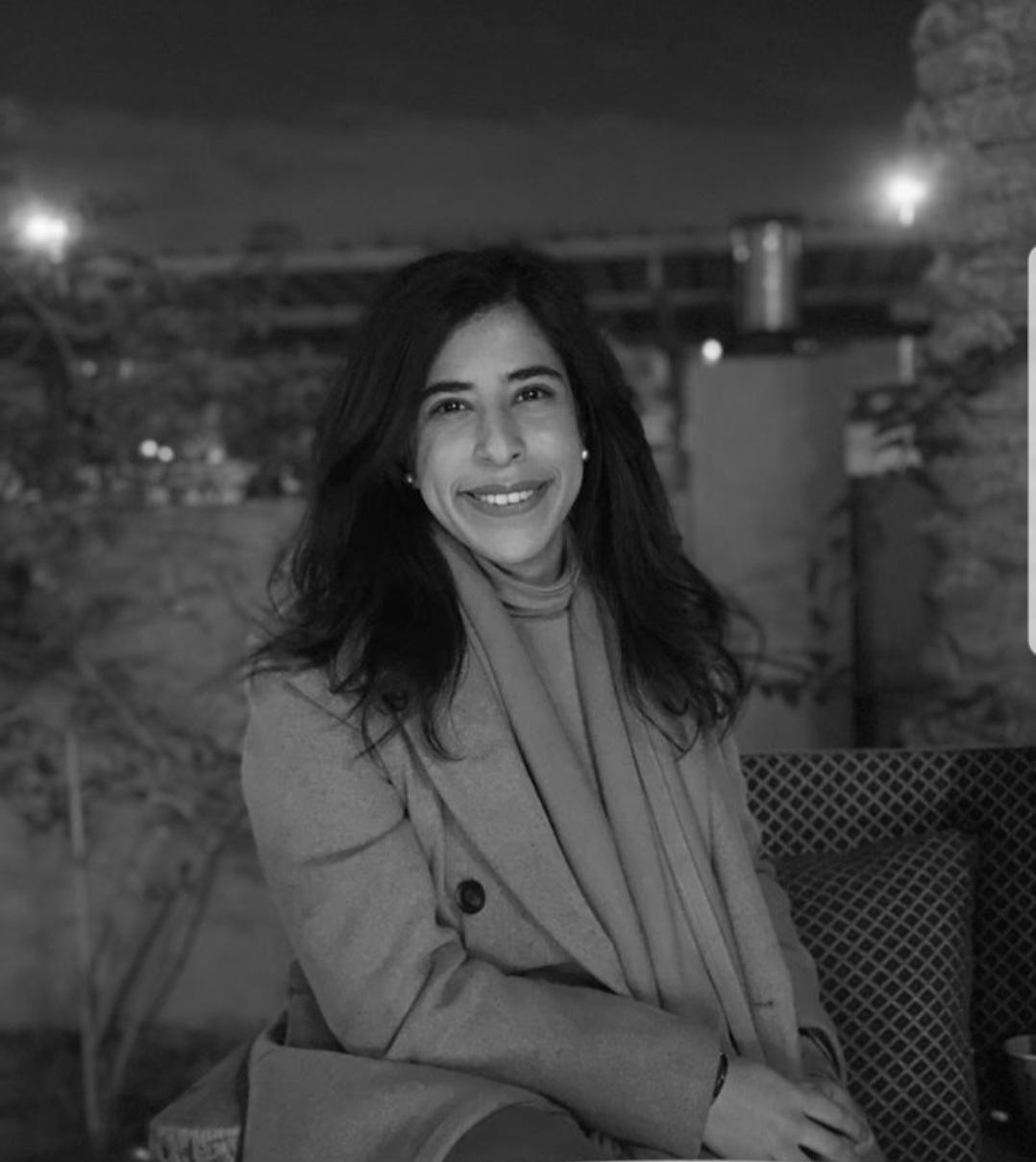
Ghada AlMuhanna Abalkhail is a Saudi author and visual anthropologist based in Germany. She is driven by a passion for unearthing material about the Arabian Peninsula and a curiosity about the origins of images – where they come from, who makes them, and for whom they are made. She has looked for materials across the globe, frequently discovering them in the most unexpected places. For five years, Ghada has shared her journey and findings on X and Instagram, where she has amassed more than 100,000 followers combined, as well as through four books and many more articles she has authored.
In February, Ghada launched al-Falaj, an Arabic and English open-access directory to help users explore the peninsula’s visual and documentary heritage by providing information on archives, collections, photographers, institutions, record creators, and repositories where materials are held. The directory targets researchers, academics, journalists, curators, students, and those trying to find their own history.
In a conversation with AGSI, Ghada discussed the significance of al-Falaj, explained why information about the Arabian Peninsula is so dispersed, and reflected on the misconceptions that frequently shape scholarly research on the region.
AGSI: What motivated you to establish al-Falaj? Was there a moment that made you conclude that search engines, institutions, and libraries may be failing researchers when it comes to the Arabian Peninsula?
Ghada: There wasn’t one grand realization, but there was a moment that stuck. I was in an archive looking for photographs of my own hometown. I typed “Riyadh,” and something came up that confused me completely. I was looking at Riyad in Morocco not Riyadh in Saudi Arabia. I sat with that for a while. Then, it kept happening, in other collections; material was registered wrong or missing the basic information that would let you find it or trust it.
What really made the scale of it clear was sharing this content publicly and asking people to help identify it. The more I did that, the more obvious it became that the gap was enormous and that closing it couldn’t be a solo project. It had to be collaborative.
But the motivation to actually build al-Falaj was bigger than any one moment. There are good initiatives out there, including the Qatar Digital Library and Arabian Gulf Digital Archives, and I’m glad they exist. What I believe wasn’t there was a map – something that tells you what exists, who made it, and where it’s held today, across all these scattered places and in both Arabic and English. The material is real. It’s just invisible, privatized, or filed under a name you’d never search.
It had to be an open and collaborative collection, so the people who actually hold the knowledge, including families with photographs in a drawer, could add to it and correct it. The personal motive underneath all of it is simple: I hit a wall doing this research over and over. I didn’t want the next researcher, or someone just trying to find their own history, to hit the same one.
AGSI: What was the inspiration behind choosing the name “al-Falaj”?
Ghada: I wanted a name that was easy and accessible to many people but still felt like it came from the region – not something abstract or imported. I was looking at maps at some point, and there was one that showed these old irrigation channels – the aflaj – and I thought that’s exactly what I feel the region needs: The information about it needs to flow more, to be more exposed and reachable, instead of sitting in scattered places no one can get to. A falaj takes water that is buried and dispersed and carries it to people who need it. That’s the whole idea of the directory in one image. So many researchers don’t even know where to go, and the name is meant to answer that.
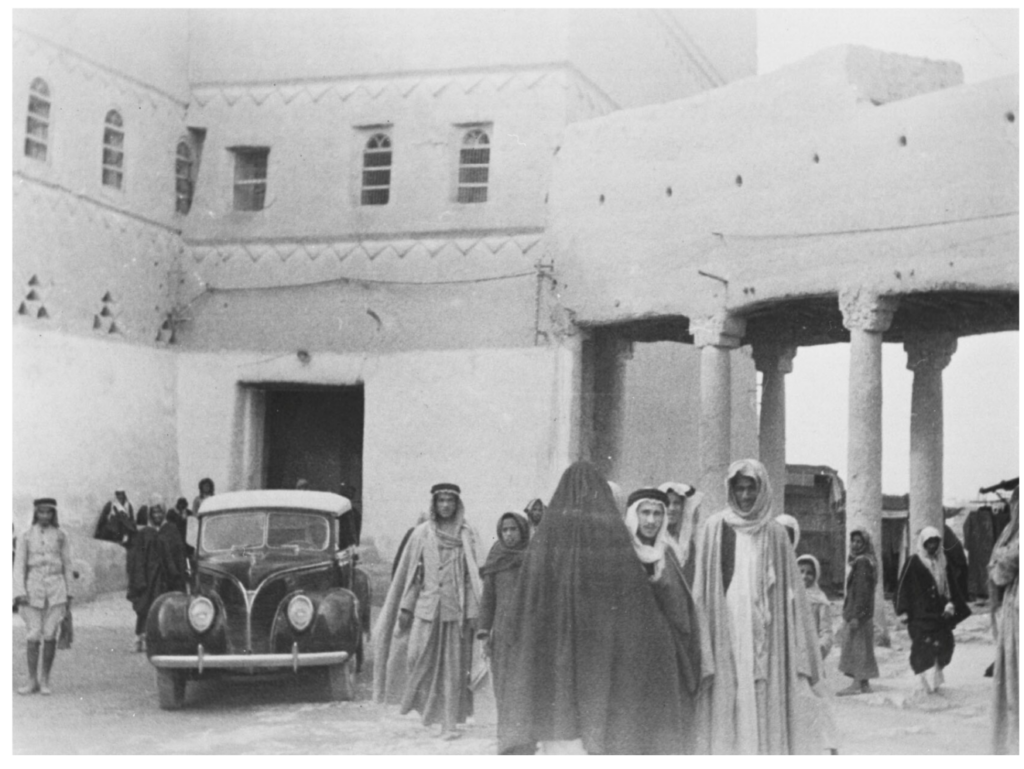
A photograph of Riyadh, taken by the Dutch diplomat Daniel van der Meulen, who served as consul in Jeddah, between 1940 and 1950. (The photograph was published in F.C. van Leeuwen, D. Oostdam, and S.A. Vink, “Dutch Envoys in Arabia, 1880–1950: Photographic Impressions”)
AGSI: Why do you think information about the region is so “scattered” as you describe it?
Ghada: Part of it is ownership (i.e., who actually holds the material). Much of the early record wasn’t preserved or kept by the people of the land; it was made and taken by outsiders. So, the foundational collections sit in their archives, and those archives set the tone, what got photographed, what got catalogued, what got called important. That framing becomes the inheritance, and peninsula institutions are still working against it, trying to build their own record on top of someone else’s terms.
Then, there’s the religious dimension, which people are sometimes reluctant to name. For a long stretch, there was a real disinterest in preservation and a specific discomfort with photographic and figurative imagery. Our societies were transforming, and what was most worth documenting, many people simply weren’t keeping the visual record or were wary of it. Those who did take photographs or try to preserve history often kept those items at home, within the family, never shared publicly, so it never entered any archive at all. That leaves a hole the outside collections then fill by default.
There are also the plainer structural reasons. The region’s own archives, universities, and digitization efforts are relatively young, so for decades there was no central place catching any of this. The material that does survive is scattered across collections in London, Washington, Istanbul, Moscow, Paris … It is physically dispersed, and it is catalogued in other languages and under names that do not match how someone here would search for it. So even when a thing exists, you can’t find it. The dispersal is not only geographic. It is linguistic and institutional, too.
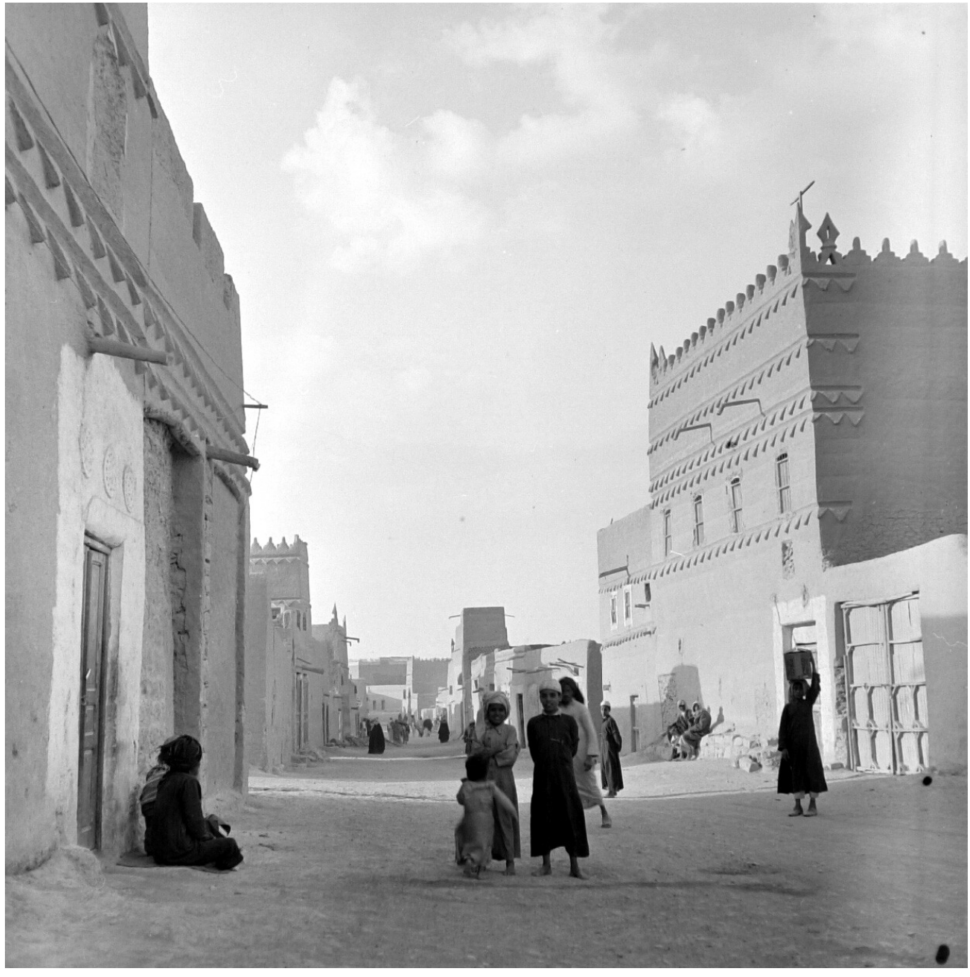
A photograph taken in Riyadh by the Dutch diplomat Daniel van der Meulen, who served as consul in Jeddah. The image dates from sometime between 1940 and 1953, though it was most likely taken in 1945. (The photograph was published in F.C. van Leeuwen, D. Oostdam, and S.A. Vink, “Dutch Envoys in Arabia, 1880-1950: Photographic Impressions”)
AGSI: How did you organize the directory and select what to include?
Ghada: The main split is by gaze not by medium. There is “Looking In”: the explorers, photographers, and travelers who documented the peninsula from outside. There is also “From Within”: the writers, poets, journalists, and thinkers from the region itself. That division is the most important one in the whole directory. Most catalogues mix these together and flatten the difference between someone recording a place they’re passing through and someone recording the place they are from. I wanted that distinction visible from the first click, because it changes how you read a source. Then there are the holdings: institutions and archives, manuscript collections, books, and living projects (i.e., the things you actually go to) sorted so you can find where material sits today.
The filters run underneath all of that: region, period, source type, and access status, whether something is open, partial, or physical only. The access status matters more than it sounds. A lot of a researcher’s time is wasted just finding out whether a thing exists and whether you can see it. I wanted that answered up front.
As for who’s in: The bar is genuinely just whether it touches the peninsula. That’s it. I’m not gatekeeping by fame, discipline, or whether I find the source congenial. If it’s part of the record of this region, in any language, from any angle, it belongs. The hard work isn’t deciding what’s worthy; it’s finding the thing and verifying it.
AGSI: How have you reckoned with colonial sources, and why is doing so important?
Ghada: I understand the anger people carry about colonial material. I do. But here’s the reality: The people who made these images were living in a time that normalized that way of looking. That doesn’t make it right, and it doesn’t mean we shouldn’t name what’s wrong in it, we absolutely should. But staying angry doesn’t get us anywhere. The people of today are not the people of the past. What moves things forward, I believe wholeheartedly, is collaborative work – being honest and frank about what a source is, what it carries, and what in it can be taken apart.
AGSI: What are some of the most common blind spots or misconceptions researchers have when researching the Arabian Peninsula?
Ghada: The biggest one is something we tell about ourselves. We’ve slowly consistently convinced ourselves that ours is an oral culture – that the word, the poem, the spoken line is where our heritage lives. Oral tradition is real and extraordinary, but it’s not the only thing. If you actually look at the peninsula as a whole, we have visual heritage going back thousands of years; the rock art at Jubbah and Shuwaymis alone covers something like 10,000 years of carved images – people and animals and whole hunting scenes. It’s right there on the stone, yet it gets treated as a footnote or ignored, while we keep repeating that we’re a culture of the word and not the image.
The other thing I notice, and it’s connected, is how few counternarratives there are. When I look at archives dealing with African or Asian heritage, there’s real push-back from local communities: workshops in Europe and elsewhere, people actively working to broaden the picture and reclaim the framing. There’s very little of that for the peninsula. What does exist tends to stay private or inside a small circle of privileged individuals. So, the external version of us goes largely unchallenged, not because there’s nothing to say back, but because the “saying back” hasn’t been built yet. That’s part of what I want al-Falaj to be.
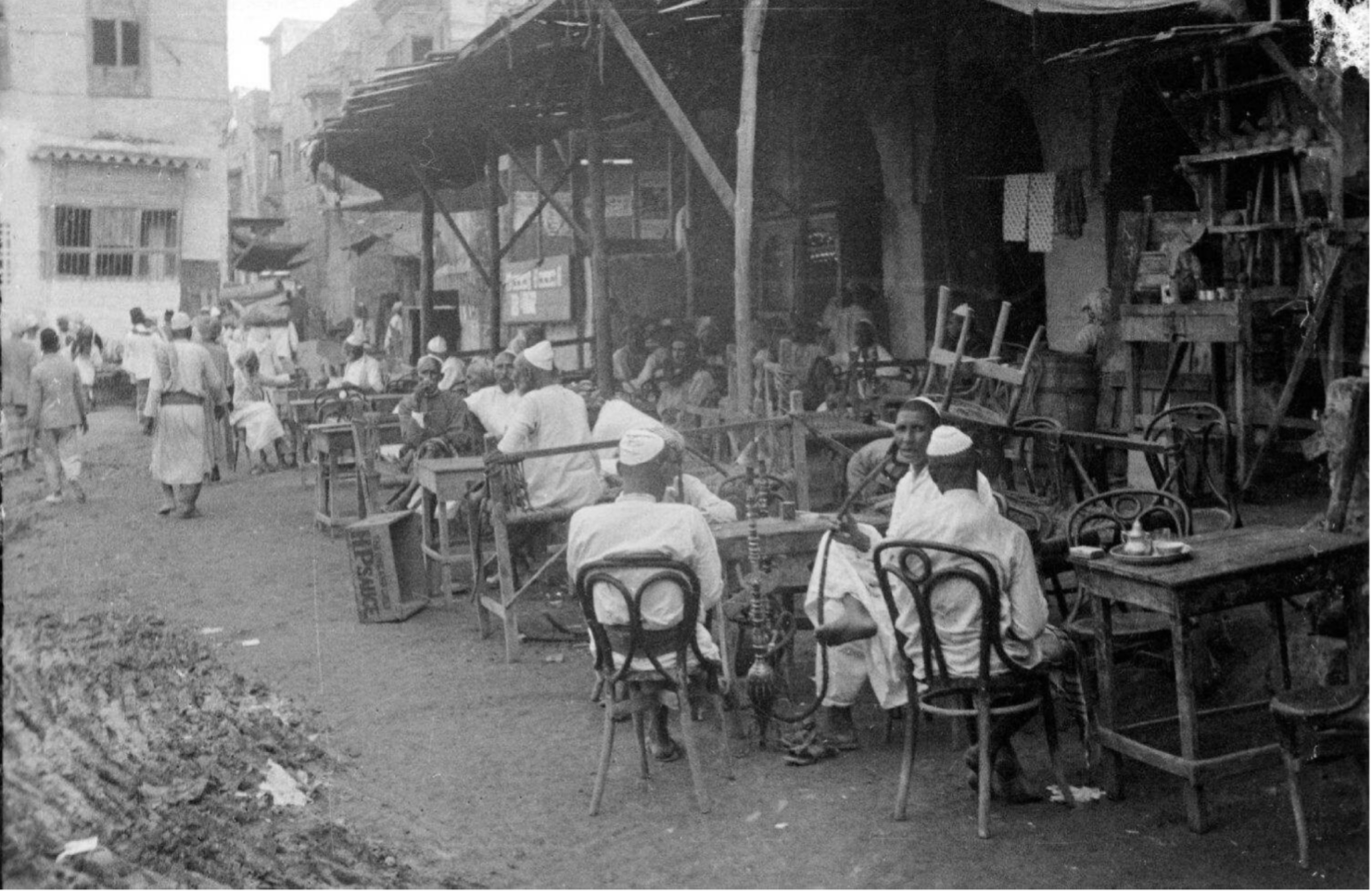
A café in Jeddah. This photograph was taken by the Dutch diplomat Daniel van der Meulen, who served as consul in Jeddah, sometime between 1930 and 1950, most likely in 1946. (The photograph was published in F.C. van Leeuwen, D. Oostdam, and S.A. Vink, “Dutch Envoys in Arabia, 1880–1950: Photographic Impressions”)
AGSI: What is one piece of advice you would share with researchers?
Ghada: Just keep pushing. I know how exhausting it is to feel defeated, to hit dead end after dead end and wonder if the thing you’re looking for even exists. But with the peninsula, the gap is so big that it’s actually an invitation. There’s so much that hasn’t been touched yet. You can keep going deeper and deeper and still be among the first to look closely at something. That’s rare. Most fields are crowded; this one is wide open, and that’s the reason to stay with it.
And work together. This goes for both ends – the people who hold the archives and the people searching through them. The whole point is to put more information into the light, not less. Knowledge is light. So, what is actually gained by keeping it all behind closed doors? Share it. That’s how the picture gets fuller for everyone.
The views represented herein are the author's or speaker's own and do not necessarily reflect the views of AGSI, its staff, or its board of directors.
Independent researchers and informal collaboratives have been connecting through social media to fill in gaps in popular knowledge of the United Arab Emirates’ pre-state era.
Best-selling Kuwaiti author Fadwa Al Taweel shares her experiences as a woman crime fiction novelist and offers insight into the state of crime fiction novels in the Arab world.
Omani youth spearhead national pavilions in Dubai and Venice as upcoming artists Abdulrahim Al Kendi and Mays Al Moosawi draw recognition for their novel explorations of love, religion, and self-acceptance.