With the Iran war, large AI projects now sit inside a regional battlespace. The next phase of Gulf AI strategy will need to focus on resilience, continuity, and trusted infrastructure, not only capital and scale.
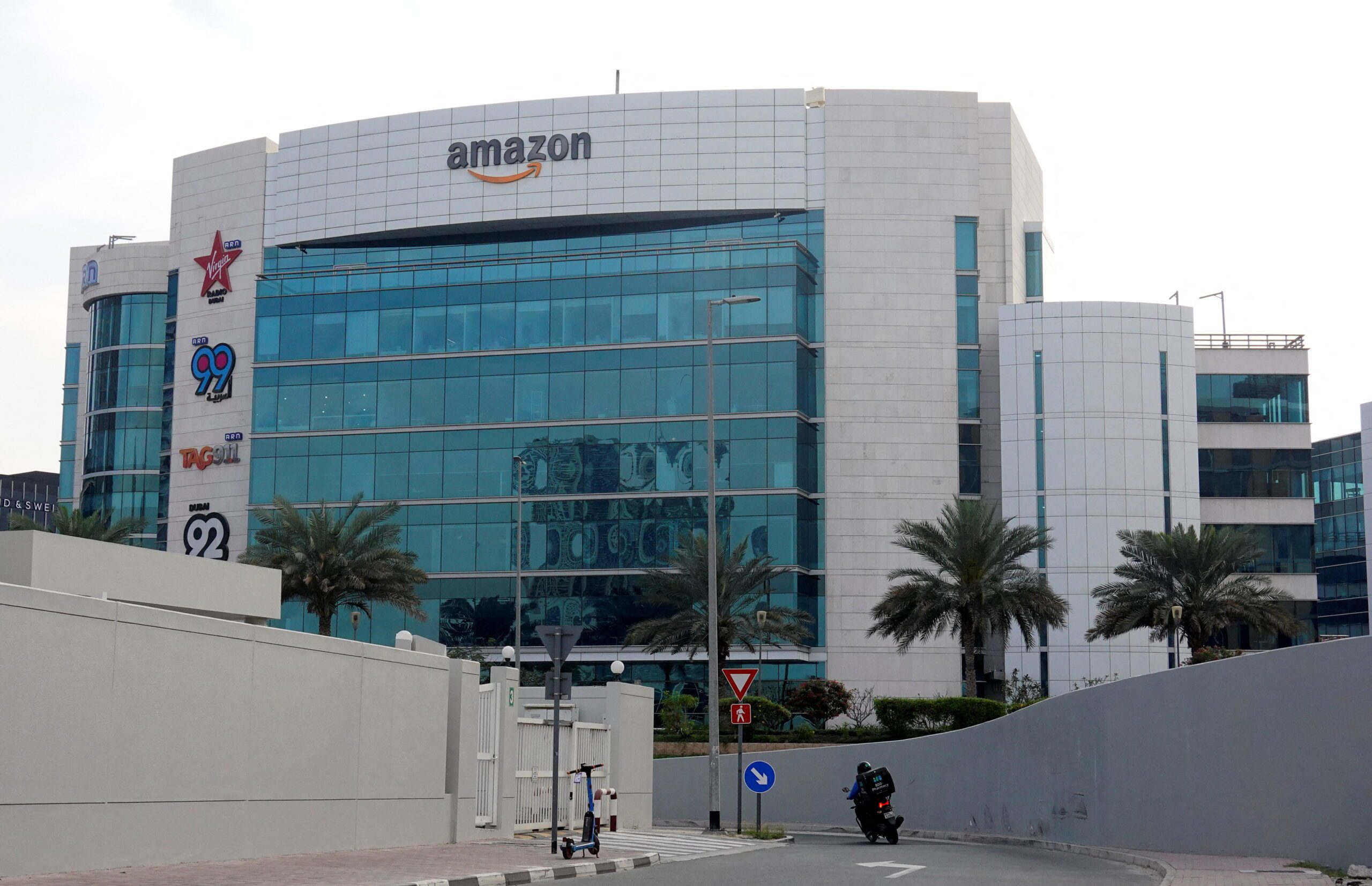
A delivery person rides a motobike in front of a building with the Amazon sign displayed amid the U.S.-Israeli war with Iran, in Dubai, the United Arab Emirates, March 7. (REUTERS/Amr Alfiky)
Iran’s attacks on Amazon Web Services facilities in the United Arab Emirates and Bahrain changed the risk profile of Gulf artificial intelligence investments. Two AWS facilities in the UAE were directly struck, while a nearby drone strike in Bahrain damaged AWS infrastructure, disrupted power, and prolonged recovery. A later April strike damaged Amazon’s Bahrain cloud operation, marking the second disruption in a month. In Dubai, an aerial interception caused limited shrapnel damage to an Oracle building. Data centers, cloud regions, and AI campuses are increasingly becoming military targets.
Direct attacks have stopped for now, but the war has not ended. Amid ongoing discussions regarding opening the Strait of Hormuz, the conflict remains in a fragile stalemate. This fluid environment is a serious problem for Gulf AI investments as hyperscale data centers require stable construction schedules, imported chips, insurance, power contracts, and customer confidence. This is why some Gulf-based clients started redirecting data center workloads to India-based facilities.
Gulf AI strategy has relied on early access to U.S. AI chips, large-scale capital investment, and the ambition to turn the Gulf states into global technology hubs. With the cheap drone attacks against this infrastructure, this strategy now faces a more difficult test. Gulf AI investments can still continue, but only if Gulf states build a regional resilience framework that gives companies and investors greater confidence in the security, continuity, and reliability of these projects.
A Regional Competition in Sovereign Compute
Gulf AI investments are too large to dismiss as prestige projects. They are part of a regional competition to host the infrastructure behind the next phase of the digital economy. The UAE, Saudi Arabia, and Qatar each aim to build sovereign AI capacity that can support government services, companies, research institutions, and global cloud customers. The Gulf has capital, land, energy, and access to U.S. technology partnerships.
The UAE has committed most to the AI projects. Stargate UAE is designed to include a 1-gigawatt cluster in Abu Dhabi, with 200 megawatts expected to go live in 2026. The first 200 megawatts of the broader UAE AI campus were scheduled to come online in 2026, with G42, OpenAI, Oracle, Nvidia, Cisco, and SoftBank partners on the project. Microsoft has also announced a $15.2 billion investment in the UAE through 2029, including cloud and AI data centers.
Saudi Arabia is also building its own AI infrastructure. Humain, the Public Investment Fund-owned AI company, secured up to $1.2 billion in financing to support as much as 250 megawatts of AI data center capacity. Humain is targeting about 6 gigawatts by 2034. Nvidia planned to ship 18,000 advanced chips to Saudi Arabia for a 500-megawatt data center project with Humain. Qatar has also entered the race. Qai, backed by Qatar’s sovereign wealth fund, formed a $20 billion AI infrastructure joint venture with Brookfield.
Strategically, Gulf states want leverage in a technology system that increasingly depends on chips, cloud infrastructure, data, energy, and secure geography. The United States’ willingness to include capital rich Gulf states in its supply chain framework is consolidating a U.S.-Gulf tech axis. The Iran war does not erase that logic completely. However, it forces Gulf governments to build a resiliency framework around the will and money.
War Has Made Compute a Security Issue
The March and April attacks showed that cloud computing has a physical base. Cloud services depend on data centers, power delivery, cooling systems, fiber routes, and availability zones. AWS data centers have redundant power, water, telecommunications, and internet connections, but their physical security is designed mainly to keep out intruders not to withstand drone attacks. That distinction now matters for every Gulf AI campus.
Iran’s Islamic Revolutionary Guard Corps threatened OpenAI’s planned Stargate data center in Abu Dhabi after earlier attacks on regional cloud infrastructure. Iran also threatened G42’s planned data center and said U.S.-linked information and communications technology companies in the region were legitimate targets. AI infrastructure has entered the target set of regional conflict.
Vulnerability to cheap drones is particularly worrisome as it does not require missiles hitting particular coordinates. Data centers are not the main military targets, but they can become military targets easier now with the proliferation of offensive drones, which are easy to produce and accessible to nonstate actors.
The immediate effect on Gulf AI investment will likely be delay and diversification rather than abandonment. Construction timelines may stretch. Insurance costs may rise. Cloud providers may ask for more redundancy before bringing sensitive workloads online. In fact, early signs show that some Gulf-based clients are asking Indian data center companies to host more workloads. India has received up to 500 megawatts of data center capacity inquiry in a couple of weeks. Customers in banking, government, logistics, and aviation may push to keep backups outside the Gulf. AWS and Microsoft Azure were already exploring options to redirect workloads from Dubai, Abu Dhabi, and Oman toward India and Singapore. These signs suggest some planned data centers will be delayed in production.
The fragile cease-fire between the United States and Iran further complicates the issue. Compute investments need stability, but the security dynamics and threat perceptions created by the Iran war remain. This could cause some megaprojects to stall, even if they are not canceled.
A Resiliency Framework
The drone attacks will not lead to Gulf’s retreat from AI. The capital, political will, and U.S. interest in keeping Gulf partners inside trusted supply chains remain strong. Yet, Gulf states will need to do more to give companies and investors greater confidence in the security, continuity, and reliability of projects. As the early movers of the global AI race, Gulf countries now need to build a more difficult pillar of the strategy: They need a clear resilience framework for AI infrastructure.
First, Gulf governments should classify major AI campuses, cloud regions, chip clusters, undersea cable landing stations, and power systems that serve data centers as one integrated class of critical AI infrastructure. This classification should trigger national risk assessments, security standards, incident reporting rules, and emergency continuity plans. These assets should be treated more like ports, airports, energy terminals, and financial infrastructure than traditional commercial real estate.
Second, Gulf states should create a resilience plan that allows them to rely on one another’s infrastructure in the event of an attack or disruption. Until now, Gulf countries have invested in the U.S. AI stack largely independently. Yet a regional framework that allows them to support one another could be a major step toward stabilizing services and protecting investments. For example, if AWS data centers in the UAE are attacked and services inside the country are disrupted, backup capacity in Saudi Arabia, Qatar, or another Gulf state could help maintain service continuity. The Gulf Cooperation Council could begin with cloud continuity drills, shared data classification rules, backup routing protocols, and service restoration exercises. This would send a credible signal to AI companies and investors. Such a resilience plan should include external compute portfolios. Gulf sovereign wealth funds already invest globally. Part of the new AI strategy should be to build trusted backup capacity in the United States, India, Singapore, Turkey, and selected European markets that can provide similar latency.
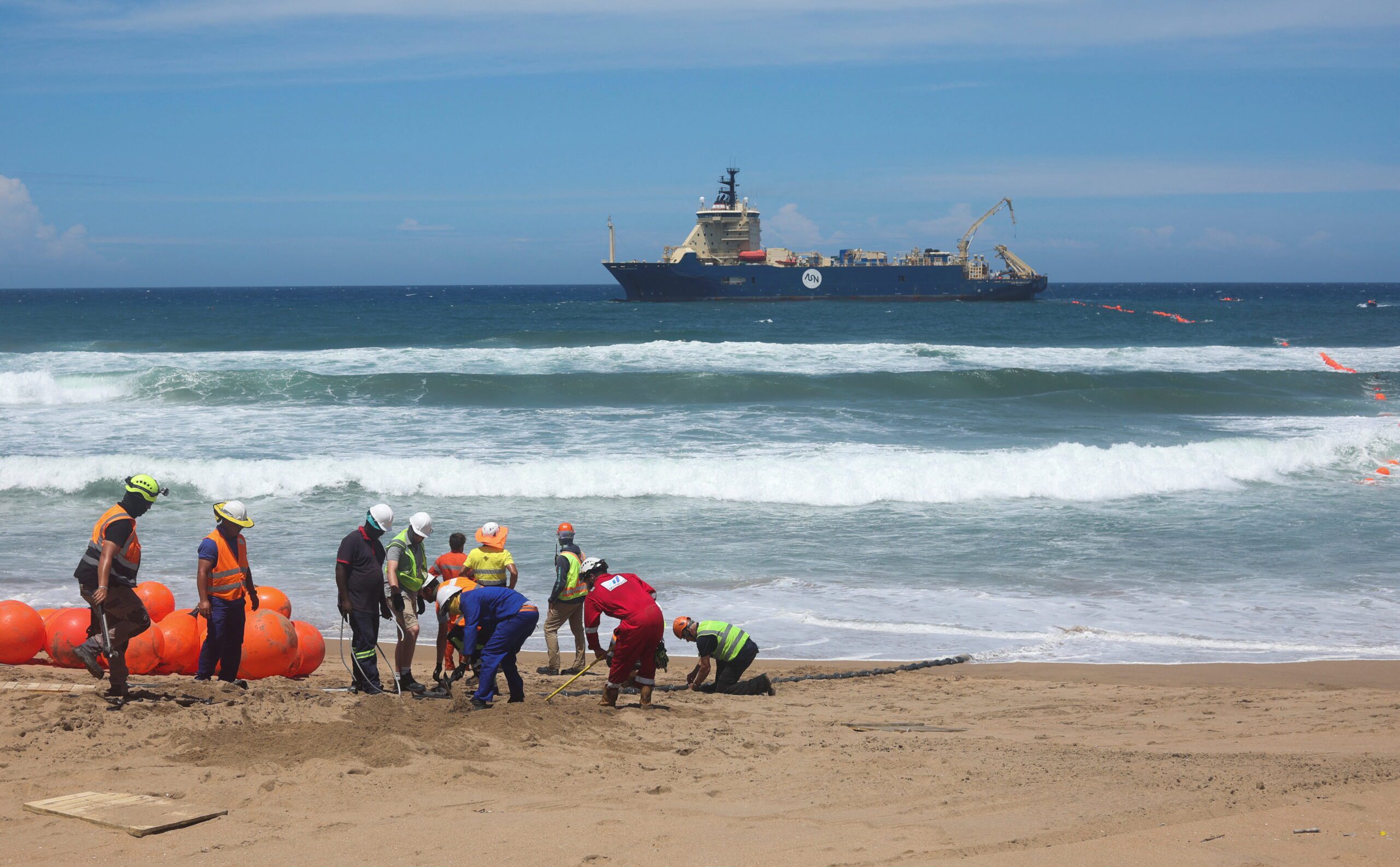
Third, physical protection must adapt to the threat. Data centers need layered counterdrone defenses, electronic warfare capabilities, hardened power and cooling systems, stronger fire suppression, protected fiber routes, and clearer coordination with air defense authorities. The risk to undersea cables should also be addressed. The Gulf’s AI ambitions depend on high-capacity, low-latency connections that remain exposed to disruption and sabotage. Data center defense must therefore include both the site and the networks that connect it to the world.
The Gulf’s AI opportunity is undergoing a test. While the war has not removed the region’s capital, energy advantages, or desire to become a global AI hub, it has changed the standard by which these investments will be judged. The largest AI campuses will not automatically be the most attractive. The most resilient, insurable, trusted, and governable campuses will have the advantage. If Gulf states want to be part of the global AI race, they will need a resiliency framework to prove that their infrastructure can function under the shadow of war.
The views represented herein are the author's or speaker's own and do not necessarily reflect the views of AGSI, its staff, or its board of directors.
Undersea cables are necessary for the rapid movement of information that the Gulf’s AI ambitions require, but they are uniquely vulnerable to disruption and sabotage.
Regardless of the outcome of ongoing U.S.-Iranian negotiations, Gulf states are likely to speed up the diversification of their defense partnerships, including with each other, though many hurdles have yet to be overcome.