Qatar Petroleum Comes of Age as it Assumes Sole LNG Ownership
After more than 25 years of working alongside international oil company giants, Qatar Petroleum has the technical capability and expertise to manage its own gas business. But it is unlikely to end all its partnerships.
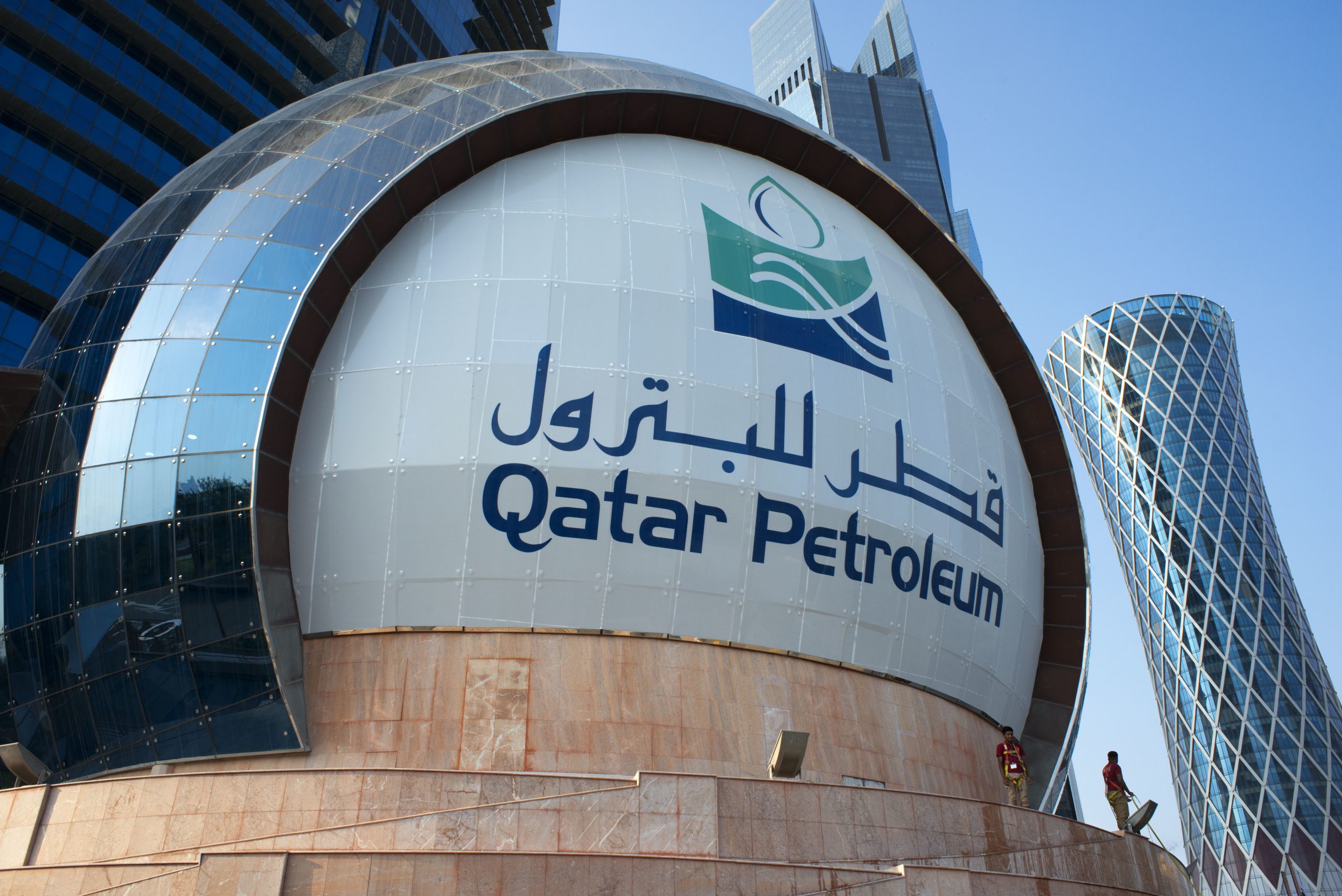
Qatar Petroleum headquarters in Doha, Qatar (Sergi Reboredo/VWPics via AP)
The decision by Qatar Petroleum to assume full control of the Qatargas 1 liquefied natural gas project after the joint venture agreement with foreign partners expires may presage a more independent policy direction for the national oil company. The surprise move raises the possibility that Qatar may nationalize its three other LNG projects when their respective contracts expire.
Qatar Petroleum took the industry by surprise when it announced on March 30 that it would not renew the Qatargas Liquefied Natural Gas Company Limited (QG1) joint venture after the agreement expires at the end of the year. The move ends a 25-year partnership with ExxonMobil and Total. ExxonMobil has been the largest investor in Qatar since the launch of the Gulf Arab state’s maiden LNG project in 1984, setting it on a path to becoming the world’s leading producer and exporter of LNG.
After the joint venture expires on December 31, Qatar Petroleum will for the first time in its history have sole custody of an LNG project.
Neither Total nor ExxonMobil commented on the decision, which will result in the loss of a significant volume of marketable LNG supply for the two oil majors. ExxonMobil and Total each have a 10% stake in Qatargas 1 while Mitsui and Marubeni of Japan each have 7.5%. Qatar Petroleum has 65% interest.
Total and ExxonMobil will remain partners on the Qatargas 2 project, which began operating in 2004 and has a few years remaining on its contract. A number of other joint ventures run beyond 2030. ExxonMobil also has stakes in the Ras Laffan LNG joint ventures.
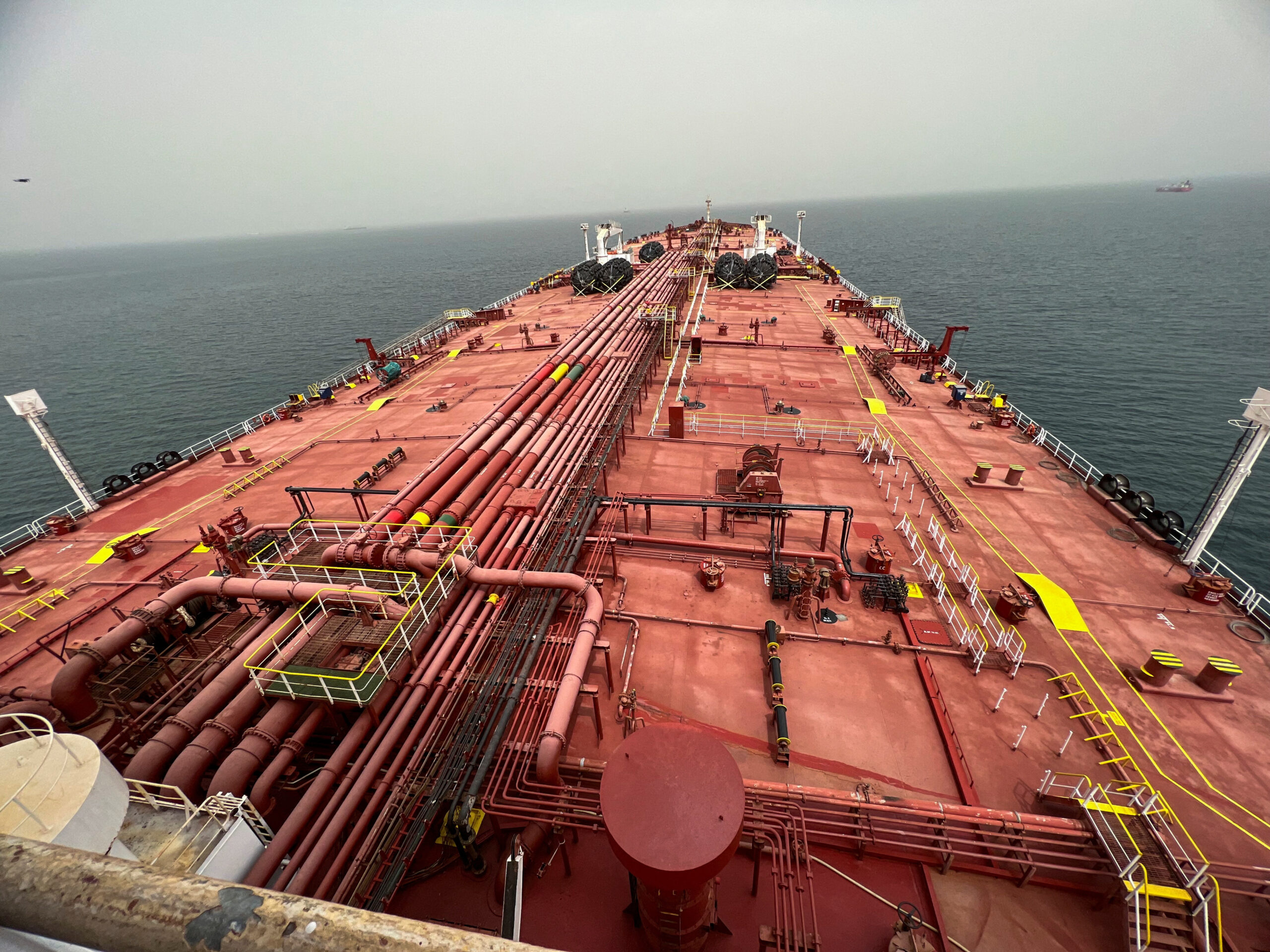
Qatargas 1 is the largest of Qatar’s seven liquefaction plants, consisting of three trains with capacity to produce 9.9 million metric tons per year (mt/y) of LNG. The process involves producing gas from Qatar’s offshore North Field and converting the gas into liquid form, which is then cooled to extremely low temperatures for transportation to world markets in specially designed tankers. The liquefied gas is converted back into gaseous form on the receiving end at regasification plants.
Qatargas Nameplate Liquefaction Capacity
Source: Qatargas, Qatar Petroleum, MEES
Qatar Petroleum originally considered the United States a key market for Qatari LNG, but that was before U.S. shale gas production soared, allowing the United States to become an exporter of liquefied gas. U.S. LNG exports now compete with Qatari LNG in many of Qatar’s traditional markets, including China. Where Qatar Petroleum has an advantage is in its low-cost production, medium- and long-term sales agreements, growing fleet of supertankers, and access to storage capacity in the United Kingdom and Belgium.
Qatar’s LNG Exports by Destination (2020 in million tons)
Source: Kpler, MEES
Qatar Petroleum has also moved swiftly to produce lower-carbon LNG to meet customer demand for carbon-neutral cargoes, an investment that will pay off in the growing global trend to decarbonize. Gas producers are coming under increasing pressure to reduce methane emissions to comply with stricter environmental standards. Qatar’s LNG expansion will involve the use of carbon capture and storage to sequester methane and export green LNG. Saad Sherida Al-Kaabi, Qatar’s minister of state for energy affairs and CEO of Qatar Petroleum, said in a November 2019 interview with MEES that Qatar Petroleum planned to spend $100 million to $200 million on sequestration of carbon dioxide.
Qatar Petroleum was a relative minnow when the first LNG project was conceived, more focused on oil production rather than gas. It has since matured and now operates more like an international oil company with a global presence. Under Kaabi’s stewardship, the integrated oil and gas company has been streamlined to operate more efficiently while expanding beyond its home turf. In recent years, Qatar Petroleum has acquired assets in Africa, the eastern Mediterranean, and as far afield as Guyana, where ExxonMobil dominates in the frontier province. Total is also invested in Guyana’s offshore oil patch.
In announcing the decision to end the Qatargas 1 partnership with the foreign oil majors, Kaabi acknowledged the roles of Total and ExxonMobil in developing Qatar’s massive gas reserves and its LNG business. Qatar has the world’s third largest natural gas reserves after Russia and Iran. The BP Statistical Review of World Energy 2020 estimates Qatar’s reserves at 872 trillion cubic feet. “The takeover by Qatar Petroleum will conclude more than 25 years of successful operations of QG1, from which the first ever Qatari LNG cargo was exported,” Kaabi said. “This is a momentous event that highlights Qatar Petroleum’s efforts to further enhance the utilization of our natural resources for the benefit of our country and its current and future generations as well as to continue serving the world’s need for cleaner energy.”
Qatar Petroleum’s decision coincides with its plans for a two-phased expansion of capacity from 77 million mt/y currently to 126 million mt/y before the end of the decade.
Qatar Petroleum plans to invite bids later this year for 30% participation in its North Field East first phase expansion to 110 million mt/y, a $28.75 billion project. Kaabi indicated at a recent industry event that he would look to ExxonMobil to be among the bidders. It remains to be seen if Qatar Petroleum will seek a more geographically diverse partnership for its new projects. It recently clinched a series of LNG sales agreements with Asian buyers, including China, Pakistan, and Bangladesh. Asia is Qatar’s largest LNG market, accounting for around two-thirds of its 2020 exports.
Although the move coincided with a tighter fiscal environment in Qatar as a result of the global economic slowdown caused by the coronavirus pandemic, assuming full ownership of Qatargas 1 would translate into higher revenue for the state once the foreign partners exit. Qatar had already signaled its intention to pursue a more independent energy policy when it withdrew from OPEC in 2019.
After more than 25 years of working alongside international oil company giants, Qatar Petroleum has the technical capability and expertise to manage its own gas business along with the financial clout to self-finance new projects. But it is unlikely that it will end all its partnerships with ExxonMobil, Shell, and Total, which have both technical and LNG marketing expertise. The relationships also offer a geopolitical advantage given the lobbying power of the oil majors in their respective countries. The oil majors may be streamlining their operations and cutting costs, but the opportunity to take part in Qatar’s ambitious LNG expansion projects at a low break-even cost is likely to prove too attractive to miss despite the latest setback.
The views represented herein are the author's or speaker's own and do not necessarily reflect the views of AGSI, its staff, or its board of directors.
Gulf national oil companies are looking to increase stockpiles in Asia to meet customer needs, address their energy security concerns, and enable a nimbler response to unexpected market disruptions.
Saudi Arabia’s ability to maintain its reputation as a reliable supplier in the months ahead will depend on how quickly it can repair damaged assets and keep several imperfect routes operating at the same time.
How the Gulf states choose to invest now could determine not just how they survive this crisis but how they sustain their role as both allocators and magnets of capital and superpowers in the global energy system.
Saudi Arabia’s ability to maintain its reputation as a reliable supplier in the months ahead will depend on how quickly it can repair damaged assets and keep several imperfect routes operating at the same time.
Egypt has become the indispensable transit state linking Saudi Arabia's Red Sea infrastructure with global markets. But that strategic importance may also have exposed it to the same risks facing Gulf producers.
The vulnerability of the world's most important energy chokepoint has been laid bare, setting in motion changes that are likely to outlast the conflict.