Cricket has become a key part of the United Arab Emirates’ multipolar approach to sports investment, where franchise ownership, player markets, and transnational capital converge to support economic diversification and power projection.
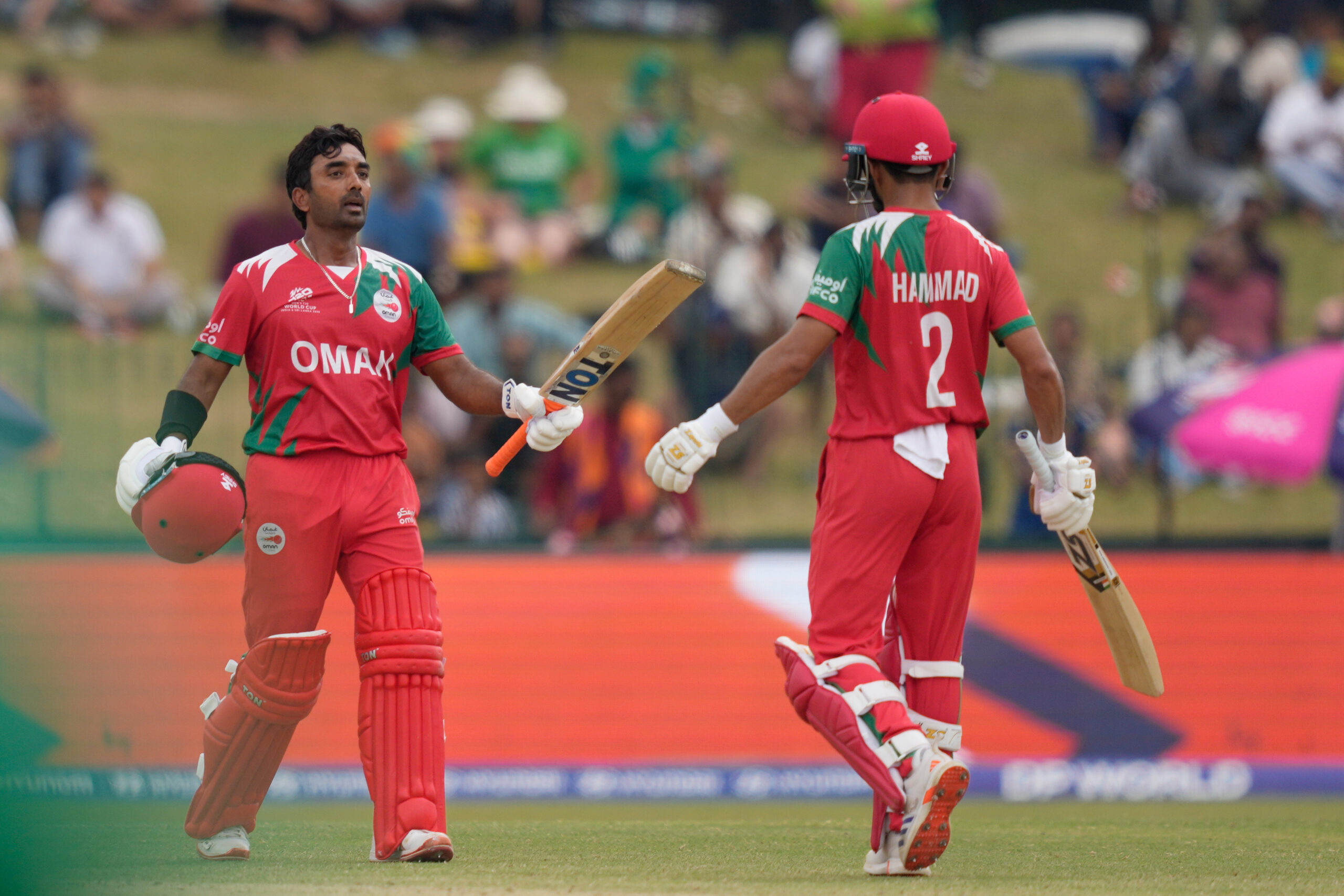
Oman's Syed Aamir Kaleem, left, celebrates his 50 runs with batting partner Hammad Mirza during the T20 World Cup cricket match between Ireland and Oman in Colombo, Sri Lanka, February 14. (AP Photo/Eranga Jayawardena)
Far from Italy’s Olympic slopes, the United Arab Emirates and Oman are competing in the International Cricket Council Men’s T20 World Cup, while Gulf-backed sponsors and franchises engage with lucrative South Asian markets. For the UAE, cricket, once a pastime primarily practiced by expatriate communities, has transformed into a strategic sector that intertwines sports, commerce, and regional influence.
Cricket Geopolitics
On December 16, 2025, the Indian Premier League held its annual player auction in Abu Dhabi, highlighting the UAE’s centrality in the governance and political economy of global cricket. Beyond serving as a marketplace for players, the auction brought together Indian business elites, global media, Abu Dhabi’s financial apparatus, and Dubai’s flagship institutions. Abu Dhabi aims to serve as a key hub for influential actors in the Pakistani and Indian markets, well beyond the bounds of cricket.
Previous auctions in Dubai, in 2023, and Jeddah, in 2024, also connected Indian investors with Gulf Cooperation Council states pursuing economic diversification initiatives in Asia. Saudi Arabia has leveraged cricket sponsorships – Saudi Aramco’s International Cricket Council sponsorship in 2021 and Visit Saudi’s Indian Premier League sponsorship in 2023 – to strengthen its position as a global sports hub. Dubai leveraged cricket to sustain its economic project through global attractiveness and its expatriate population, and Saudi Arabia, through Jeddah, developed a pillar of Saudi Vision 2030, structuring cricket as a market platform to advance regional influence and economic connectivity.
In Abu Dhabi, now, the UAE is pursuing distinct strategic goals. Abu Dhabi has embedded the sport within a broader geopolitical architecture aimed at structuring and sustaining political and economic alignments across South Asia and the Gulf. Through leagues, such as the DP World International League T20, and strategic events, including the Indian Premier League Auctions in Abu Dhabi, the UAE is using cricket to preserve channels with Pakistan, deepen its strategic tilt toward India, and connect with diaspora and transnational business networks.
Although Abu Dhabi continues to formally engage with Islamabad, including a December 26, 2025 visit by UAE President Mohammed bin Zayed al-Nahyan, it has recalibrated its regional posture in response to recent tensions with Saudi Arabia and the UAE’s full withdrawal from Yemen. This rupture, compounded by the consolidation of the Saudi-Pakistani alignment through a military cooperation agreement in September 2025, seems to have accelerated Abu Dhabi’s strategic reorientation toward India – signaled by a January 19 meeting between Mohammed bin Zayed and Indian Prime Minister Narendra Modi. As evident in these instances, cricket is an auxiliary instrument of statecraft – a platform to increase ties – or preserve them – outside of traditional diplomatic channels.
Gateway to Asia
Cricket began to grow in the Gulf in the 1930s among South Asian merchant communities in Dubai, Sharjah, Muscat, and Manama and was played by British soldiers near their bases. In the 1980s, cricket in the UAE became associated with Sharjah and Dubai. Sharjah was a neutral venue for South Asian teams. Dubai offered infrastructure, hospitality, and commercial services and has hosted the International Cricket Council headquarters since 2005. Abu Dhabi’s initiatives, including hosting the Indian Premier League auction and launching the DP World International League T20 in 2023, consolidated governance, infrastructure, and league management under state supervision. The DP World International League T20, inspired by the Indian Premier League franchise model, is regarded as the second-most powerful domestic T20 league in financial terms and global reach behind the Indian Premier League.
Unlike historically influential merchant ports, where cricket developed organically through trade and diasporic exchanges, the Gulf’s hydrocarbon states adopted the sport later and primarily as a state-led strategic instrument. In the mid-2000s, Abu Dhabi began embedding cricket within projects that linked governance, capital, and elite South Asian networks. This model was subsequently emulated, though unevenly, by Saudi Arabia and Qatar, where cricket became one element in wider efforts to consolidate regional stature and hub ambitions. In clubs and institutions reserved for Gulf citizens, the sport is not offered, reflecting rulers’ deliberate promotion of Arab-associated sports, such as football (or soccer), handball, volleyball, and track and field. Oman is a notable exception, where cricket has been used to unify diverse communities, elevating its role.
The UAE’s South Asian diaspora represents a vast consumer market and reservoir of capital, expertise, and influence. By attracting cricket governance, leagues, and tournaments, the UAE has become both a hub for South Asian elites and a gateway to Asian markets.
Institutional Consolidation
Under Nahyan bin Mubarak al-Nahyan, UAE minister of tolerance and coexistence and president of the Emirates Cricket Board, cricket has become an instrument of influence. In June 2006, he replaced Abdulrahman Bukhatir, a Sharjah businessman and cricket promoter active since the 1980s, in a shift from private business control to consolidation under Abu Dhabi rulers. Leveraging political, economic, and philanthropic networks across South Asia, Nahyan bin Mubarak made Abu Dhabi a central hub for cricket, attracting investment, integrating diaspora markets, and cementing the UAE’s role in international cricket governance. His connections extend into the Pakistani economy through the Abu Dhabi Group, with stakes in Bank Alfalah, Warid Telecom, and Wateen Telecom.
The DP World International League T20, launched in 2023 and dominated by Indian corporate investors – including Reliance Industries, Adani Sportsline, and the Knight Riders Group – strengthened regulatory authority, attracted foreign investment, and deepened ties with South Asian business elites. The UAE was also a launchpad for the Pakistan Super League in 2015 and safe haven for Pakistani cricket after the Lahore attack in 2009, reinforcing Abu Dhabi’s image as a neutral, business-friendly hub capable of hosting global events.
National Squads, Migration, and the Gulf Cricket Ecosystem
The participation of Oman and the UAE’s national teams in the International Cricket Council Men’s T20 World Cup reveals the structural and migratory dynamics that shape Gulf cricket. In the Gulf, player trajectories generally follow two broad patterns. The first group are the “ideal-type” cricketers who were born and raised in the Gulf, integrated into local clubs, domestic leagues, and youth development programs, and meet International Cricket Council residency requirements. These players of South Asian origin often form the backbone of national squads. The second type consists of migrant professionals from South Asia, recruited through corporate teams, franchise contracts, or short-term employment terms. While these players bring valuable expertise, their transient presence often limits their contribution to squad cohesion and their eligibility under International Cricket Council residency rules.
Oman’s 15-player squad, for example, combines local-born talent with players of Indian or Pakistani origin, such as team captain Jatinder Singh, who developed within Oman’s domestic structure despite being born in India. Similarly, the UAE’s squad, led by Muhammad Waseem, relies on South Asian-origin players, many of whom are present due to franchise commitments or corporate employment. While these selections strengthen the team competitively, they also illustrate the narrow domestic talent pool and point to a relatively restrictive fan base, inhibiting long-term continuity and growth in popularity of the sport.
Influence, Sponsors, and Networks
On the pitch, cricket tells a story of attraction, migration, and the transnational circulation of talent. Behind the scenes, the sport operates as a space of influence where Gulf state interests converge with the strategic and economic ambitions of wealthy South Asian businesspeople. While franchise names and prominent families dominate public attention, operational control often rests with Pakistani and Indian entrepreneurs, who manage investment flows, sponsorships, and league governance.
The Gulf’s influence is particularly visible in financial and institutional terms. The sponsors of the International Cricket Council World Cup – Emirates, Aramco, Sobha, and DP World – highlight the region’s centrality in International Cricket Council finances. Through these financial commitments, Gulf actors shape governance, tournament economies, and league structures.
GCC Diversification and Soft Power
The growth of cricket across GCC countries is part of a larger alignment of economic, cultural, and geopolitical priorities. South Asian businesses benefit from political stability, favorable demographics, and economic opportunities, while GCC states integrate cricket into broader development agendas: Stadiums and tournaments support tourism, urban projects, and transportation, while broadcasting rights amplify regional influence. This multidimensional approach reflects Gulf strategies where sports are a nexus for investment, infrastructure, and projection.
By centralizing governance, attracting South Asian capital, and tapping diaspora markets, the UAE is using cricket as a bridge to South Asia. Far removed from tape-ball matches (street cricket) and the private clubs that structure South Asian diasporas’ everyday cricket in the Gulf, this sport has become a strategic platform where soft power, economic opportunity, and regional influence meet, showing how these Gulf powers play to win on multiple fronts.
The views represented herein are the author's or speaker's own and do not necessarily reflect the views of AGSI, its staff, or its board of directors.
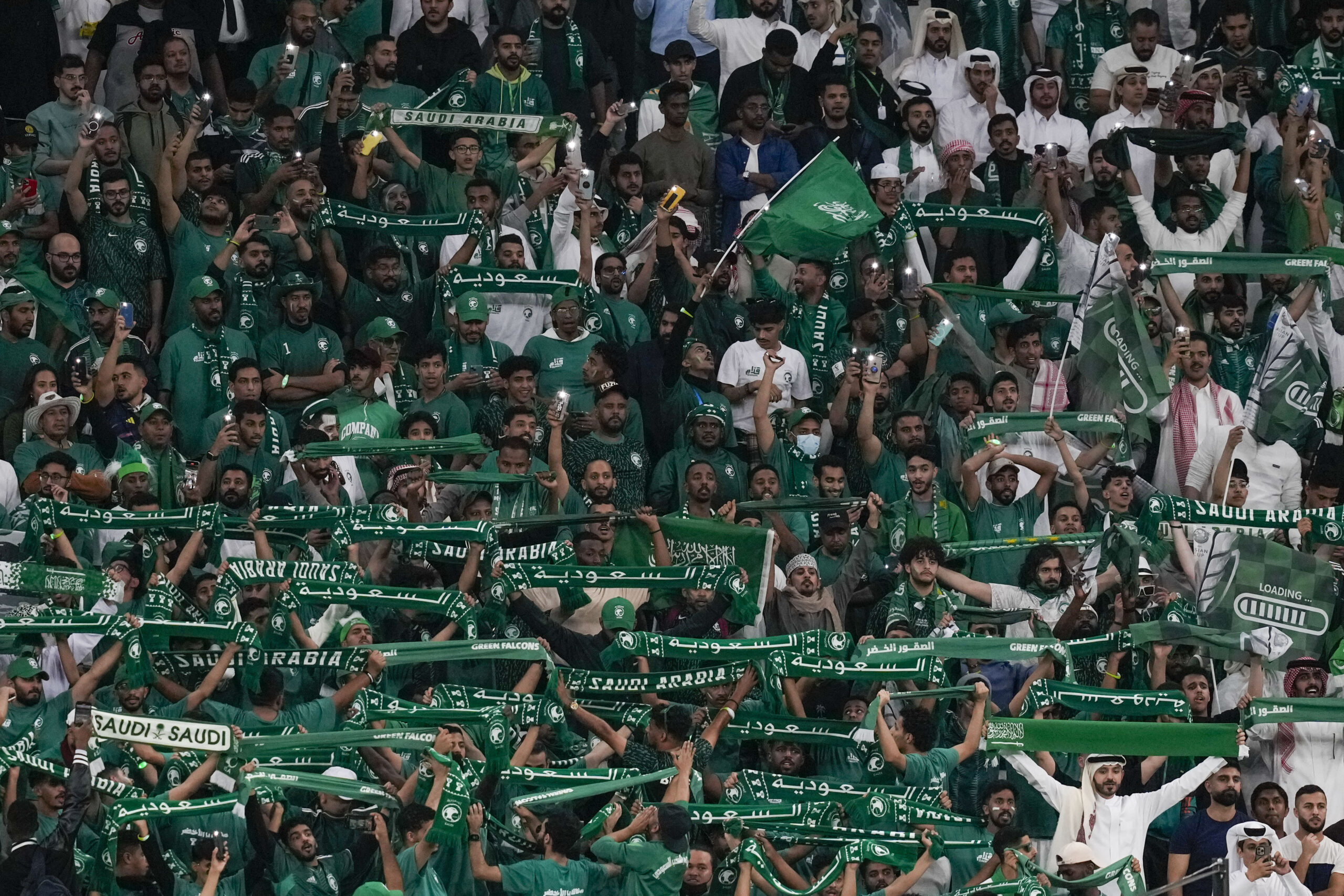
Hosting the World Cup will be a huge opportunity for Saudi Arabia, supporting Vision 2030 reforms. While preparations for the tournament will be costly, they will boost economic growth and could spur further social change.
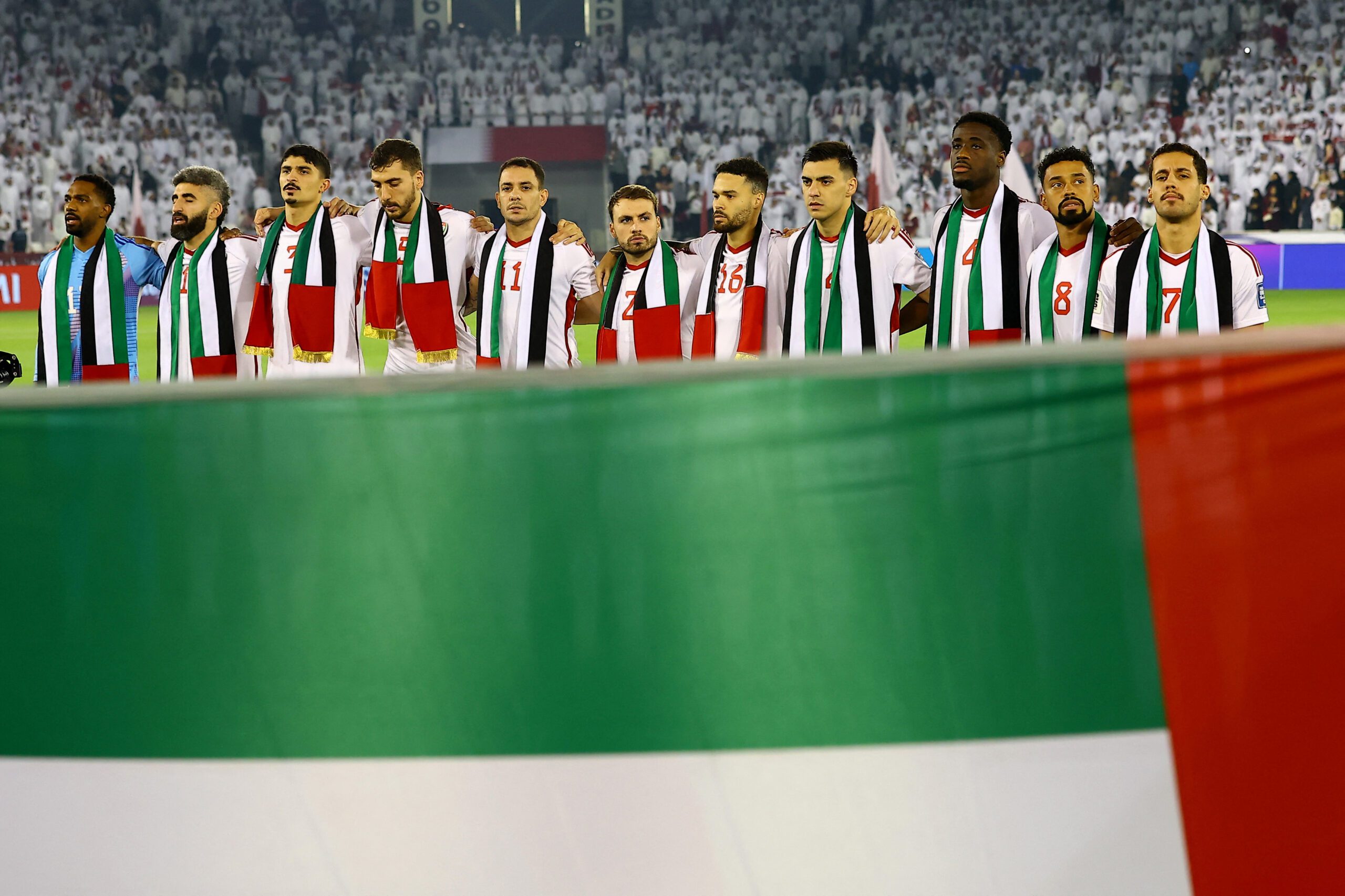
Qatar's first World Cup point, earned through a goalkeeper of Palestinian descent, reveals how the emirate has turned a tiny citizenry, migration, and naturalization into an instrument of statecraft and where that instrument meets its limits.
As Saudi Arabia seeks to reposition itself as a leading regional and global actor, its embrace of camel diplomacy reflects a sophisticated recalibration of tradition for modern ends.