Friends in Need: Morocco’s Gen Z Protests and the GCC Response
Morocco’s protests prompted gestures of support from GCC states, representing a fresh reminder of a long history of supporting each other in times of need.
Protesters demonstrate in Casablanca, Morocco, October 2. (REUTERS/Stringer)
On September 27, after the death of eight pregnant women at a hospital in Agadir, young Moroccans launched massive countrywide demonstrations demanding vast improvements in services and governance, lower expenditures on premier sporting events, and removal of the government. Over 250,000 young Moroccans joined the “Gen Z 212” social media group organizing the protests, which took its name from global Gen Z anticorruption protests and Morocco’s international telephone area code, +212. The protests extended to over 30 cities and towns, and mostly peaceful protesters numbered in the tens of thousands. More than 100 police vehicles were damaged, 326 security forces were injured, and three protesters were killed. The government responded with thousands of detentions and arrests, and over 1,500 protesters face prosecution. Some have already received long prison terms.
As the protests spread nationally, the list of demands grew. Economic demands were high on the list – with the youth unemployment rate topping 35%, protesters called for more jobs as well as higher wages and lower prices and higher subsidies for basic goods. At the same time, they called for lower expenditures on the 2025 Africa Cup and 2030 World Cup. They demanded improvements in education, health care, housing, and public transit. They called for the release of detained protesters and effective measures against corruption, including the removal of corrupt political parties from the governing coalition. Interestingly, they also called for the adoption of English over French as Morocco’s second national language after Arabic, and, notably, most protest signs were in English – relatively few were in Arabic, with almost none in French. Increasing numbers of young Moroccans prefer English over French, replacing “colonial” French with the preferred language of international commerce and communications.
The protests brought to mind the Arab Spring protests of 2011, which resulted in significant political changes in Morocco. The resonance with the earlier protests was enough to spark a reaction and support, albeit modest, from fellow monarchies in the Gulf. Moroccan King Mohammed VI’s regularly scheduled address to the Parliament on October 10 signaled his refusal to accede to the most forceful demands, notably the removal of the prime minister. Still, the protests have been a reminder both that ties among fellow monarchs persist and that youth ambitions in the region have not been fully met. Typically, protests in Morocco trigger cabinet reshuffles and, at times, prime minister replacements, institutional mechanisms that insulate to some degree but also serve as a proxy for direct criticism of the monarch.
Morocco in the Gen Z Protest Wave
Morocco was the 22nd country swept up in a global wave of protests that peaked in September following well-publicized Gen Z protests in Nepal and Madagascar. Previously referred to as the “Asian spring,” worldwide Gen Z protests began earlier in Sri Lanka and Iran (following the death of Mahsa Amini) in 2022; continued in 2024 in Kenya, Bangladesh, Mozambique, and South Korea; and, in 2025, spread to Turkey, Mongolia, Nepal, Timor-Leste, Madagascar, Serbia, Indonesia, Togo, the Philippines, France, Italy, Switzerland, San Marino, the Maldives, Peru, Paraguay, and Morocco.
What ties these global youth protest movements together, other than the ubiquitous skull and crossbones flag and meme (from the Japanese manga series “One Piece”), are concerns over inequality, reductions in standards of living, corruption, democratic backsliding, and increasing authoritarianism. Another common thread has been the important roles of rappers, both in providing protest anthems and as “martyrs” when arrested. Morocco was no exception. Prominent Moroccan rappers in the movement included Don Bigg, Dizzy DROS, ElGrande Toto, and Khtek, and the movement also spawned the viral rap freestyle challenge #FreeKoulchi (Free Everyone).
While some of these protests have toppled governments – for example in Nepal and Bangladesh – others have been more reformist in nature, such as those in Turkey, Indonesia, and Morocco. Young Moroccans presented their demands to Mohammed VI in an October 2 letter that called for the removal of the prime minister, the dismissal of the government, and a plethora of reforms and new policies. A second letter by 60 prominent artists and intellectuals condemned the government’s initial lack of concessions and called for the same reforms and the release of those in detention.
Solidarity From the Gulf States
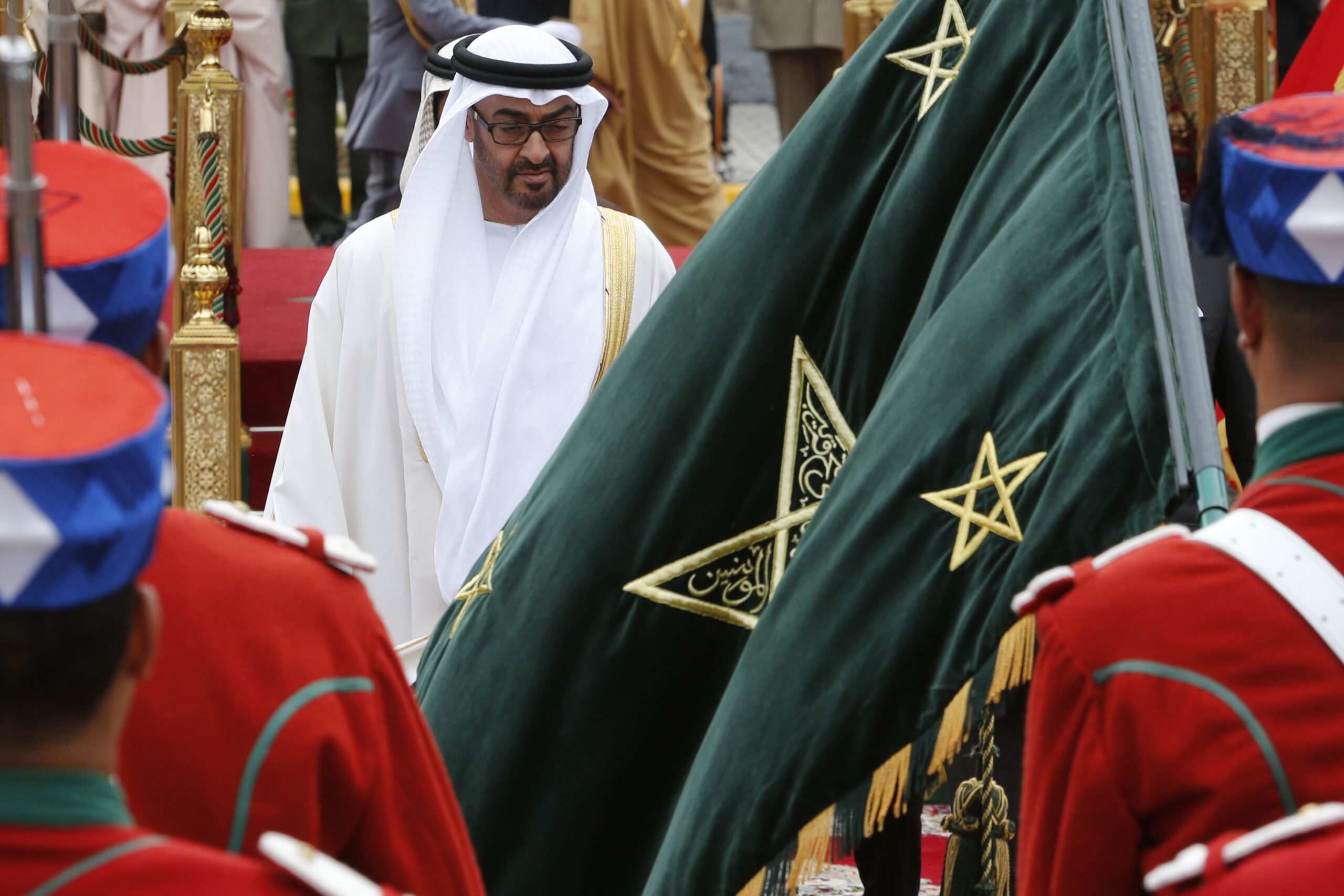
The Moroccan state’s predicament prompted a series of gestures of support by Gulf Cooperation Council countries. Saudi Prince Turki bin Mohammed bin Fahd bin Abdulaziz, minister of state and member of the Council of Ministers, personally delivered a message to Mohammed VI on October 6 on behalf of Saudi King Salman and Crown Prince Mohammed bin Salman. On the same day, the Saudi crown prince’s plane was spotted in Marrakesh, prompting unsubstantiated media reports that Mohammed bin Salman personally participated in the Saudi show of solidarity. In addition, a high-level Saudi delegation visited the capital, Rabat, to discuss increasing cooperation in a wide range of strategic sectors, including bilateral efforts to boost employment. Anwar Gargash, advisor to the president of the United Arab Emirates, issued a statement of solidarity. Al Jazeera covered the protests but significantly softened its tone relative to its coverage of the 2011 Arab Spring protests in Morocco, amid a widely reported reorganization of its senior staff and concomitant shifts in its editorial line.
Morocco and the GCC states have a long history of supporting each other in times of need. Following a serious oil spill off Morocco’s coast in 1989 by an Iranian tanker, Saudi Arabia sent Morocco $50 million for the cleanup. When ocean winds and currents unexpectedly pushed the spilled oil offshore and out of harm’s way, the money was used to create Al Akhawayn University, which quickly became the country’s most prestigious institution of higher learning. Morocco famously sent 1,200 troops to defend Saudi Arabia in 1991 following Iraq’s invasion of Kuwait despite strong populist headwinds in Morocco. GCC countries made a series of strong gestures during and after Morocco’s large Arab Spring protests, leading to the 2013 establishment of a $5 billion development fund. Morocco joined Saudi Arabia’s military action in Yemen in March 2015, and Moroccan soldiers stayed for nearly four years. When Morocco cut ties with Iran in 2018, it cited Iran’s 2011 interference in Bahrain as one of the reasons.
These gestures of solidarity have accompanied a deepening of economic and business ties. The first Morocco-GCC summit was held in 2016. And, in March, Morocco and the GCC established a joint action plan for 2030. The fifth Moroccan-GCC Investment Forum was held in early November. Increased GCC investment has been and will be critical in helping Morocco weather the current storm.
The King’s Response and a “Victory” for Youth
Mohammed VI responded to the protests in his October 10 address to the new session of Parliament. He called for job creation, improved services, and a reduction in regional inequities and directly criticized the Parliament for inefficiency, but he also – indirectly – criticized protesters for questioning “flagship” projects. These include the construction and refurbishing of seven stadiums for the World Cup, which he argued were no less important to national development and pride than other local infrastructure projects. For example, the new stadium in Casablanca is planned to be the largest in the world, with a capacity of 115,000 spectators. However, the most prominent slogan of Morocco’s protests was “Stadiums are there, but where are the hospitals?” Another was: “At least the FIFA stadium will have a first aid kit! Our hospitals don’t.”
The Moroccan government introduced both economic and political reforms following the protests. On the economic side, it announced a 16% increase in health and education spending amounting to $15 billion. These reforms are slated to create 27,000 jobs in those sectors, build new university hospitals, renovate 90 other hospitals, and expand teacher training and preschool education. On the political side, Morocco introduced bills to increase youth participation in politics, including the easing of candidate eligibility requirements and subsidies of up to 75% for young candidates’ electoral campaigns. “Gen Z 212” responded somewhat tepidly that “these measures must be accompanied by firm measures against corruption and conflicts of interest.”
Then something extraordinary happened: Morocco upset a heavily favored Argentinian team at the 2025 FIFA U-20 World Cup, the youth soccer World Cup, in Chile. Morocco defeated Spain, Brazil, South Korea, the United States, and perennial top seed France to get to the final. Argentina was the only undefeated team and had won the trophy six previous times. On October 19, the young Moroccans beat the offensively and defensively capable Argentinian team 2-0.
Suddenly, many of the same young Moroccans lamenting new stadiums joined the delirium in favor of another huge Moroccan soccer success. Morocco had been the first African or Arab team to reach the Men’s World Cup semifinals in 2022. Its women’s team was reaching new heights as well by unexpectedly qualifying for knockout stages of the 2023 World Cup, the first Arab and North African team to do so. This filled Moroccan youth with pride and is likely to serve to further dampen criticism of soccer stadium construction and refurbishment. But as the monarch and Moroccan youth seem to agree, the country’s political and economic success will depend to a significant degree on greater investment in job creation and services beyond what World Cup success will provide.
The views represented herein are the author's or speaker's own and do not necessarily reflect the views of AGSI, its staff, or its board of directors.
Gulf actors will be paying close attention to the dispute to make sure it does not transition to more direct conflict that could further jeopardize regional stability and strategic Europe-Mediterranean-Africa market linkages.