Talli Circle: Traditional Weaving Connects Emirati Women
Talli Circle, a new platform highlighting a traditional Emirati form of weaving, is reconnecting young Emirati women with their culture, heritage, and mothers and grandmothers.
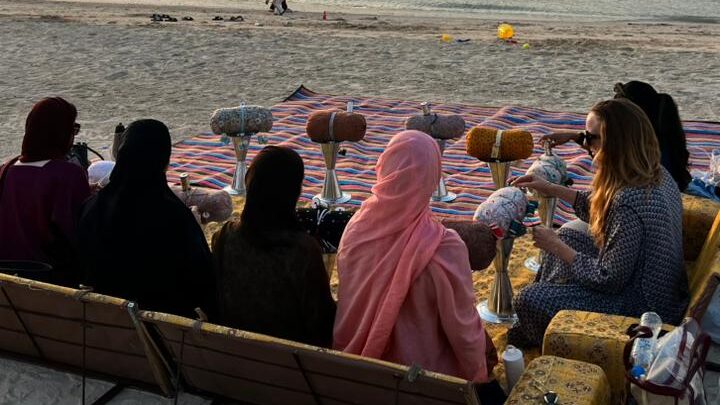
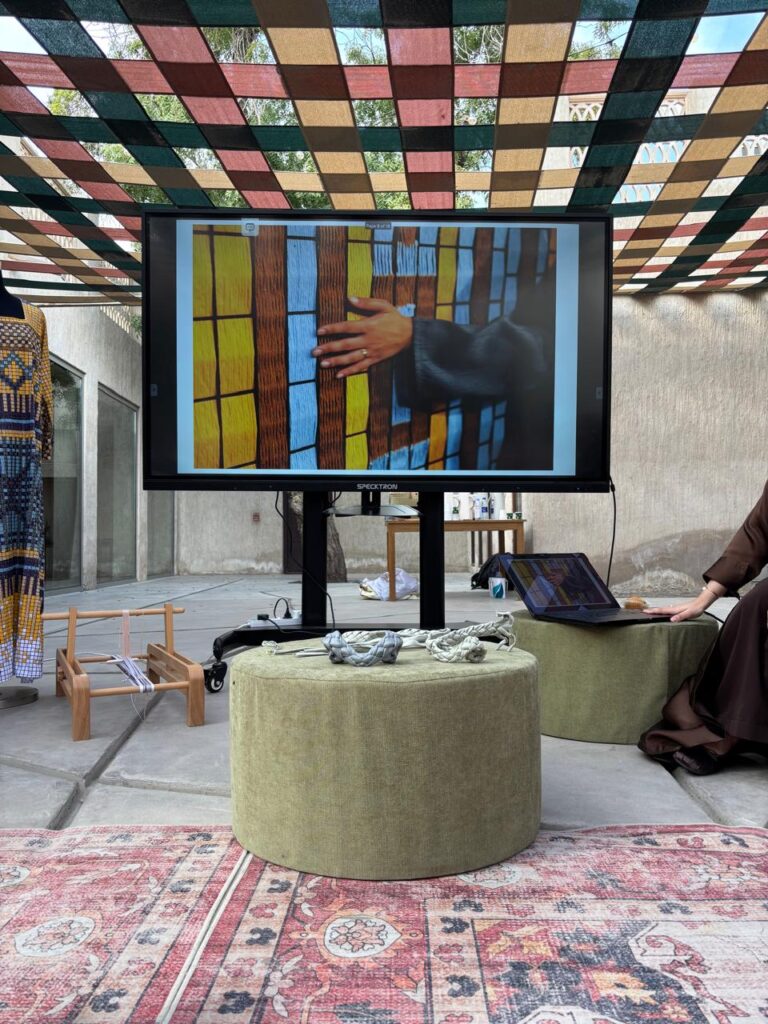
Talli Circle community event at Jumeirah Beach Park. (Courtesy of Talli Circle)
Salama Al Falasi is a workshop facilitator and co-founder of Talli Circle, a new and upcoming platform highlighting talli craft, a traditional form of decorative weaving. Salama believes that “talli is woven into the identity of Emirati women.” Talli Circle organizes and hosts workshops, aiming to bridge the gap between Emirati artisans and those hoping to learn the craft themselves. The workshops are a space not only for learning the talli technique, they also provide participants with deep historical and cultural knowledge of the craft and unique ways it is being preserved and repurposed. While the ultimate goal is to teach and inform, Talli Circle also hopes that by bringing women together who share a passion for talli, they will create a community.
The Arab Gulf States Institute spoke with Salama about talli craft and how Talli Circle is working to preserve it and help Emirati women connect with each other and their culture.
AGSI: First off, what is talli, and can you explain its significance?
Salama: Talli, in its simplest form, is a traditional Emirati embroidery craft passed down from mother to daughter to embellish clothing. The craft has distinct phases. In fact, “al–tallimarahal” (talli is phases) is a widely known saying. We say that talli is a starting point, and the final weave is al–badla – a type of pants with large, heavy embellishment at the bottom. This is the final form of talli and the most difficult. It is cherished because it is traditionally passed down from mother to daughter on her wedding day.
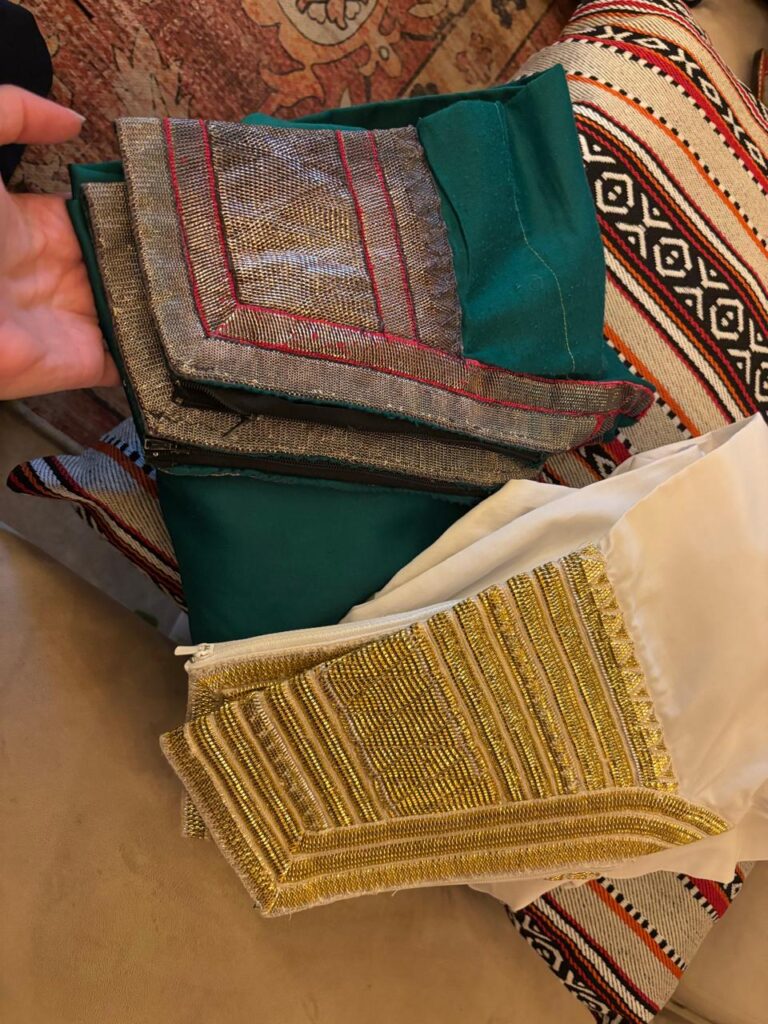
A close-up image of an older al-badla compared to a modern one. (Courtesy of Talli Circle)
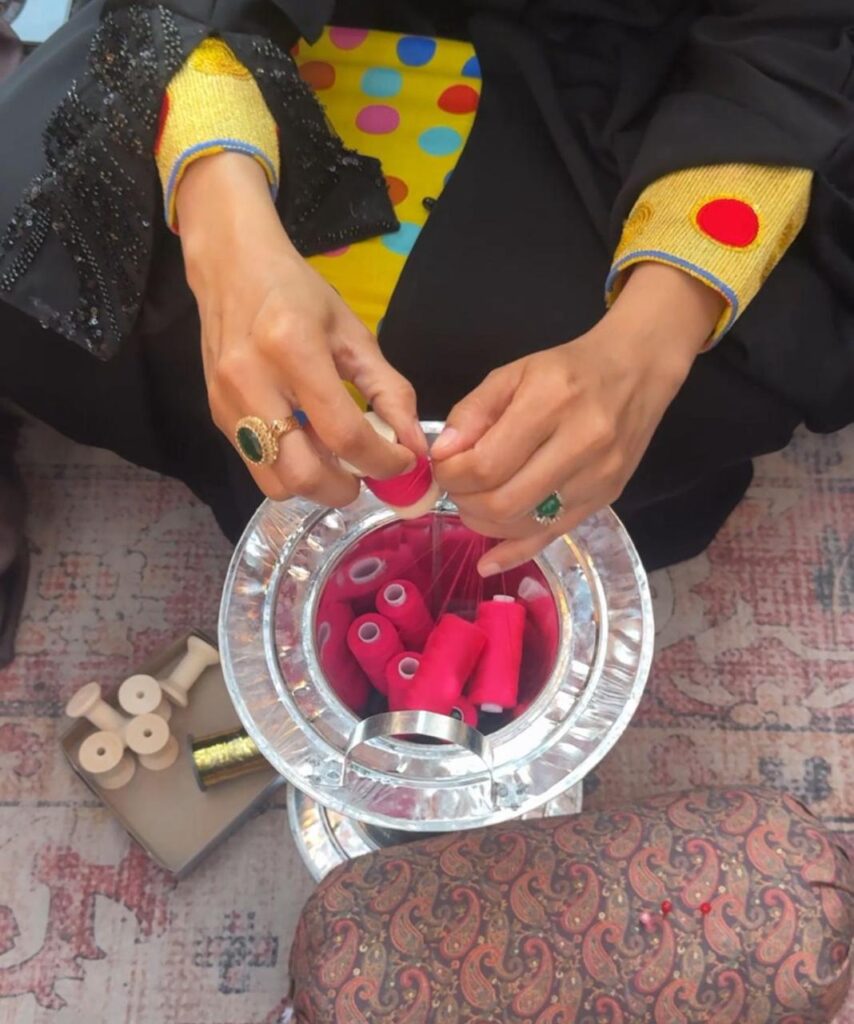
The materials required to make talli include threads from either cotton, polyester, or silk; khoos, which is a metallic thread; a kajooja; bobbins; elastics; and pins. With these materials, you can start making your own talli. The kajooja is a stand with two cones and a pillow on top. It is customary to be seated on the ground while making talli, as we didn’t have chairs and tables back in the day.
Participant at Talli Circle workshop. (Courtesy of Talli Circle)
AGSI: How did you get started organizing talli workshops?
Salama: I studied fine arts, with a minor in art history. I love heritage, history, and culture. I am particularly fascinated with learning about my own culture. I had always wanted to learn talli. My cousin described it to me. She has extended family from Liwa, where they often practice the craft. Last summer, I attended a workshop hosted by the Emirati jewelry designer Alia bin Omair. There I met with Azra Khamissa and Vanessa Gate. We felt that talli was a challenging craft but very rewarding to learn. We wanted to make the workshops accessible and enriching, covering the practical techniques, history, and contemporary evolution.
Our aim was to create an enriching, accessible, and enjoyable experience for a community of women who wanted to learn talli. Hosting the workshops, in a way, makes me feel like I am honoring my ancestors. I feel a sense of pride and humility when I’m teaching talli to our attendees. It is gratifying to see women meet and bond over learning the same craft. It is important for us to build a community.
My cousins have also learned talli, and they were practicing in front of their grandmother. I think she feels very happy to see them continue a craft that may have skipped a generation. I was glad to hear that she relaxes when she sees this new, younger generation practicing talli. There’s a blessing in that.
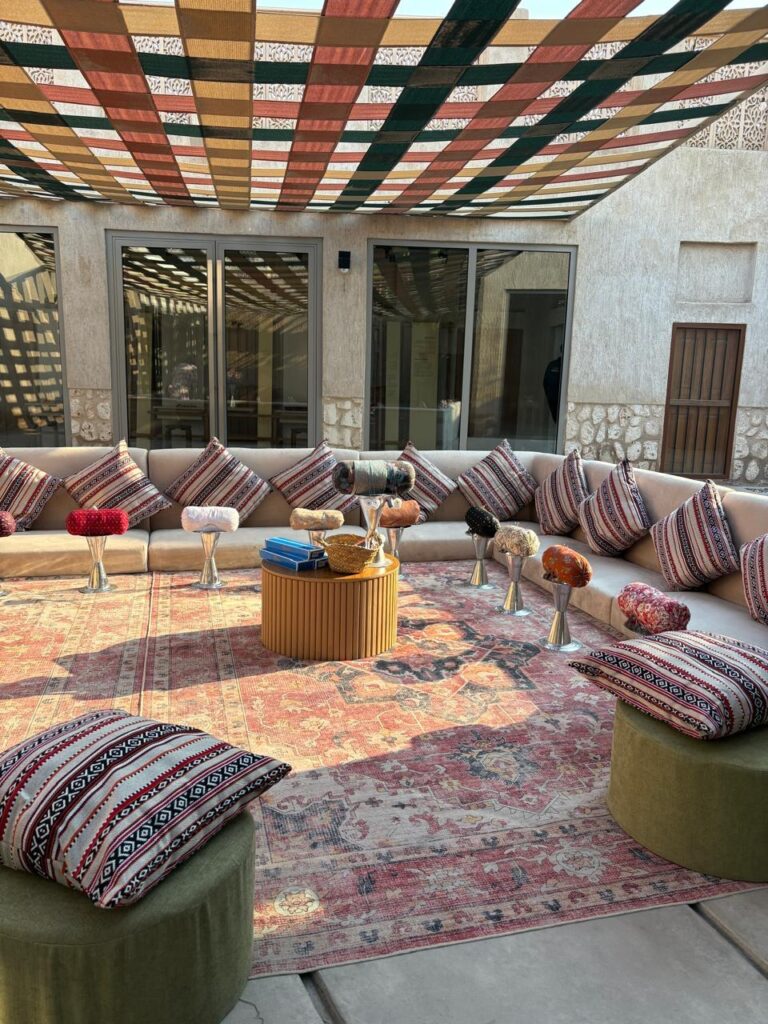
Talli Circle workshop at Al Shindagha Museum. (Courtesy of Talli Circle)
AGSI: Why do you think it’s important to preserve a craft like talli?
Salama: I believe that talli is essential to preserve because it allows Emirati women to connect with their heritage. By maintaining this connection, the craft serves as a bridge between the past and the present. In the past, the khoos was made with authentic silver. Talli was a currency. It allowed women to protect their wealth and keep it close by stitching it into their clothes.
With fewer elders to seek wisdom from, I took it upon myself to preserve talli. I noticed younger generations face cultural identity gaps. Talli can bridge that divide. If you feel like you don’t know where you’re from, or if you don’t know your cultural values … talli can help you.
The language barrier is another challenge to learning talli. Some young Emiratis lack essential Arabic skills, unlike previous generations. Yet most of the older women who practice talli don’t speak English. This divide complicates the transmission of the talli craft. Through talli, younger Emiratis can learn an array of Arabic vocabulary, like kajooja, khoos, braysum (silk), and bakarat (spools). To these young women, talli transcends language and generational divides.
Additionally, traditional crafts like needlework and crochet have made a comeback in recent years. This revival is driven by factors like increased screen time, lifestyle choices, stress, and consumerism. This renewed interest benefits crafts like talli as it also behaves like a mindfulness practice.
AGSI: What are some new ways that Emirati women are preserving talli or integrating it into their own crafts?
Salama: Munira al–Mullah and Sarah Al Mansoori come to mind. They recreated the kajooja stand, which is an interesting spin. I use the traditional kajooja myself, and I feel it could use some improvement. NAFS is a luxury Emirati clothing line. They sew talli into their jalaleeb (flowing garments) but with a modern twist to the design. Talli Circle invited the owner to give a lecture at one of our workshops. She brought her grandmother’s and mother’s badlas. Her grandmother’s was made with authentic silver khoos. It was insightful to compare it to her mother’s badla, which was made with a plastic gold-colored material more commonly used today. These are now artifacts from the 1960s and 1980s. It was a history class and rich treat for our attendees. She spoke about how they had preserved these family heirlooms and why they were so special to them. My role during the workshops is to be a facilitator, but it is hard to resist wanting to just be an attendee sometimes to take in all the learning and interesting stories being shared.
To our surprise, it’s not only Emirati women who are preserving talli or attending our workshops. A little over half of our participants are Emirati citizens, but we welcome many others of different nationalities. It’s a way for everyone to feel grounded in the United Arab Emirates and connected to the culture and people here.
Vanessa Gate, one of our co-founders at Talli Circle, approaches talli from the perspective of sustainable fashion and cultural exchange. Talli is a sustainable practice. The materials required and your tailor are locally sourced, which also makes you connect more with your community. The experience of learning talli has grounded Vanessa in Emirati culture and extended her community circle to more women finding enjoyment in the craft.
Sarah Alkhayyal, a guest speaker, presenting at a Talli Circle workshop. (Courtesy of Talli Circle)
AGSI: What are some of your future plans for Talli Circle?
Salama: When I look ahead, I feel a sense of responsibility to learn more about talli myself. This way, I can offer more to our participants. For example, I’m looking into taking a course in Abu Dhabi on how to properly stitch talli onto fabric. I want to fill the gaps in my knowledge so that I can offer more to those who attend our workshops.
When I mentioned talli is phases, the different techniques and styles are implied. The techniques are named after everyday objects. It’s poetic yet simple. So, it is my goal to learn more techniques. With that, our hope is to teach younger girls by bringing our talli workshops to schools around the UAE.
The views represented herein are the author's or speaker's own and do not necessarily reflect the views of AGSI, its staff, or its board of directors.
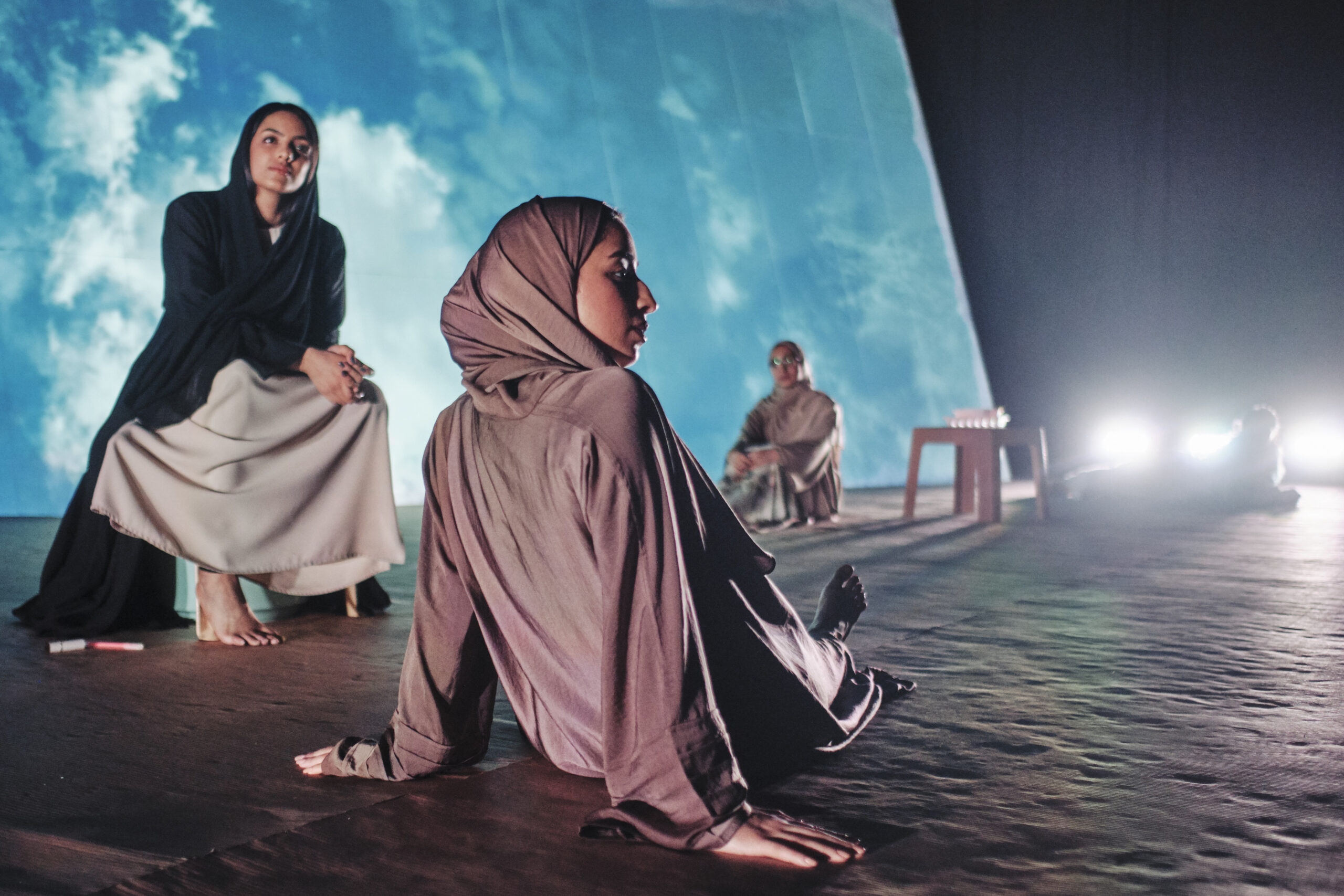
“Al Raheel,” a play written by a young Emirati woman, made its world premiere in January in Abu Dhabi. With its all-female Emirati cast, this poetic and innovative production shakes many assumptions about theater and what it means to be a young woman in today’s United Arab Emirates.