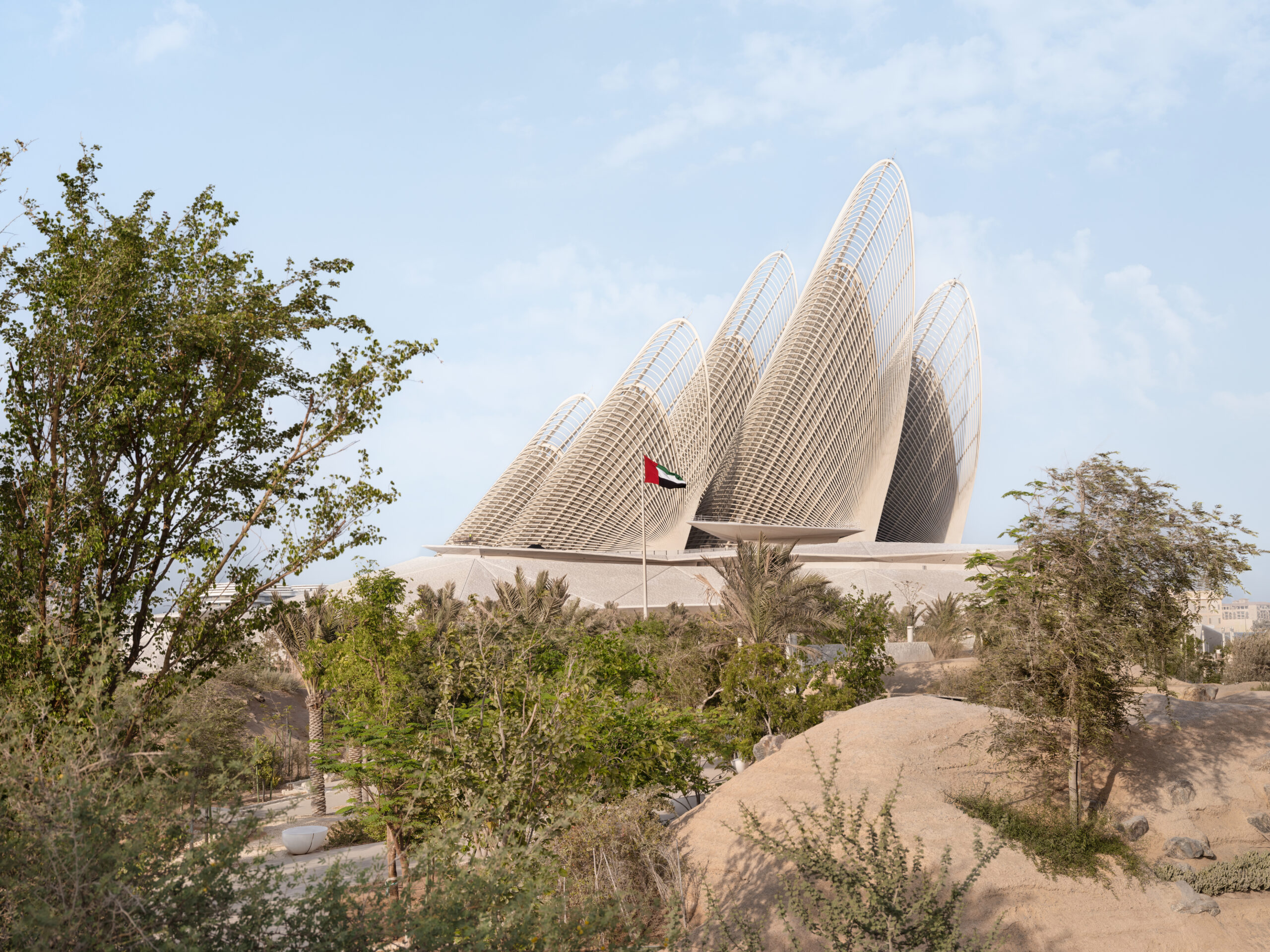
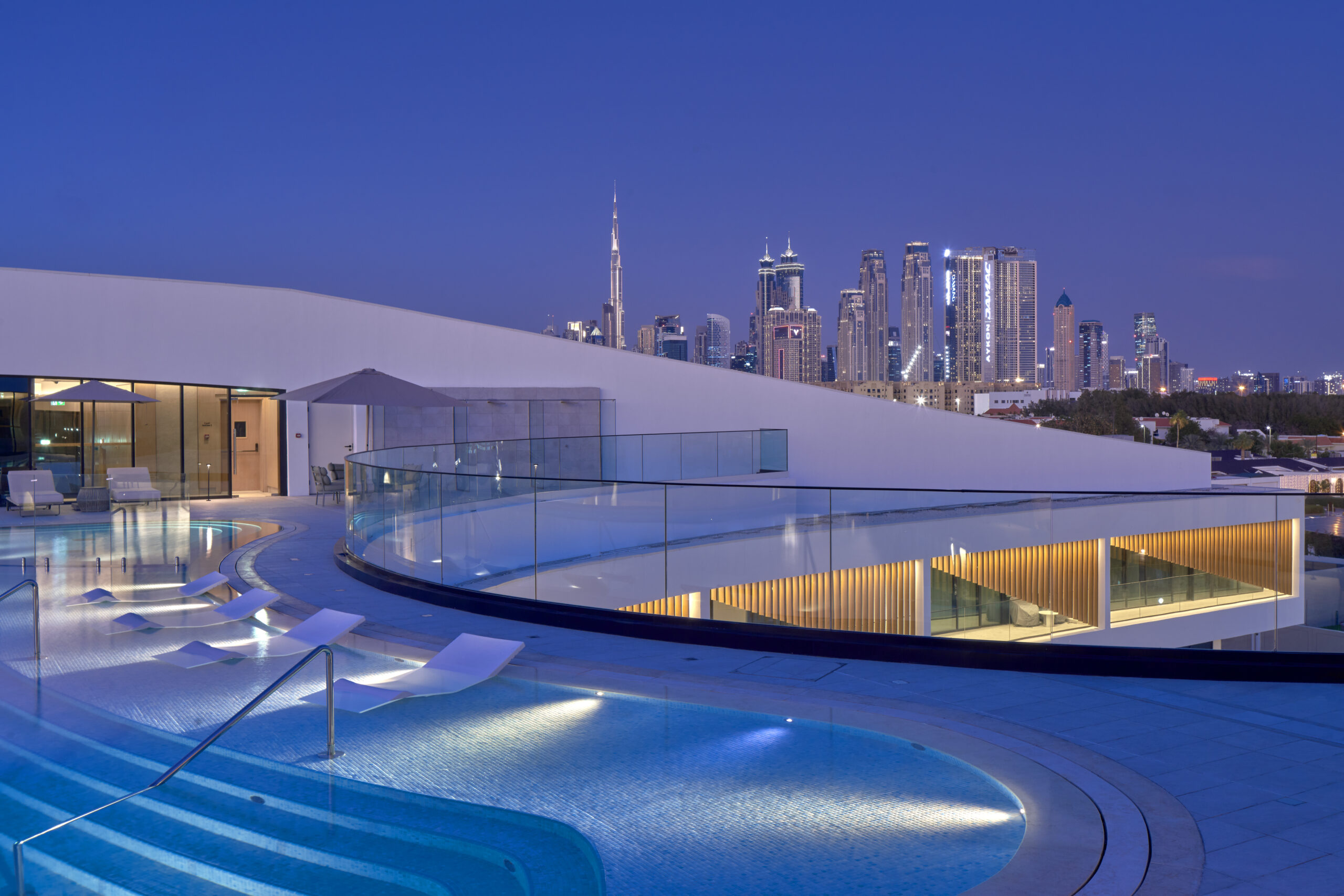
Zayed National Museum. (Credit: Zayed National Museum)
On December 3, one day after the United Arab Emirates’ 54th birthday, a striking architectural masterpiece was inaugurated in the Saadiyat Cultural District of Abu Dhabi. With its five-falcon wing-shaped towers soaring proudly toward the skies, the design of the Zayed National Museum by Norman Foster, of Foster + Partners, aims to reflect the resilience, determination, and forward-thinking vision of the country’s founder to which the museum is dedicated: the late Zayed bin Sultan al-Nahyan, who united the emirates in 1971. The UAE National Orchestra, blending Western and Oriental instruments to create a sound specific to the global demographic of the Gulf state, marked the occasion with its debut performance during the museum’s opening ceremony.
The new museums, cultural districts, and citywide events are part of Abu Dhabi’s strategic long-term investment to bolster its cultural offerings. In 2021, Abu Dhabi announced a five-year $6 billion plan for its culture and creative sector, building on the prior investment of $2.3 billion, to make culture a major economic driver for growth in the emirate.
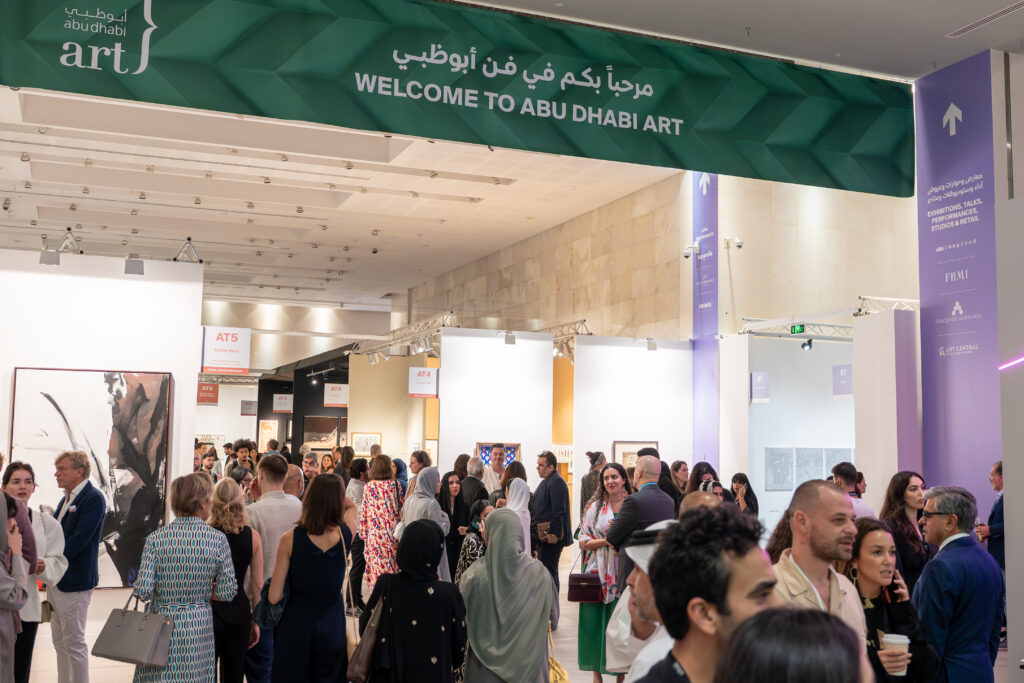
Opening night of Abu Dhabi Art. (Image courtesy of Sutton)
“Economic exchange brings about cultural exchange, the exchange of ideas,” said Dyala Nusseibeh, director of Abu Dhabi Art Fair. She noted how the fair is “a marketplace but also a space where ideas are exchanged, discussed, and thought about.” For over a decade, Nusseibeh emphasized, curators and researchers at institutions such as the Guggenheim Abu Dhabi (due to open in 2026) and the Louvre Abu Dhabi have been researching the art histories of the Gulf. “Collectively, we’re all working toward the growth and centering of Abu Dhabi as a cultural hub,” added Nusseibeh. “And at the same time, all of this has come about because of the government’s decision quite a long time ago to invest seriously in culture and think about culture as essential for the future growth of the country.”
This cultural vision is spearheaded by Mohamed Khalifa Al Mubarak, the chair of the Department of Culture and Tourism. He has said that culture is an engine that not only offers an expression of identity but also fuels economic growth, innovation, job creation, and sustainable development and contributes to Abu Dhabi’s aggressive goal to diversify its economy away from oil.
The growth of Abu Dhabi’s cultural ecosystem is taking place alongside the city’s rise as a global financial hub. Abu Dhabi Finance Week, which held its fourth annual summit from December 8-11, was dubbed by some as the “real ‘Davos in the Desert’” as Indian-born strategy advisor and author Parag Khanna stated. In recent years, Abu Dhabi has attracted to its financial hub, Abu Dhabi Global Market, many of the world’s biggest financial firms and thousands of professionals, including BlackRock, Rothschild & Co, Bitcoin Suisse, and Millenium Management. In early December, Mubadala Investment Company and Aldar, the emirate’s largest developer, announced a landmark $16.3 billion expansion of Abu Dhabi’s Al Maryah Island financial district.
“I believe that our government in Abu Dhabi is continuing to make sound decisions in their approach to art and culture,” said Maryam Al Falasi, an Emirati Abu Dhabi-based art dealer who opened her gallery within the Madar_39 creative hub in the Mina Zayed cultural neighborhood in November 2024. “They have been consistently investing in the ecosystem, which has contributed to this rise, because a true cultural city needs a number of factors to succeed. It’s not enough to have collectors or galleries or institutions, but it needs to have all of these to form a true ecosystem.”
The Zayed National Museum was the fifth new museum, and undoubtedly the most monumental, to open in Abu Dhabi in 2025, signifying the city’s evolving role as a regional and global capital for culture. In April, teamLab Phenomena Abu Dhabi, developed in collaboration with Tokyo-based art collective teamLab, began offering its immersive digital art experience to visitors to the UAE capital. Also located in Saadiyat Cultural District, it joined the Louvre Abu Dhabi, which opened in 2017 and Manarat Al Saadiyat, a dynamic arts and culture center. Also in April, the restored Al Maqtaa Fort, now renamed the Al Maqtaa Museum, opened, offering insights into Abu Dhabi’s early years as a trading post and border checkpoint. In October, the Al Ain Museum, the country’s oldest museum, first opened in 1971, reopened after a major restoration, including new exhibition spaces to showcase the region’s ancient desert settlements and early Bedouin life alongside displays on the legacy of the UAE’s founder, who was born in Al Ain. A few weeks prior to the Zayed National Museum opening, the Natural History Museum Abu Dhabi opened its doors. It is the largest institution of its kind in the region and showcases 13.8 billion years of natural history in the region.
“It’s not just about thinking critically about our national identity, but it’s about bringing those perspectives to bear on global conversations,” Nusseibeh highlighted. “That’s also the role that culture has in ensuring that the region is talking about itself from the region and that you’re not relying on people from outside who haven’t spent serious amounts of time in the region to describe it or to frame it or narrate it. In fact, you have artists from the region who are doing that critical work directly, and this is important.”
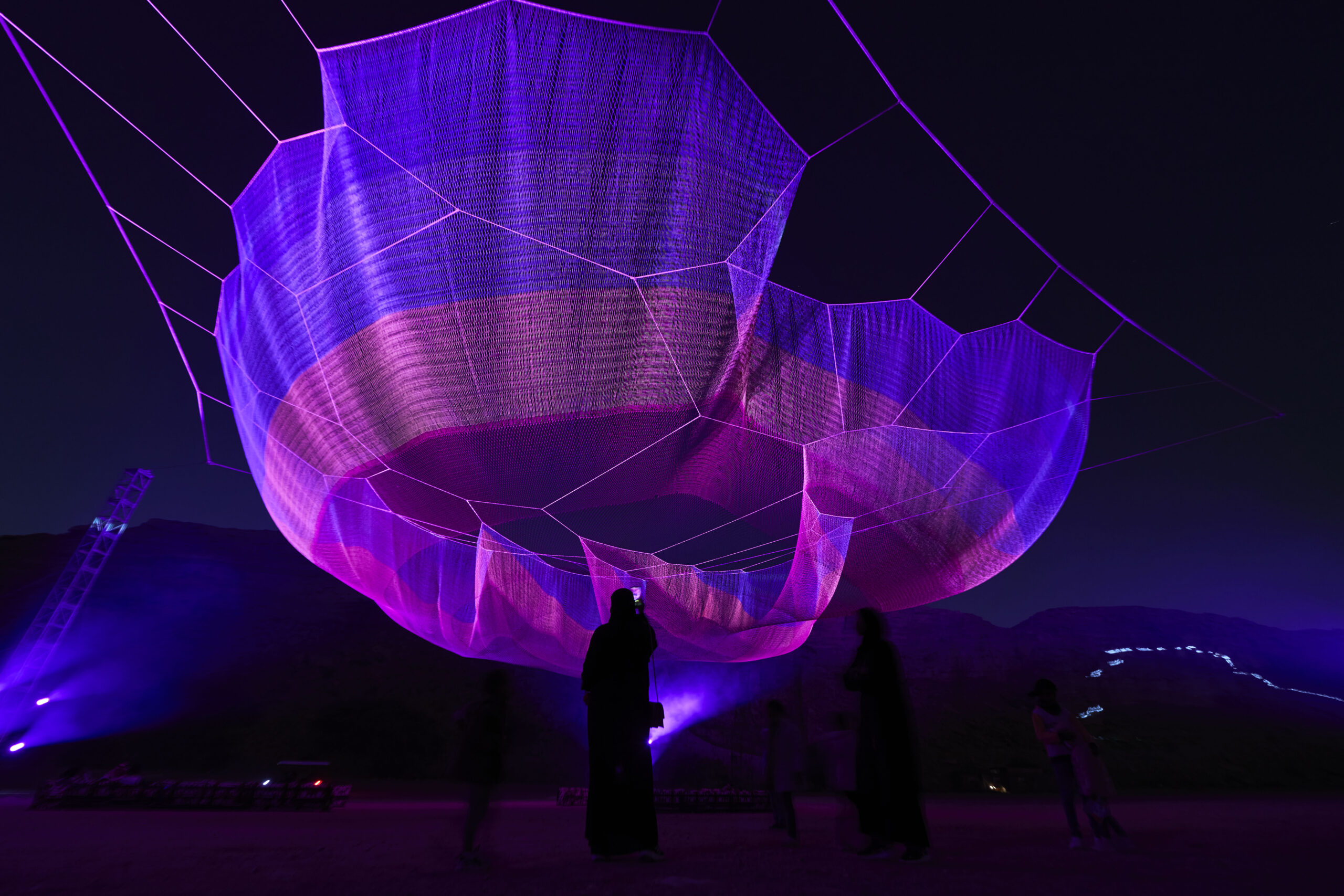
Abu Dhabi’s numerous museum openings have brought the UAE capital much regional and international attention. This has been bolstered by the recent announcement that leading global contemporary art fair group Frieze will transform the existing Abu Dhabi Art Fair into Frieze Abu Dhabi in November 2026. Each year Abu Dhabi’s state-led cultural programming has become more robust and extensive. In 2024, the first Public Art Abu Dhabi Biennial, with local, Middle Eastern, and international commissioned works of art displayed at various locations throughout the city, transformed Abu Dhabi into a citywide outdoor art gallery. In November, the second Manar Abu Dhabi opened. The light art festival presents works by local Emirati artists, such as Shaikha Al Mazrou, known for her sculptural abstract works, alongside the vibrant Pop Art works of globally renowned American artist KAWS.
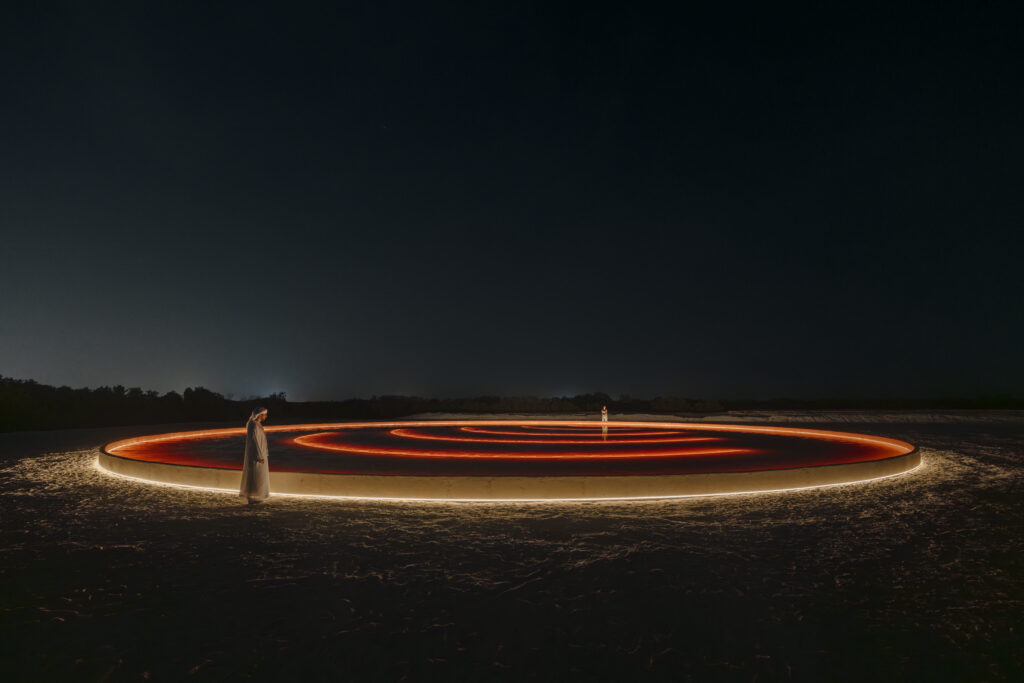
“Contingent Object,” 2025 by Shaikha Al Mazrou, Manar Abu Dhabi 2025. (Image courtesy of Department of Culture and Tourism Abu Dhabi & Public Art Abu Dhabi. Photo by Lance Gerber.)
Reem Fadda, a renowned curator and art historian and now the director of Abu Dhabi Culture Programming called this moment in Abu Dhabi’s history “a homecoming.” She said, “It’s been years in the making,” emphasizing her involvement since 2009 with the Guggenheim Abu Dhabi. “I am very aware of the seriousness, the efforts, the depth of how much institutional foundational work has been put through in Abu Dhabi to make this happen and to arrive at this moment. I think the world has not paid enough attention, but now we’re getting full lights on all the aspects.”
Fadda has been involved in creating a strategy for public art in the capital. Alongside the museums and institutions, events such as the Public Art Biennial and Manar Abu Dhabi seek to create, as she says, “historic moments of art that people can engage with and remember, and it becomes part of the city’s experience and fabric.”
The Saadiyat Cultural District is nearing its completion. When finished, it will be home to seven museums and cultural institutions, promoting interfaith dialogue, through the Abrahamic Center, and cultural exchange.
Not so far away in the heart of Abu Dhabi’s historic port of Mina Zayed another cultural district is also rapidly taking shape. Established amid Mina Zayed’s other attractions, such as the bustling Madinat Zayed Gold Center, the MiZa cultural district is becoming a host for private cultural entities. 421 Arts Campus, a multifunctional arts center dedicated to emerging artists in the UAE, is also located here. Comprising exhibition spaces, studios, and workshops, and supported and operated by the Salama Bint Hamdan Al Nahyan Foundation, 421 Arts Campus celebrated its 10th anniversary in November. Serving as a catalyst for creative practitioners in the UAE, South Asia, and North Africa, according to the organization, it has supported over 1,500 creative practitioners, delivered 2,000 programs from residencies to grants, exhibitions, and public programs, and commissioned hundreds of new works.
“When we first opened 10 years ago, we were alone here in Mina Zayed alongside maybe two or three other places you could visit to get an understanding of what’s happening in the city,” said 421 Arts Campus Director Faisal Al Hassan. “Today it’s overwhelming to see what’s happening. The accelerated growth over the past 10 years is exceptional and not necessarily just in visual arts. You are seeing a lot of commitment toward design, performance, music, other creative disciplines – means of focusing on the creative economy in general, and that is where you can really see a shift and a change in the thinking of how we bring in more creative voices into the city.”
421 Arts Campus is presenting “Rays, Ripples, Residue,” an exhibition running until April 26, 2026. It showcases multidisciplinary works of art by artists from and based in the UAE to reflect the evolution of creative practice and exhibition in the Gulf state over the past 10 years.
“The government has also been investing in their own corporate collections and supporting local artists in this manner,” Falasi, who works with several government entities on growing their corporate collections, noted. Mubadala Investment Company is also establishing its Mubadala Corporate Collections – another sign of the support corporate entities are giving art in the UAE capital.
Some critics have mused over the still small pool of private collectors. But as Nusseibeh and others have noted, that is changing with the influx of new residents and new wealth to the capital. In June, data from the Statistics Center in Abu Dhabi indicated that the city’s population crossed four million for the first time after a 7.5% surge in 2024, meaning that the emirate’s population has increased by over 50% in the last decade.
“It’s up to us as gallerists and art dealers to also build on this momentum and play our part in contributing toward this rise,” Falasi said. “This will also contribute to a growing scene through a rise in audiences, and this synergistic approach will bolster Abu Dhabi as a true cultural city.”
The views represented herein are the author's or speaker's own and do not necessarily reflect the views of AGSI, its staff, or its board of directors.
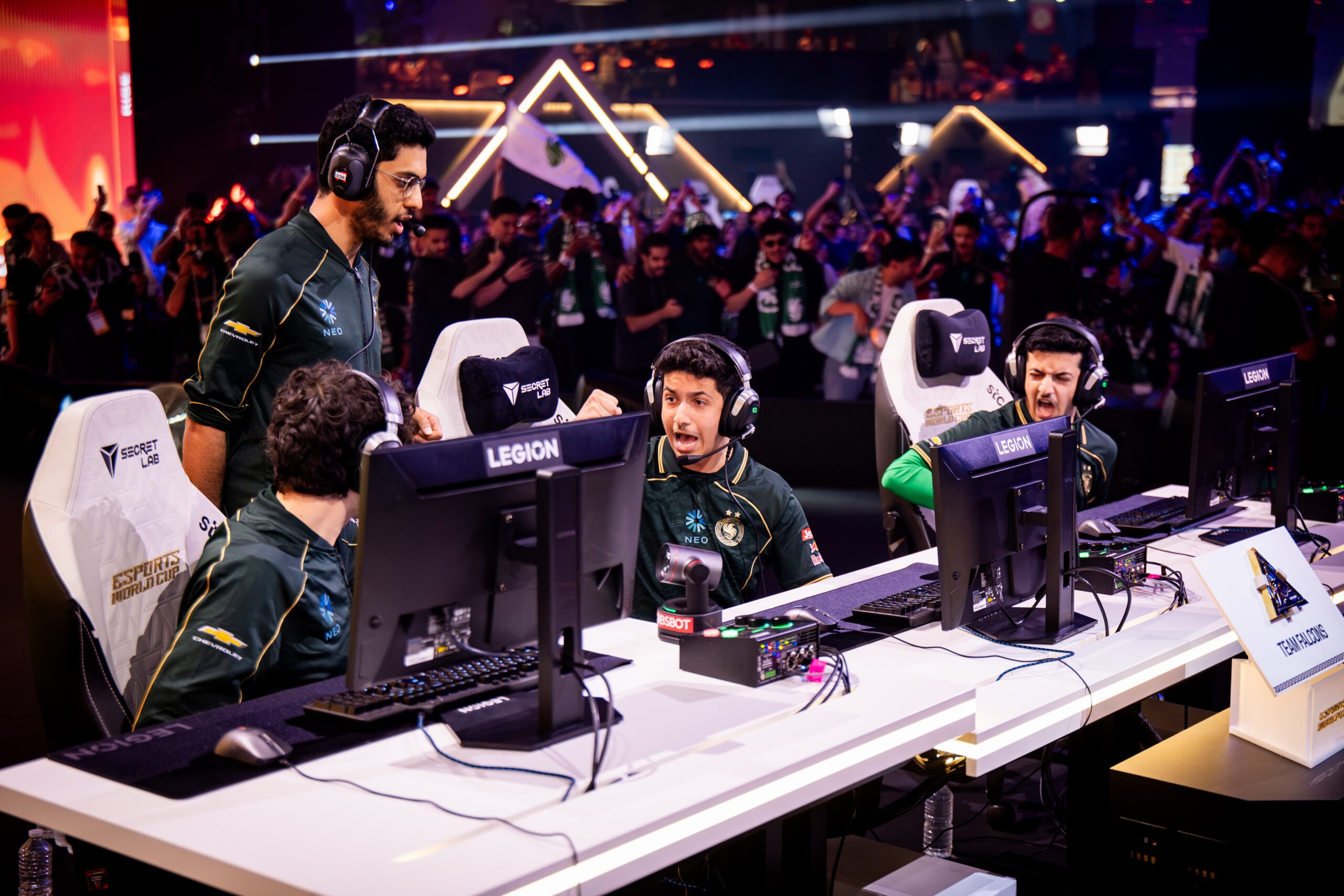
The Esports World Cup’s staging in Paris showcased Saudi Arabia’s global gaming ambitions, and the booming sector is also helping to narrow the regional gender gap in technology and entertainment.
Following the high of the inaugural Art Basel Qatar, and the low of the ongoing Iran war, Qatar is doubling down on global and regional cultural diplomacy.
The war has hit the United Arab Emirates during a period of cultural and economic flourishing. While life goes on amid continuous Iranian attacks, the country’s residents rally for its postwar return.